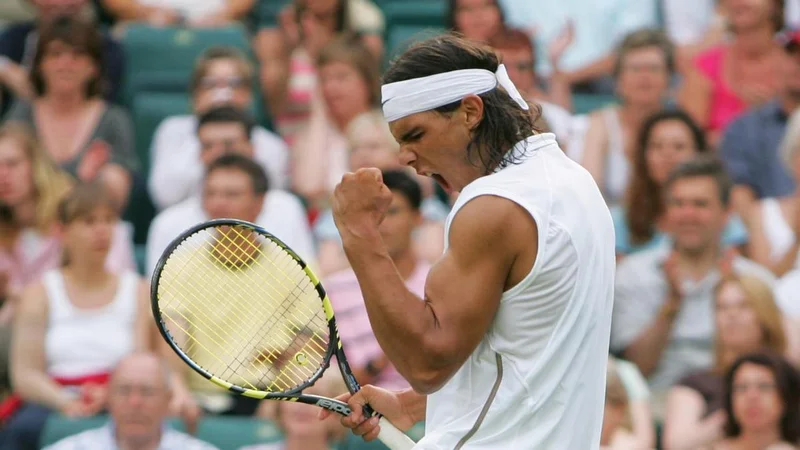
The German writer Goethe once wrote a truth that cuts straight to the bone: “Talent is built in calm; character is built in the storm.” Look around today, and you will see a world entirely obsessed with the calm. We are taught to seek comfort, to avoid friction, and to build protective, fragile bubbles around our lives to keep any hint of discomfort away. We treat pain as a stop sign — a signal to quit, pack up, and run. But the Netflix’s documentary series RAFA completely shatters this illusion.
It doesn’t just show us a glamorous montage of trophies and roaring crowds, but it introduces us to a man who chose to live, fight, and win from the very centre of a brutal, lifelong storm. For the youth of today, who are so often shielded from hardship, this story is not about tennis. It is a masterclass in how to take the worst life throws at you and use it as fuel to become unstoppable.
To truly understand Rafael Nadal, you have to look at the hidden cracks beneath his greatness. Early in his career, a devastating medical reality threatened to destroy his dream before it even started. He was diagnosed with Müller-Weiss syndrome — a rare, painful, and permanent condition that causes the bone in his foot to literally waste away. The top medical experts gave him a cold, simple choice: undergo surgery, and accept that your career as a professional athlete is over.
At that crossroads, most people would have taken the comfortable exit. Rafa chose the storm. He refused the surgery and his team came up with a temporary, desperate fix which is an extra layer of custom foam stuffed inside his shoe. It was a fragile Band-Aid on a broken body. The extra foam changed how he ran, sending a chain reaction of intense stress up into his knees, his hamstrings, and his back. From that moment on, Nadal was at war with his own body.
His coaches and his family lived in constant anxiety. Year after year, the news behind closed doors was almost always bad. Another tear, another flare-up, another joint giving out. Yet, time and time again, Rafa would look past the medical data, ignore the screaming protests of his nerves, step onto the court, and beat the best players in the world.
This madness reached its peak during his historic run at the French Open. To compete on the brutal clay courts, Nadal did something that defies human logic. He chose to completely numb his foot using constant, aggressive nerve-block injections. Think about the sheer mental toughness required to step onto a global stage, facing the fiercest competitors on earth, while being entirely unable to feel the foot connecting you to the ground. He was running on pure muscle memory, instinct, and an iron will. He was surviving on painkillers, yet he marched through the tournament to lift the championship trophy.
The world often looked at Nadal’s rigid on-court habits in the way he perfectly aligned his water bottles, swept the baseline, or fixed his clothes before every single serve and laughed, calling it superstition. But the truth is much deeper. When your physical body is burning in agony, strict routine is how you take control back from the chaos. Those habits were his mental shield, a way to drown out the white noise of pain so his mind could focus entirely on the next ball.
There is a dangerous lie being fed to the next generation: that a successful life is supposed to be an easy, painless one. We celebrate the finish line but completely erase the bloody footprints it took to get there. Young people see a champion holding a golden trophy under a shower of confetti, completely blind to the hundreds of hours that same champion spent crying on a treatment table, surrounded by a worried family and an anxious team.
We must show youngsters this story to teach them that pain is not a dead end. It can be a massive spark. Nadal proved that suffering does not have to break you and that it can reveal exactly what you are made of. He showed the world that when you stop running from discomfort, you take away its power over you. Eventually, as it does to everyone, time delivered its final verdict. The body could simply take no more, the foam insoles and nerve blocks could no longer bridge the gap, and he had to retire. But Rafael Nadal did not leave the sport because he was broken but he left because he had completely emptied the tank. He left every single ounce of his humanity on the court.
If we want to build a generation capable of surviving hard times and achieving true greatness, we have to teach them to stop hiding in the calm. True character is only built when you have the courage to look directly into the eyes of the storm, smile through the pain, and refuse to back down.
N. Anand Venkatesh is a judge of the Madras High Court
Published - August 09, 2026 03:34 am IST