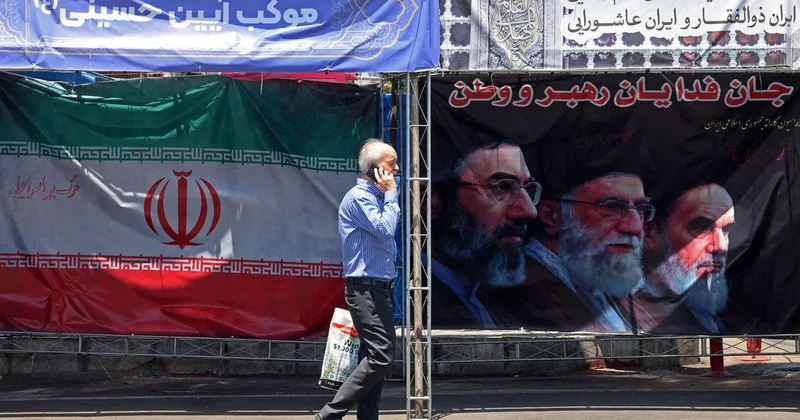
Vali Nasr’s Iran’s Grand Strategy: A Political History is one of the most vital works that demand attention during the ongoing Iran-America standoff. The author argues that Iran’s strategy is not driven by ideology alone, but shaped by a collective memory of invasions, humiliation, foreign interference, and a deep-seated fear of national disintegration. To understand the politics of the Islamic regime, one has to understand the historical psychology behind it.
According to Nasr, the Islamic Republic views itself as both isolated and vulnerable because the Arab Sunni states surround it, while it possesses a distinct Persian identity fused with Shi’ism. Under the Safavids, especially Shah Ismail I, Shi’ism became Iran’s state religion as a strategic decision helping distinguish Iran from its Sunni Ottoman and Uzbek rivals. The Persian nationalism which in unique ways was subsumed in, as well as perpetuated by, Shia theocracy is distinctive to modern Iran. This nationalism is absorbed in the ideological framework of the Republic.
A perennial battleground
By intertwining religion with geopolitics, contends Nasr, the Safavid rulers transformed their authority into something far deeper than mere kingship, giving their rule profound ideological and emotional resonance among the people. However, over time this feeling would transform into being a besieged civilisation surrounded by hostile powers.
These insecurities intensified in the 19th and 20th centuries as Iran repeatedly became a battleground between colliding Western powers. The Anglo-Russian Agreement of 1907 divided Iran into spheres of influence between the expansionists. During both world wars, the foreign armies occupied Iran despite Tehran’s neutrality and continued protest. History has left behind a bitter national memory of being violated whenever the imperialists wished. The rise of Reza Khan after the collapse of the Qajar dynasty in 1921 reflected a desperate attempt to resist this weakness.
Reza Shah sought to centralise and modernise the state so Iran could resist foreign domination. Yet, even he ultimately fell victim to it. In 1941, Britain and the Soviet Union invaded Iran and ousted him from power. He was replaced by his son Mohammad Reza Pahlavi. For many Iranians, this confirmed and entrenched the fear that the idea of freedom remained elusive and sovereignty was only fragile and conditional.
Prime Minister Mohammad Mossadegh nationalised Iranian oil. This did not sit well with the West. A coup backed by the CIA and MI6 overthrew Mossadegh. This event shaped Iranian political consciousness deeply by destroying what many Iranians saw as a democratic nationalist project. The belief that the West would tolerate neither independence nor genuine democracy if either threatened its strategic interests was deeply reinforced in the psyche of common Iranians.
Nasr notes that the Eisenhower administration even considered another coup in 1958. Such episodes became foundational to the Republic’s worldview that shaped the 1979 revolution. The revolution cannot be understood simply as an Islamic uprising. Nasr highlights a revealing moment involving nationalist politician Karim Sanjabi, who brought Khomeini a draft declaration describing the future Iranian state as “democratic” and “Islamic.” Khomeini personally added a third principle in his own handwriting: esteqlal (independence).
The word became central to the revolution and would go on to define Iran’s politics for decades to come. After the revolution, Khomeini was asked what its greatest achievement was and his reply was simple: “Now all decisions are made in Tehran.” Beneath the religious language and symbolism lay a profound determination for sovereignty.
Even today, long after the revolutionary idealism has faded, the principle of independence remains imbricated in the flesh of the Islamic Republic’s state identity.
The book places Khomeini within the wider anti-imperialist movements of the 20th century. Iran’s revolution resonated far beyond Shi‘ite circles because it appeared to achieve what Arab nationalism and communism often failed to do: overthrow a pro-Western regime and openly defy the US. Khomeini’s rhetoric attracted Islamist movements across the Muslim world, even among Sunnis who did not share his theology. In many ways, he came to resemble figures like Castro or Lenin as much as a traditional religious cleric. Iran’s rejection of the West was not only geopolitical but also epistemic, something akin to what Walter Mignolo called “epistemic disobedience” (albeit in a different context). Iran refused to accept that Eurocentric definitions of modernity, liberalism, and secular reason constitute universal truths.
In the aftermath of the Iranian Revolution, the Islamic Republic sought not just political autonomy but also what could be called a “cognitive sovereignty.” It sought the right to define reality on its own civilisational terms. However, this rejection of Western definitions and categories was not simply a return to tradition; it was a reconstruction of modernity itself where Iran never stood outside its perimeters. Iranian academicians contested its authorship and asserted that there are multiple modernities, the Western version being neither neutral nor universal. According to them, Western modernity was historically contingent and politically enforced. Also, in creating its own reality, it not only challenged the Western episteme, but it also questioned the orientalist distortions that construct non-Western societies and histories as residual categories of the West.
Forward defence
The Iran-Iraq War forms the central theme of the book. The war transformed Iran even more deeply than the revolution. Saddam’s invasion confirmed every Iranian fear about isolation and vulnerability. Iran fought the war alone while most of the world armed Iraq. Out of this emerged the doctrine of “Sacred Defence” – the idea that survival depended on resistance, self-reliance and ideological mobilisation. The Islamic Revolutionary Guard Corps (IRGC) was created to defend the revolution internally during Kurdish unrest and fear of counterrevolution. However, in the aftermath of the Iran-Iraq War, the IRGC evolved and consolidated itself into a core institution of the state.
The Guards drew one crucial lesson from the war: Iran could not rely on conventional military power alone. Sanctions and isolation meant it would always struggle to match its adversaries. Therefore, Iran embraced the principle of asymmetric warfare and Lebanon became the model. Following Israel’s 1982 invasion, Iran helped cultivate Hezbollah as a proxy force capable of confronting Israel indirectly. This experience shaped what later became Iran’s “forward defence” doctrine, i.e fighting enemies far from Iranian borders before conflicts could reach Iran itself.
Nasr also draws attention to various hitherto lesser-known facts that show the state pragmatism behind Iranian defence policies. Khomeini quietly approved covert cooperation with Israel during the Iran-Iraq War. Israel supplied spare parts for Iran’s American-made weapons, and Iran even shared intelligence connected to Israel’s strike on Iraq’s Osirak reactor in 1981.
After Khomeini’s death in 1989, Ali Khamenei inherited this worldview. Though lacking Khomeini’s charisma or clerical stature, he consolidated power around the lessons of the resistance, self-reliance, and distrust of the US. Interestingly, Nasr writes that for all his religious signalling, Khamenei did not establish his reputation on account of his Islamic scholarship alone. As a seminarian, he engaged deeply with Western philosophy, history and literature. When imprisoned in the 1960s, Khamenei shared cells with communist activists. “His views on the United States were not drawn from religion but rather from his political education,” Nasr writes. Khamenei was driven by the conviction that the US sought nothing less than regime change in Iran – a suspicion that was only reinforced by the subsequent US regional policy.
Under Khamenei, the alliance between the clerical establishment and the IRGC became the backbone of the Islamic Republic. The book traces the divide within the Islamic Republic between pragmatic modernists clustered around figures such as Akbar Hashemi Rafsanjani and the IRGC-Clerical alliance. While the former advocated economic reconstruction, limited normalisation with the West, and the development of Iran as a stable regional power, the latter remained deeply suspicious of any engagement with the West. The alliance insisted instead on preserving the revolutionary ethos and ideological militancy of the 1979 Revolution.
One intriguing aspect in Nasr’s book is Mojtaba Khamenei’s rise in status. His significance comes from family ties and his military background, having served in the elite Habib ibn Mazahir al-Asadi Battalion, and their roles in the Iran-Iraq War. The battalion is famed for its valourous role in the battle for Khoramshahar during the war.
Iran’s “forward defence” strategy of building influence across the Shi’a Crescent to isolate Israel backfired badly. It pushed Tel Aviv into the arms of Sunni Gulf states, which Tehran already saw with hostility. This drew Iran deeper into the crosshairs of the US-Israel strategic alliance across West Asia. The two forces of Western sanctions and renewed Israel-Gulf bonhomie together created the conditions for serious domestic instability, most visibly in the Green Movement protests of 2009. It exposed just how thin the revolutionary consensus had become among younger Iranians.
The internal fracturing in the Iranian regime had an unexpected diplomatic consequence. Hardliners began warming to the idea of a deal with the West. As a result, Iran agreed to cap its nuclear programme in exchange for sanctions relief. The détente represented a significant strategic concession by Tehran.
US President Donald Trump tore it up anyway with the reimposition of sanctions, escalating from 370 to 1,500 under the “maximum pressure” doctrine. This gutted Iran’s economy and hollowed out its middle class. It set off the chain of instability whose consequences are still reverberating across West Asia. Nasr is careful with his language, but the logic of his argument is unsparing: the US had a deal, Iran held up its end, and Washington walked away. The region is paying for that decision still.
The Islamic Republic sees itself not simply as a revolutionary state, but as a country that survived coups, invasions, occupations, sanctions, and isolation through resistance. Nasr’s great strength is that he humanises Iranian strategy without romanticising it. The book provides a nuanced understanding of how historical trauma becomes embedded in statecraft itself.
Iran’s Grand Strategy: A Political History, Vali Nasr, Princeton University Press.
We welcome your comments at letters@scroll.in.