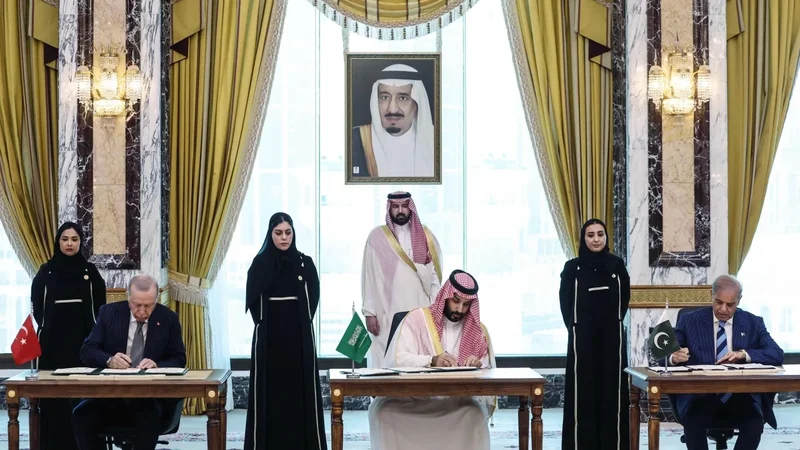
How Saudi Arabia-Turkey-Pakistan defence pact acts as ‘insurance’ over US disengagement
The Mecca deal may emerge as a third geopolitical ‘centre of gravity’ in the Middle East, with more members joining, analysts say
No further details have been made public, but the signatories were quick to clarify that they had not formed a military coalition, and that the agreement served as a deterrent.
In a social media post, Saudi Deputy Minister for Public Diplomacy Rayed Krimly said the pact “does not threaten the security of any country in the region and should not be viewed as an escalation of tensions between any two states”.
Erdogan followed suit, saying the agreement “targets no country and is open to the participation of all brotherly countries that aim for the peace, prosperity, and stability of our region”.
Former Qatari prime minister Hamad bin Jassim bin Jaber al-Thani described the tripartite pact as “a step that calls for optimism” and expressed hope that other Gulf Cooperation Council members would “take the initiative to join it”.
Analysts see Qatar as an obvious candidate to join the pact because of its pre-existing defence agreement with Turkey. Kuwait is also a potential signatory following ratification of its expanded defence cooperation agreement with Pakistan in July.