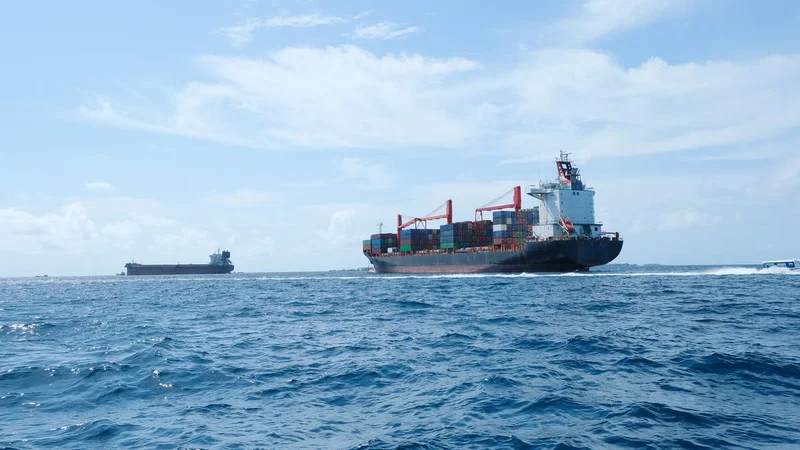
On the heels of the Strait of Hormuz crisis comes the new threat — a Strait of Bab el-Mandeb crisis. On July 16, Reuters reported that Iran had instructed the Houthis to close the Strait (which is between Yemen and the Horn of Africa) if the United States attacked Iran’s power plants.
Whether the Houthis have the capacity to threaten the Strait or whether this is part of Iran’s signalling to the U.S. is secondary. What is important is that this represents a risk to one-third of India’s entire trade.
Revisiting 2024
We have been here before. When the Gaza war started in October 2023, the Ansarallah group in Yemen, also known as the Houthis, claimed solidarity with the Palestinians and launched drones and missiles at Israel. From November 2023 to March 2024, the Houthis targeted at least 40 vessels in the Red Sea, claiming that the vessels were linked to or bound for Israel.
In response, the U.S., together with allies including Singapore and Sri Lanka, launched Operation Prosperity Guardian (December 2023) to ensure “freedom of navigation” in the Red Sea. This was followed by United Nations Security Council Resolution 2722 (2024). which was adopted in January 2024. Israel also carried out unilateral strikes against the Houthis. The Indian Navy rescued the crew of a British tanker after it was set on fire (January 26-27, 2024). By the time the U.S declared a ceasefire in May 2025, the Houthis had been weakened, but much of the damage had already been done.
Marine insurance companies tend to be highly risk-averse. With over 90% of the world’s shipping insured by just 12 protection and indemnity (P\&I) clubs, shipowners have limited room to negotiate. Between November 2023 and March 2024, at least 2,000 ships avoided the Suez Canal and instead sailed around the Cape of Good Hope. This delayed critical imports to India. Global shipping routes effectively reverted to what was being done 170 years ago. Egypt lost a quarter of the Suez Canal’s revenue. By July 2024, Israel’s Red Sea port of Eilat had filed for bankruptcy.
This time around, the situation is more unpredictable. With U.S. forces in the region focused on Iran, it is unclear whether they will seek to secure the Red Sea as they did before.
Even in 2024, when India-bound ships were attacked by the Houthis, New Delhi had to lean directly on Tehran to bring the attacks to a halt. But that was a different time for India-Iran ties. Meanwhile, the UN Security Council is more divided today than ever before, and even if it manages to call for “freedom of navigation” in the Red Sea, it is unlikely to pass a resolution approving a force to implement that call. China is also likely to again take a unilateral approach to protecting its shipping in the Red Sea through quid pro quos with the Houthis.
If the Houthis resume attacks on shipping in the Strait, the impact on India’s economy — which is already reeling from the Strait of Hormuz crisis — would be dire. While India has now ordered that no Indian mariner be deployed on ships bound to or from the Strait of Hormuz, extending the same restriction to a busy route such as the Strait of Bab el-Mandeb would not be easy and would adversely affect the safety and welfare of thousands of Indian seafarers.
What India should do
In 2024, France stayed out of a U.S.-led operation to guard its role in mediating between Hezbollah and Israel in Lebanon. Those conditions no longer exist. However, France and Japan — two countries that need shipping lanes in the Red Sea for their connectivity with Asia and Europe respectively — maintain bases in Djibouti, perched on the Red Sea. Their navies have also conducted joint drills with the Indian Navy, which creates an opportunity for India to pre-empt a recurrence of the events of 2024.
India therefore needs to pro-actively build a naval taskforce in collaboration with France and Japan to deter attacks on shipping in the Bab el-Mandeb.
India would also do well to engage Egypt and Saudi Arabia. They had refused to join the alliance against the Houthis in 2024, given their own stance on Gaza. This time, with their economies at stake, they may not stand by. On July 20, the Houthis announced a “maritime embargo” on Saudi ships, seen as a threat against their transit through the Bab el-Mandeb. India needs to engage with these nations proactively to help secure the Red Sea, from the Suez to Bab el-Mandeb, while keeping its other partners in the region informed.
A rules-based maritime response
It needs to be emphasised that this would be a theatre-specific “Trade Protection Task Force” of navies, rather than a strategic alliance. In addition to ships and personnel, the Information Fusion Centre–Indian Ocean Region hosted by India could provide the necessary maritime domain awareness, while France and Japan could complement these efforts with on-ground logistical support. The constituent navies could agree on joint rules of engagement in response to any hostile attacks. They could provide security cover or escorts requested by commercial and civilian vessels transiting the Strait, especially those bound for Europe, India, or Japan. The task force would serve as a lasting demonstration of India’s resolve to ensure “respect for maritime rules and norms” as part of Security and Growth for All in the Region (SAGAR).
India has both the responsibility and the capability to prevent the Bab el-Mandeb from becoming a literal “Gate of Tears” this time.
Raja Karthikeya is Adjunct Fellow and lead for West Asia studies at Takshashila Institution
Published - July 23, 2026 12:08 am IST