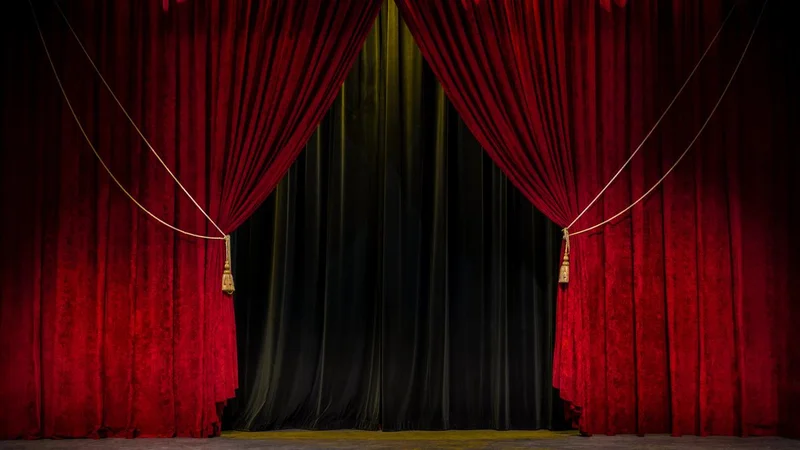
The lights dimmed slowly. Conversations softened into whispers and then disappeared altogether. Hundreds of strangers sat in silence as Shurpanakhi, written by Apurva Kasaravalli and directed byVandana Supriya Kasaravalli, began to unfold at Ranga Shankara in Bengaluru. As I settled into my seat, a thought crossed my mind. In a world where everything competes for our attention, what happens when something asks for it completely?
It is a curious dilemma of our times. We complain about distraction and our inability to focus. Yet we willingly participate in systems designed to fragment our attention. There is always a notification to check, a message to respond to, a reel to watch, or a headline to scan. We are connected as never before, yet rarely fully present.
Theatre, however, demands something different. For 90 minutes, there are no shortcuts. No fast-forward button. No option to pause and return later. The performance moves at its own pace, indifferent to our impatience. If our minds wander, we miss something. Theatre does not wait for us.
Most experiences today are designed around our convenience. We can skip, scroll, replay, accelerate and customise them to suit our preferences. Theatre offers no such accommodation. It unfolds on its own terms. There is something almost radical about an art form that refuses to adapt itself to our distractions. This is perhaps the first lesson it teaches: presence.
Unlike cinema, where the camera directs our gaze, theatre leaves that responsibility to the audience. Meaning is not neatly packaged and delivered. It often resides in a pause, a silence, a fleeting expression, a subtle shift in lighting, or the distance between two characters on a stage. You learn to listen beyond words and to notice what is not immediately obvious. At first, this can feel demanding. Yet it is also rewarding.
In a culture that values speed, theatre reminds us that some things reveal themselves only when we slow down. Not every scene is dramatic. Not every exchange is loud. Some moments unfold quietly. Yet these are often the moments that stay with us long after the curtain falls. There is another quality that makes theatre distinct. What unfolds on stage is live, fragile, and unrepeatable. When an actor pauses for a fraction too long, the audience senses it. When emotion trembles in a voice, it is shared by everyone in the room. A slight mistake, a spontaneous reaction, an unexpected burst of laughter — these become part of that evening’s performance and belong only to those who were present.
Perhaps this is what makes theatre feel so intensely human. The audience, too, becomes part of the experience. A ringing phone, a whispered conversation, a glowing screen — each has the power to disrupt the shared concentration of hundreds of people. Without announcing it, theatre reminds us that public spaces depend on mutual consideration. We are not merely individuals occupying adjacent seats; we are participants in a collective experience.
At the end of the performance, the applause lingered. The actors took their bow. Many in the audience remained seated for a few moments, acknowledging the effort that had unfolded before them. Nobody seemed particularly eager to rush away. It felt like a small but meaningful act of respect in a culture that is constantly moving on to the next thing.
As I left the auditorium that evening, the dilemma remained. We spend much of our lives searching for experiences that hold our attention. Yet when something finally asks for our complete attention,we often find it difficult to give. Is the challenge that theatre demands too much of us? Or that the rest of the world demands too little?
rajanib@rvu.edu.in
Published - August 09, 2026 04:21 am IST