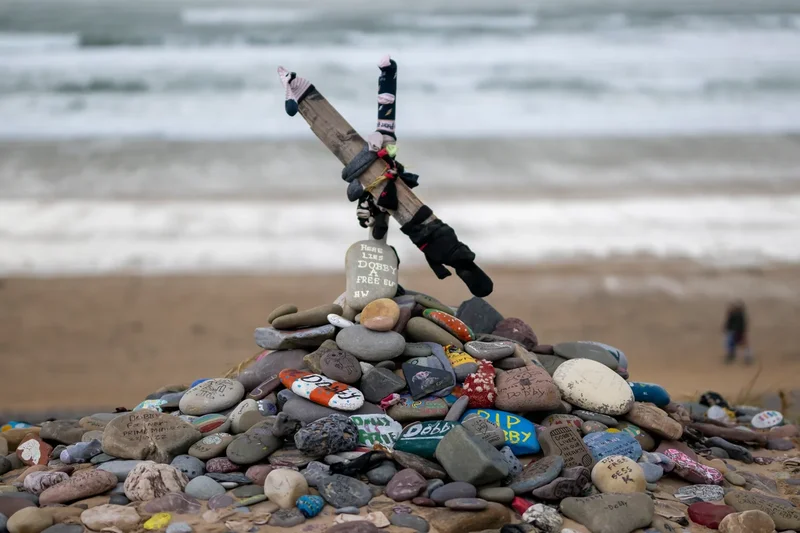
Harry Potter fans forced a £430m energy project to divert plans for a giant pipeline away from a Welsh beach in order to protect the resting place of fictional house elf Dobby.
Fan-favourite Dobby died in the film series’s penultimate entry Harry Potter and the Deathly Hallows - Part One and the scene in which he was laid to rest was filmed on the popular Freshwater West beach in Pembrokeshire.
Since then, the grave has become a shrine to the character, with fans leaving tributes to him, including many painted stones.
Now it’s been revealed that its presence and mass following has led to the diversion of a sizeable energy project called Greenlink.
The beach was to be the site for a connector for a pipeline to carry solar and wind power to the Republic of Ireland from the UK.
The initial plan placed Greenlink’s British end at the beach, with the other side of the cable landing in Wexford.
In an interview on The Energy Revolution podcast released on Wednesday, Simon Ludlam, chief executive of advisory firm Etchea Energy, who served as director of the project, recalled how the plans led to outcry from Harry Potter fans.
“Once we’d agreed with all the authorities, with all the landowners and the people who own the beach, the local residents, how we’d make landfall, I remember BBC Wales said, ‘Could you come down and just do a quick thing,’” Mr Ludlam said.
The BBC interview resulted in hundreds of phone calls from furious fans, angered that the cable would go “straight through Dobby’s grave”.
Mr Ludlam continued: “And so my colleague Tom, who works in permitting, said, ‘Simon, we’re going to have to respond to these calls.’ And I said, ‘well, Tom, I’m super busy.’ And he goes, ‘no, no, we really have to respond to this’.
“I said, ‘Well, Tom, what are they on about?’”. On being informed the outcry was over the cable going through Dobby’s grave, Ludlam said: “Dobby? Who’s Dobby?”
The energy boss said his response at the time was: “He is a fictitious character in a fictitious book, the whole thing's fictitious, what are you talking about?”.
However, his colleague insisted that the matter was “very, very serious”.
“So we got back with the planners and discussed exactly how to reroute the cable so we wouldn't go anymore into Dobby's grave,” Mr Ludlam explained.
“And a lot of people were very happy about that and, you know, the project's now going and Dobby's happy.”
The £430m project involved laying down of a 190km high voltage cable between Wales and Ireland, with 160km of the cable under the Irish sea.
It got up and running in 2025, crucially not going through Dobby’s grave, and can now power 380,000 homes.