Your support helps us to tell the story
From reproductive rights to climate change to Big Tech, The Independent is on the ground when the story is developing. Whether it's investigating the financials of Elon Musk's pro-Trump PAC or producing our latest documentary, 'The A Word', which shines a light on the American women fighting for reproductive rights, we know how important it is to parse out the facts from the messaging.
At such a critical moment in US history, we need reporters on the ground. Your donation allows us to keep sending journalists to speak to both sides of the story.
The Independent is trusted by Americans across the entire political spectrum. And unlike many other quality news outlets, we choose not to lock Americans out of our reporting and analysis with paywalls. We believe quality journalism should be available to everyone, paid for by those who can afford it.
Your support makes all the difference.
Read more
Some of the strongest parental instincts happen without conscious thought. The urge to check on a sleeping baby. To stay close. To pick them up when they cry.
Becoming a mother also brings about an extraordinary shift in priorities. As the late British psychotherapist and author Naomi Stadlen wrote, “motherhood can be relentless. The dependency, the need, the constant pull of being someone’s entire world…”
For all mammals, raising young demands enormous time, energy and resources, requiring mothers to place their offspring’s needs ahead of almost everything else.
So just how precisely does the brain make that shift? Our newly published research sought to answer that question.
Using studies in mice, we identified part of the brain circuitry that drives a mother’s urge to interact with her newborn. We found an essential pathway linking a hormone-sensing region of the brain to its reward network.
Activated by the pregnancy hormone placental lactogen and the milk-production hormone prolactin, this pathway helps make caring for a newborn rewarding rather than simply necessary. Remarkably, we were even able to switch that drive on and off experimentally.
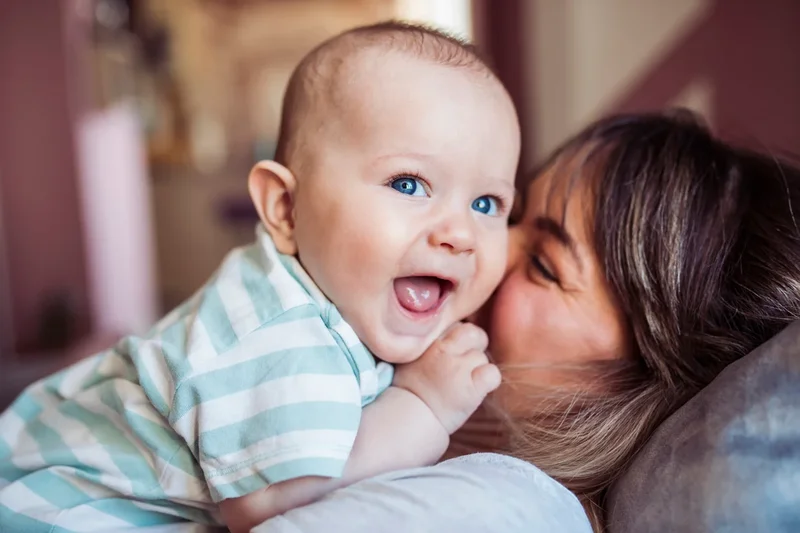
For all mammals, raising young demands enormous time, energy and resources (Getty Images)
Observing a mother’s brain
We focused on a brain region called the medial preoptic area, known for decades to be a key controller of parenting behaviours. Many of its neurons carry receptors for placental lactogen and prolactin.
In earlier studies, we showed that mice without these receptors in this region were unable to care for their offspring after birth. What remained unclear was exactly how these neurons helped drive parenting behaviour.
Using specialised neuroscience techniques to observe these neurons in living mice, we found they became highly active when females came into close contact with pups. The response was much stronger in mothers than in females that had never given birth, with the biggest surge occurring at the very first meeting.
We then traced where these neurons send their signals. A subset of these neurons connect directly to the brain’s reward system, triggering the release of dopamine – the neurochemical that helps make experiences feel rewarding. Recent advances in neuroscience allowed us to watch dopamine being released in real time as mice interacted with their pups.
When we artificially activated this pathway, female mice that had never given birth behaved much more like new mothers. Faced with a barrier separating them from newborn pups, they climbed over it more quickly and repeatedly returned to the pups.
Interestingly, when we blocked the pathway, the opposite happened. Mice no longer showed the normal dopamine surge when meeting the pups and were slower to engage with them. Removing prolactin receptors from the pathway also reduced mother–pup interactions, while leaving other aspects of maternal care largely unchanged.
These new insights help explain why caring for a newborn becomes such a powerful priority after birth. Prolactin acts through this pathway to tune the brain’s reward system, making time with offspring rewarding rather than simply another task.
A peripartum puzzle
Although our work was conducted in mice, the same reward pathways are found in human mothers, with prolactin serving as the key milk-production hormone in all mammals.
The human brain undergoes huge and long-lasting changes during pregnancy, yet very little neuroscience research has focused on females – and even less has looked at how pregnancy causes changes in the brain.
The Ministry of Health estimates that 12–18% of New Zealand women experience depression, anxiety or other mental health conditions during pregnancy or after birth.
The World Health Organisation reports that globally, about 10% of pregnant women and 13% of women who have just given birth experience a mental disorder, primarily depression. In developing countries, this rate is even higher.
Yet there are few treatments that target the biological changes driving these disorders.
Rosie Brown is an Associate Professor in Physiology, University of Otago. Jenny Clarkson is a Research Fellow and Lecturer, Department of Physiology, University of Otago. Michael Perkinon is a Postdoctoral Research Fellow, Department of Physiology, University of Otago. This article was first published by The Conversation and is republished under a Creative Commons licence. Read the original article.
Our research aims to understand how the brain adapts during pregnancy and early motherhood to support healthy mood, with the goal of developing better ways to prevent and treat poor peripartum mental health.
We also hope this work will help reduce the stigma faced by parents who struggle to bond with their baby. Rather than personal failing, difficulties with bonding may reflect brain pathways that have not adapted as expected.
Given the profound changes the brain undergoes during pregnancy, it is perhaps unsurprising that this process does not always unfold smoothly. Parents and families deserve better understanding, support and treatment during this critical period.