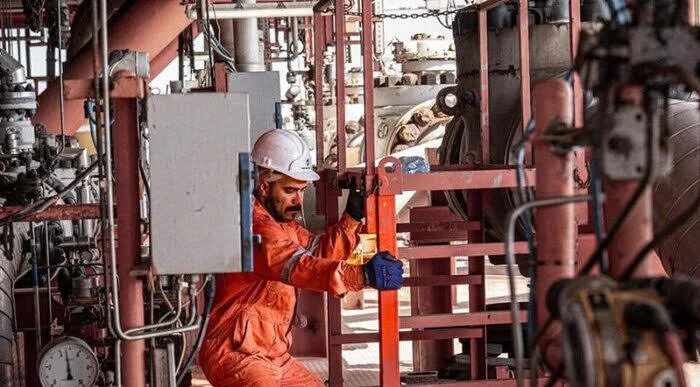
South Pars to be prepared before cold season
TEHRAN- Simultaneously with the continued production on South Pars platforms, reconstruction operations at the damaged refineries are underway with accelerated speed, aimed at restoring lost capacity and preparing the country's gas network for the cold season.
According to IRNA, damage to part of the South Pars refinery facilities during the recent attacks by the United States and the Zionist regime on our country's soil removed a portion of gas production capacity from the circuit. This issue, along with the existing imbalance in the gas sector, has doubled the necessity of quickly restoring the lost capacities. According to Mohammad Jafar Qaempanah, the Executive Deputy of the President, enemy attacks on oil industry infrastructure during the third imposed war removed 230 million cubic meters from the country's gas production capacity. According to the planning, efforts by oil industry specialists are expected to restore 100 million cubic meters of this capacity to the production cycle in the coming months.
Mohsen Paknejad, the Minister of Oil, also emphasized the necessity of compensating for the lost capacity and announced that all efforts will be employed to restore the major part of the limitations created in gas production before the start of the cold season.
Accordingly, the Ministry of Oil's goal is not merely the physical reconstruction of facilities, but the restoration of production capacity in the shortest possible time. To this end, the National Iranian Oil Company, the National Iranian Gas Company, Pars Oil and Gas Company, contractors, and domestic manufacturers in various sectors of engineering, equipment supply, execution, and commissioning are involved in this process.
Hamid Bovard, the Managing Director of the National Iranian Oil Company, also emphasized during his recent visit to the damaged South Pars refineries the necessity of accelerating reconstruction operations and returning these refineries to full operation to ensure the continued sustainable production of the country's gas.
The CEO of Pars Oil and Gas Company, explaining the latest status of reconstruction operations, announced that after the attacks, all technical, engineering, and executive capacities were mobilized for debris removal, securing the site, damage assessment, and initiating reconstruction in the shortest possible time.
Touraj Dehghani reported the return of three trains of the Phase 14 refinery to the production cycle within 10 days and stated that the safe debris removal operations for the 3rd and 5th refineries were also completed in less than two months.
According to him, the revival of the last sweetening train of the Phase 14 refinery is also proceeding according to schedule, and the defined executive activities at the damaged refineries are being pursued with compliance to technical, engineering, and safety requirements.
Alongside the National Iranian Oil Company and Pars Oil and Gas Company, the National Iranian Gas Company has, for the first time, taken responsibility for the reconstruction of two damaged gas refineries.
Saeed Tavakoli, the CEO of the National Iranian Gas Company, reported serious follow-up on reconstruction programs and the commissioning of damaged units within the scheduled time.
Additionally, a special supervisory working group for the reconstruction projects of damaged refineries has been formed with the presence of senior managers and officials of the gas industry. Establishing coordination among executive sectors, removing obstacles, providing the groundwork for early commissioning of operational units, and swiftly conveying executive challenges have been cited as the most important tasks of this group.
Moghaddam Biglarian, the head of this working group, referring to the approaching cold season, stated that implementing early production plans at the damaged refineries is among the main priorities of the gas industry.
According to him, the gas tension caused by the attacks affected 11 provinces of the country and more than three million household and commercial subscribers. Therefore, executive bodies have been tasked with eliminating existing obstacles and following up the project implementation process with maximum speed and precision, in full coordination.
Continuing the process of reconstructing damaged facilities, the agreement for the reconstruction project of the South Pars Phase 4 and 5 refinery was signed between Pars Oil and Gas Company and a consortium of domestic contractors, and the project entered the implementation phase.
The CEO of Pars Oil and Gas Company, referring to the completion of debris removal and securing of the damaged refineries, appreciated the efforts of the contractors and specialists participating in these operations and stated that the reconstruction strategies and programs, after approval by the board of directors of the National Iranian Oil Company, have entered the implementation phase.
The recent visit of the CEO of the National Iranian Oil Company to Bushehr province and the Asaluyeh and Kangan regions presented a picture of the continued activity of the oil industry alongside reconstruction operations.
During this trip, the CEO of the National Iranian Oil Company visited the refineries of Phases 9 and 10, Phases 4 and 5, and Phase 14, and was briefed on the latest status of safety operations, debris removal, and reconstruction.
The Phase 14 refinery, which was damaged during the 12-day war, is now one of the main axes of reconstruction operations, and the reconstruction of one of its sweetening trains is being carried out relying on the technical and engineering capacities of the oil industry.
Reports presented during this visit show that alongside the reconstruction of damaged facilities, production on South Pars gas platforms, major platform overhauls, and development activities are also continuing.
Bord considered the continuation of these activities to be the result of coherent management and the efforts of oil industry employees, and emphasized that this industry, in critical conditions, has simultaneously been responsible for protecting national facilities and assets, as well as continuing production and ensuring the country's energy supply.
Given that the full compensation of the lost refinery capacity requires time, the readiness of South Pars production platforms to maintain sustainable production during the cold season has gained particular importance.
The technical, operational, and managerial capacities of the oil industry are now being employed to increase the reliability of facilities, reconstruct damaged capacities, and prepare offshore platforms for winter.
What is happening in South Pars is not merely the reconstruction of a few damaged facilities; a set of simultaneous operations for maintaining production, restoring refinery capacity, preparing offshore platforms, strengthening operational infrastructure, and implementing development projects is underway.
In the meantime, the experience of reconstructing the Phase 14 refinery and returning its three trains to the production cycle within 10 days, the completion of debris removal and securing of the 3rd and 5th refineries, and the commencement of the reconstruction operations for the Phase 4 and 5 refinery are part of a process aimed at reducing the time for returning production capacity and preparing the country's gas network for the cold season.
Now, relying on the capabilities of its specialists, contractors, and domestic manufacturers, and by mobilizing its technical and managerial capacities, the oil industry is simultaneously pursuing three missions: maintaining production, reconstructing damaged facilities, and preparing for winter—missions whose outcomes could play a significant role in ensuring the stability of the country's energy supply in the coming months.
MA