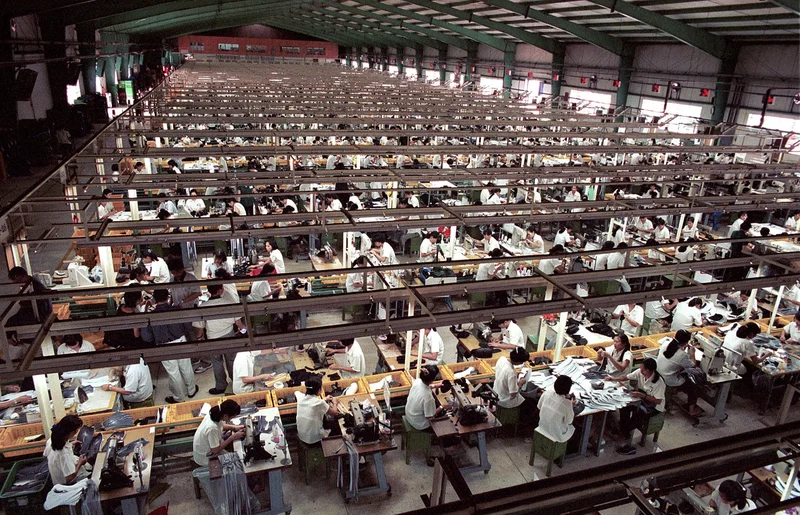
South African Clothing Factories Lose Workers as Migrant Exodus Hits Newcastle
South Africa · ECONOMY
What triggered the migrant worker exodus
For months, anti-immigrant marches and intimidation campaigns swept through parts of South Africa, channelling public anger over unemployment, crime and weak economic growth. The group March and March declared a June 30 deadline for undocumented migrants to leave the country, and thousands did.
The exodus was not confined to factories. Radio France Internationale reported that farms, households and other employers across South Africa also lost workers, making the departure a broad economic event rather than a single-sector disruption.
An Agence France-Presse tally cited by RFI put the total number of people who left at more than 160,000, based on African-government repatriation figures. South African authorities processed around 67,000 migrants for deportation or voluntary repatriation, according to Bloomberg and BizNews.
Newcastle's clothing lines feel the strain
Newcastle, a textile hub in KwaZulu-Natal, became the visible face of the labour shock. Three factory owners told Reuters they lost between 12 and 19 percent of their workforce, leaving large gaps on sewing lines and threatening production schedules.
The Southern African Clothing and Textile Workers' Union estimated that about 15 percent of Newcastle's 15,000 textile workers left. Factory owners warned Reuters that continuing losses could trigger closures if orders cannot be fulfilled.
Employers told Africanews that departing workers possessed specialised sewing skills that are hard to replace quickly. The union countered that the real problem is low wages, high commuting costs and poor working conditions, arguing that better pay would attract more South African jobseekers.
Why South African factories depend on migrant labour
South Africa's clothing, agriculture, construction, logistics and domestic-work sectors have long relied on workers from Zimbabwe, Malawi, Mozambique, Lesotho and Nigeria. Migrants often accept lower pay and longer hours than locals, giving employers a cost advantage in competitive global supply chains.
The arrangement also creates a bargaining-power imbalance. Migrant workers are frequently more vulnerable to exploitation, and some employers depend on that vulnerability to hold down labour costs, a dynamic unions have criticised for years.
The immediate economic risk is clear: lost labour can mean missed retail orders, lower production and possible factory closures. For a sector already under pressure from cheap imports and sluggish domestic demand, the timing is punishing.
The regional economic read-through
South Africa has long been a regional labour magnet, and the exodus is a shock that travels beyond its borders. Research from the OECD and the ILO shows immigrant workers contribute between 8.9 and 9.1 percent of South Africa's gross domestic product and can raise GDP per capita by up to 5 percent.
Migrant earnings in South Africa support households in neighbouring states through remittances. A sudden drop in those flows can weaken labour-sending economies such as Zimbabwe and Malawi, turning a domestic political crisis into a regional economic one.
This interdependence sits inside a larger contest over who supplies labour, who controls borders and who captures value in African supply chains, a theme explored in Africa: The New Scramble. South Africa's factories are caught between the need for low-wage competitiveness and a political backlash that makes that model harder to sustain.
Pretoria tightens the rules
The government is moving toward tighter control of labour migration. Daily Maverick reported that Cabinet approved a White Paper on National Labour Migrant Policy on 29 May 2025, a document that proposes sector-specific quotas for foreign workers.
The policy would also require employers to prove that no suitably qualified South African is available before hiring a foreign worker. If enacted, this would reshape hiring practices across industries that have grown accustomed to a deep pool of migrant labour.
The challenge for Pretoria is enforcement without deepening labour shortages, alienating neighbours or provoking further xenophobic violence. It is a test of state capacity at a moment when unemployment sits at 32.9 percent and public patience is thin.
What to watch next
Factory owners in Newcastle are watching order books closely. If the labour gap widens, some may shift production elsewhere or close lines entirely, with consequences for a town where textiles are a major employer.
The union push for higher wages and better conditions will intensify, testing whether employers can raise pay without losing the cost edge that keeps them competitive. The White Paper's progress through policy channels will signal how far the state is willing to go in restricting migrant hiring.
For neighbouring countries, the remittance channel is the one to monitor. A sustained drop in South African earnings for Zimbabwean and Malawian workers would transmit the shock across borders, adding economic pressure to governments already facing their own fiscal constraints.
Frequently Asked Questions
How many workers did Newcastle factories lose in the migrant exodus?
Three factory owners told Reuters they lost between 12 and 19 percent of their workforce, while the textile union estimated about 15 percent of Newcastle's 15,000 textile workers left.
What triggered the migrant worker exodus from South Africa?
Months of anti-immigrant protests and intimidation, culminating in a June 30 deadline declared by the group March and March for undocumented migrants to leave, triggered the exodus.
How much do immigrant workers contribute to South Africa's economy?
OECD and ILO research shows immigrant workers contribute between 8.9 and 9.1 percent of South Africa's gross domestic product and can raise GDP per capita by up to 5 percent.
Sources
This article was produced by The Rio Times’ automated newsroom system. How we use AI · Report an error
LatAm Markets: Live Signals → — real-time movers, turnover leaders and FX across Latin America.