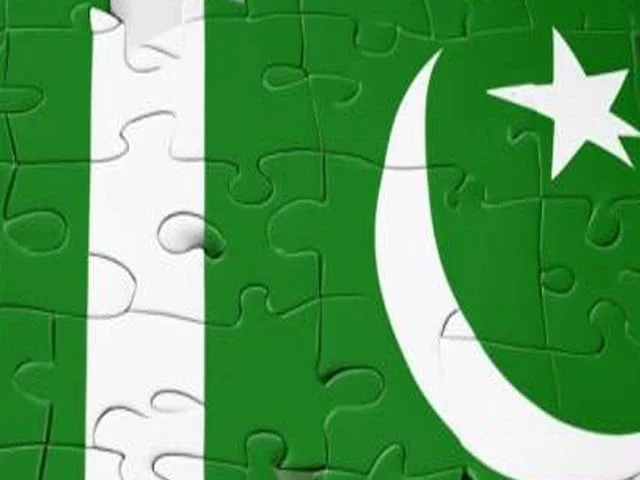
Pakistan's internal governance crisis
Devolution, stronger institutions and border trade key to sustainable prosperity
ISLAMABAD:
Pakistan's recent diplomatic successes and improving macroeconomic stability have been overshadowed by an important national debate on internal system failure initiated by a senior cabinet member. The discussion has been wide-ranging, focusing primarily on Pakistan's highly centralised system of governance.
Many believe that decision-making remains concentrated in Islamabad and the provincial capitals, leaving citizens in distant regions with little influence over decisions that directly affect their daily lives. There is also widespread concern about the deteriorating law and order situation, particularly in Balochistan and Khyber-Pakhtunkhwa (K-P).
As far as centralised decision-making is concerned, there is now broad agreement among governance experts that meaningful devolution is no longer optional; it is essential. Successive studies by international institutions, including the World Bank, have consistently shown that stronger local governments improve service delivery, strengthen accountability and promote more inclusive economic growth. Countries that have successfully decentralised governance generally achieve better outcomes because decisions are taken closer to the people they affect.
Pakistan's Constitution envisages elected local governments, yet in practice they remain the weakest tier of government. Schools, hospitals, municipal services and local infrastructure continue to suffer because decisions are made far from the communities they are intended to serve. Local governments are frequently dissolved or delayed because they are viewed as politically inconvenient. Completing the unfinished agenda of devolution should therefore become a national priority rather than remain a constitutional formality.
Some observers go further by advocating the creation of smaller provinces. They point out that India has repeatedly reorganised its administrative boundaries since independence, creating new states where governance required it. Smaller administrative units, they argue, could improve public administration and bring government closer to citizens. While this deserves careful national debate, strengthening local governments and completing the unfinished implementation of the 18th Constitutional Amendment represent more achievable and immediately beneficial reforms.
Governance failures are even more visible in Balochistan and K-P, where persistent security challenges continue to threaten national stability. More than a decade after the launch of the National Action Plan, the security situation remains fragile. Although military operations have achieved important tactical successes, implementation of the broader strategy has remained incomplete.
Over time, the National Action Plan evolved into a predominantly security-focused framework. Local governments, civilian institutions and local communities have played only a limited role. Economic development, institutional reform, education and community participation have received far less attention than they deserve. Lasting peace cannot be secured through security operations alone. It requires effective institutions, economic opportunity and public trust.
For generations, communities in Balochistan and K-P have depended on cross-border trade for their livelihoods. Today, however, much of that trade has effectively come to a halt. Even when permitted, traders face numerous checkpoints, overlapping regulatory agencies, cumbersome procedures and weak infrastructure. Several Joint Border Markets have been announced over the years, yet most remain little more than signboards without meaningful commercial activity.
The 10-month closure of trade with Afghanistan and Central Asia has imposed enormous economic costs, particularly on traders, transport operators, customs agents, labourers and businesses in Pakistan's border regions. Afghanistan is far more than a transit country. It has long been one of Pakistan's most important export markets, particularly for higher value-added manufactured goods.
Geographic proximity, low transport costs, longstanding commercial ties and Pakistan's competitiveness in consumer goods, pharmaceuticals and construction materials have made Afghanistan a natural export destination. The cumulative losses from prolonged trade disruption have run into billions of dollars.
History repeatedly demonstrates that trade promotes peace while economic isolation often fuels instability. The old observation that "when goods do not cross borders, soldiers eventually will" remains as relevant today as ever. Pakistan's own experience points to the same conclusion. Regions denied economic opportunity become increasingly alienated, making political reconciliation far more difficult.
Pakistan therefore needs a broader strategy that combines governance reform with economic integration. Genuine devolution to elected local governments would strengthen public services and democratic accountability. Joint Border Markets should finally become operational instead of remaining perpetual announcements. The National Action Plan should also be implemented in a more balanced manner, placing equal emphasis on governance reform, economic development and community participation alongside security.
Pakistan has demonstrated that it can earn international respect through constructive diplomacy. The greater challenge now lies at home. Sustainable prosperity will depend not only on diplomatic success, but on building stronger institutions, empowering local governments, restoring economic opportunity in border regions and creating a governance system that serves all citizens rather than a privileged few.
Pakistan has regained international attention. The next challenge is to ensure that its domestic institutions are worthy of that renewed confidence. Only then can recent diplomatic achievements become the foundation for lasting economic growth and political stability.
THE WRITER IS A TRADE ARBITRATOR AND FORMER AMBASSADOR AND PERMANENT REPRESENTATIVE OF PAKISTAN TO THE WTO