God provides the raw materials, but man must build the structure. God gives the seed, but man must till the ground, sow the seed, protect the field from pests, and harvest the crop. Passivity is an insult to the grace of God, because true grace does not make a man lazy; it empowers him to labour more abundantly (1 Corinthians 15:10).
Examples of Believers taking Responsibility in their Professional Fields
To understand how supernatural rest applies to our contemporary lives, we must look at how the principle of responsibility manifests within specific professional fields. The workplace is not separate from our spiritual walk; it is the ultimate arena where our spiritual authority is tested and demonstrated.
Here are six profiles of believers across various sectors who took strategic, faith-driven responsibility and triggered their professional and personal rest.
| | |
|---|
- Healthcare: Luke, the Beloved Physician (Structural Excellence)
Luke was a highly educated medical practitioner in the ancient Greco-Roman world. When he became a believer, he did not abandon his analytical mind; instead, he sanctified it for the service of the Kingdom. Luke took the responsibility of conducting meticulous, historical investigations to document the life of Jesus and the movements of the early church.
In a professional landscape often driven by commercial gain and pagan superstition, Luke brought a standard of clinical accuracy and spiritual depth. He travelled extensively with Paul, providing medical support during demanding missionary journeys. By taking responsibility for documenting the gospel narrative with medical precision (as seen in his descriptions of hematidrosis, Jesus sweating blood, and various healings), Luke brought a sense of intellectual and theological rest to the early church. His work provided an unshakeable defense of the faith, ensuring that believers could rest secure in the historical certainty of the things they had been taught.
- Law and Governance: Daniel in Babylon (Ethical Integrity)
Daniel operated at the absolute pinnacle of civil service and legal administration across multiple world empires (Babylonian and Medo-Persian). The professional environment of Babylon was notorious for corrupt conspiracies, bureaucratic backstabbing, and political occultism. Daniel could have easily compromised to survive. Instead, he took absolute responsibility for his spiritual discipline and professional competence.
He refused to defile himself with the king’s rich food, committed to a lifestyle of prayer three times a day, and maintained an unblemished standard of professional excellence. The scriptures record that his detractors searched for any flaw or corruption in his administration but found none, because he was faithful and errortless (Daniel 6:4). When he was thrown into the lions’ den for his uncompromising stance, God shut the mouths of the lions. Daniel’s refusal to bend triggered a massive systemic shift: the king issued a decree commanding the entire empire to fear the God of Daniel. Daniel entered into a profound era of administrative rest, prospering through the reigns of Darius and Cyrus.
- Education and Social Reform: Ezra the Scribe (Sacrificial Investment)
Ezra was a professional academic, lawyer, and educator living in exile. When the opportunity arose to return to Jerusalem, he recognised that a nation cannot be rebuilt without an educational and moral foundation. Ezra took the responsibility to study, practice, and teach the laws of God to a generation that had lost its cultural identity (Ezra 7:10).
The educational system of his day was fragmented, and the people were slipping into spiritual illiteracy. Ezra did not wait for the government to fund religious schools; he organised massive public literacy campaigns, reconstructed the sacred texts, and stood on wooden platforms for hours explaining the scriptures to the populace. His commitment to educational reform broke the back of generational ignorance. By restoring intellectual clarity and moral order, Ezra brought an institutional rest to Israel, stabilising the society and preserving their heritage for generations to come.
- Corporate Leadership and Economics: Joseph in Egypt (Prophetic Insight)
Joseph’s corporate promotion from a prison cell to the position of Chief Operating Officer of Egypt is an extraordinary study in economic responsibility. When presented with Pharaoh’s dream concerning an impending global depression, Joseph did not merely provide an abstract spiritual interpretation. He immediately presented a comprehensive fiscal and agricultural strategy.
He took responsibility for the survival of the entire civilised world by designing a national grain storage network, implementing a 20 per cent tax model during the years of abundance, and managing the distribution supply chain during the famine. Joseph worked tirelessly during the seven years of plenty to ensure the infrastructure was sound. Because he took strategic responsibility, Egypt became the economic capital of the world during the crisis. Joseph didn’t just survive the famine; he controlled the wealth of nations, bringing an unprecedented season of financial security and rest to his employer (Pharaoh) and his biological family.
- Technology, Engineering, and Architecture: Nehemiah (Uncompromising Standards)
Nehemiah was a high-ranking corporate executive (cupbearer to the king) who transitioned into the role of a structural engineer and project manager. When he heard that the walls of Jerusalem were broken down and the gates burnt with fire, he understood that the city’s lack of physical security meant its inhabitants lived in constant vulnerability and unrest. He took personal responsibility for the civil engineering project.
Nehemiah secured the political permits, raised the capital, organised the labour force into specialised teams, and managed an intense 52-day construction timeline. When external adversaries threatened military intervention, Nehemiah did not tell the workers to drop their tools and start a round-the-clock prayer meeting. Instead, he implemented a dual-strategy framework: every builder worked with a trowel in one hand and a sword in the other. He blended high-level security protocols with architectural efficiency. By executing this project with precise tactical responsibility, the wall was completed, the enemies were demoralised, and the citizens of Jerusalem finally experienced safety and civic rest.
- Arts, Media, and Entertainment: David the Psalmist (Purified Conviction)
David was a brilliant musical artist, poet, and cultural influencer long before he ascended the throne of Israel. In his youth, the creative arts were often weaponised for pagan worship or shallow entertainment. David took responsibility for his artistic gift by anchoring it in deep spiritual intimacy. He spent years in the wilderness perfecting his skill on the harp and composing songs that captured the character of God.
When King Saul was tormented by a distressing spirit, David was summoned to court because of his reputation for musical excellence and spiritual authority. David did not treat his art as an empty performance; he understood it as a spiritual weapon. As he played, the demonic atmosphere dissipated, Saul was refreshed, and peace filled the palace. By taking responsibility for his creative output, David brought psychological and spiritual rest to a tormented leader, establishing a standard for using music as a vehicle for divine restoration.
Expanding the Teaching on Supernatural Rest
To fully grasp the depth of this doctrine, we must explore the dual dynamics of rest: the tragic consequences of passivity and the transformative power of proactive alignment.
The Illusion of Passivity: The Danger of Misunderstanding Grace
Many well-meaning believers fall into a spiritual trap that can be termed entitlement theology. This is the erroneous belief that because Jesus paid for our peace, health, and prosperity, the believer has no further role to play in their manifestation. This misunderstanding of grace breeds passivity, turning vibrant children of God into professional beggars who wait for sovereign interventions to fix situations that require practical action.
When you look at the architecture of the tabernacle of Moses, the operating model of the priesthood, and the parables of Jesus, you discover that the kingdom of God does not reward laziness. As found in Matthew 25, the servant who hid his talent in the earth, claiming he was waiting for the master’s return, was not comforted; he was cast into outer darkness as a “wicked and slothful servant.”
God provides the raw materials, but man must build the structure. God gives the seed, but man must till the ground, sow the seed, protect the field from pests, and harvest the crop. Passivity is an insult to the grace of God, because true grace does not make a man lazy; it empowers him to labour more abundantly (1 Corinthians 15:10).
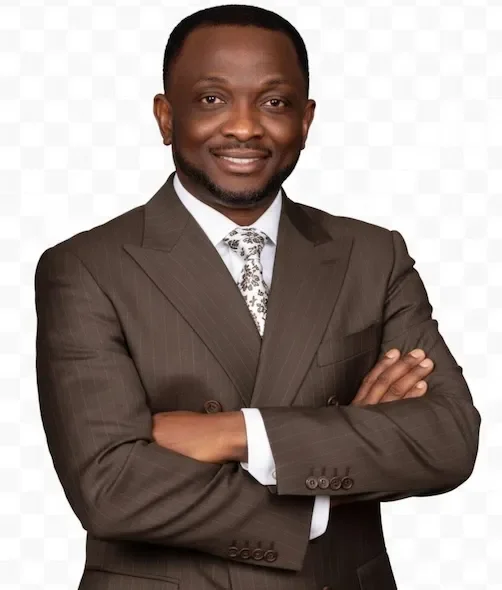
Ayo Akerele is the senior pastor of Rhema Assembly and the founder of the Voice of the Watchmen Ministries in Ontario, Canada. He can be reached through [email protected]. You can connect with him on: YouTube: @VoiceoftheWatchmen, TikTok: @drayoakerele, Instagram: @drayoakerele, Facebook: @Ayo Akerele