Your support helps us to tell the story
From reproductive rights to climate change to Big Tech, The Independent is on the ground when the story is developing. Whether it's investigating the financials of Elon Musk's pro-Trump PAC or producing our latest documentary, 'The A Word', which shines a light on the American women fighting for reproductive rights, we know how important it is to parse out the facts from the messaging.
At such a critical moment in US history, we need reporters on the ground. Your donation allows us to keep sending journalists to speak to both sides of the story.
The Independent is trusted by Americans across the entire political spectrum. And unlike many other quality news outlets, we choose not to lock Americans out of our reporting and analysis with paywalls. We believe quality journalism should be available to everyone, paid for by those who can afford it.
Your support makes all the difference.
Read more
The House of Representatives has approved a defense policy bill that includes President Donald Trump's request for a substantial $1.15 trillion in national security spending and proposes renaming the Department of Defense to the Department of War.
The legislation, which also mandates a 5 percent to 7 percent pay increase for service members next year based on rank, marks a significant departure from the typically bipartisan nature of the annual National Defense Authorization Act.
The vote, a narrow 216-212, underscored deep divisions, with Democrats voicing strong opposition. Their concerns centered on the considerable spending hike for the Pentagon, particularly as Republicans simultaneously sought to cut numerous non-defense programs through other legislative efforts.
Democrats also objected to the inclusion of certain conservative social policy provisions within the bill.
Democrats also objected to the inclusion of certain conservative social policy provisions within the bill (AP Photo/J. Scott Applewhite)
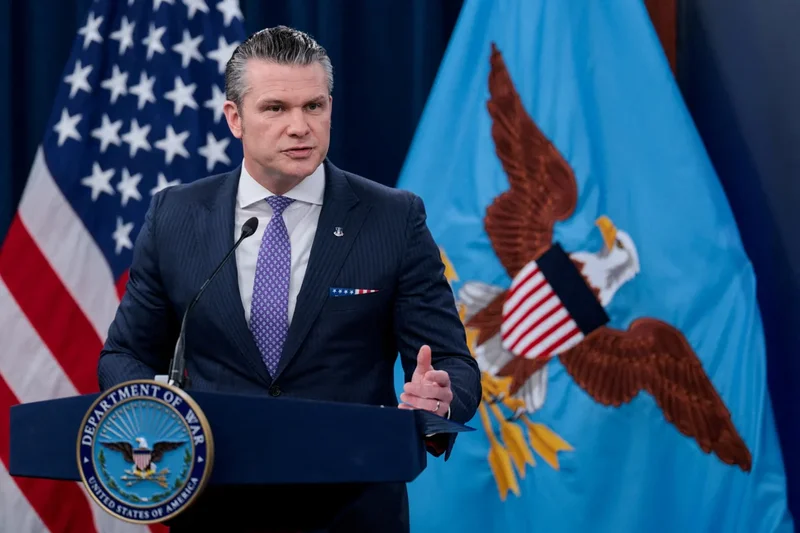
For example, the bill includes a prohibition on gender-related medical care under the military health program known as TRICARE. It also eases hurdles for service members to carry a privately owned firearm on base, following Defense Secretary Pete Hegseth's lead on the issue.
Republican leaders' decision to attach Trump's elections overhaul bill to the defense bill upon its passing also amplified the partisan divide. Speaker Mike Johnson is working to accommodate Republican lawmakers who are angry that the Senate won't pass the SAVE America Act and are insisting that it be included in must-pass bills until the Senate relents.
The House bill is testing a normally bipartisan process
Rep. Mike Rogers, the Republican chairman of the House Armed Services Committee, emphasized that he knows there were areas of disagreement, but he emphasized that Wednesday's vote was a step in a long process. He promised to work in a bipartisan manner on a final product that can pass both chambers and be signed into law.
Rogers said the United States needs to reverse decades of underinvestment and neglect in the nation's armed forces and defense industrial base.
“This bill will do that and much more,” he said. “It will build the ready, capable and lethal fighting force we need to deter China and other adversaries.”
Rep. Adam Smith, the ranking Democratic lawmaker on the Armed Services Committee, said the defense spending the administration has asked for this year is approaching $1.6 trillion when including separate efforts to pay for the war in Iran and boost weapons stockpiles.
“The American people are struggling to pay their bills and we're going to put $1.6 trillion into the defense budget. It's not a reasonable thing to ask,” Smith said.
Smith also expressed concern about the war with Iran and that in supporting the defense bill, lawmakers are “de facto supporting this war with no end in sight.”
“We are in an incredibly, incredibly dangerous time,” Smith said. “I want to maintain the bipartisan nature of this bill. I do. And I know that the chairman does. But if we're going to do this, we're going to need some Republicans to stand up to the president of the United States and say, ‘No. No, we’re not going to get you $1.6 trillion. No, we're not just going to give you a blank check for a war that is totally out of control."
The White House backs parts of the legislation
The spending increases authorized in the bill would not take effect until Congress follows up with a separate defense appropriations bill. The Senate has not yet approved its version of the defense measure. It's possible a final product won't be ready until after the midterm elections.
The White House applauded the spending levels authorized in the House bill and the Department of War designation that it says recognizes the “willingness to fight and win wars on behalf of our nation.”
The president issued an executive order last year renaming the Defense Department, but it's up to Congress to make the change official. The Congressional Budget Office has projected that the renaming could cost taxpayers as much as $125 million.
The White House's statement also said that the administration has a number of concerns with certain provisions in the bill and would work with Congress before a final bill is presented to the president. Among those concerns was a section of the bill it said would limit or undermine the president's ability to name military installations and property.
In 2023, during a national reckoning on issues of race in America, seven Army bases’ names were changed because they honored Confederate leaders. Last year, those bases reverted to their original names, but with different namesakes who share Confederate surnames. The Army found other service members with the same last names to honor.