Your support helps us to tell the story
From reproductive rights to climate change to Big Tech, The Independent is on the ground when the story is developing. Whether it's investigating the financials of Elon Musk's pro-Trump PAC or producing our latest documentary, 'The A Word', which shines a light on the American women fighting for reproductive rights, we know how important it is to parse out the facts from the messaging.
At such a critical moment in US history, we need reporters on the ground. Your donation allows us to keep sending journalists to speak to both sides of the story.
The Independent is trusted by Americans across the entire political spectrum. And unlike many other quality news outlets, we choose not to lock Americans out of our reporting and analysis with paywalls. We believe quality journalism should be available to everyone, paid for by those who can afford it.
Your support makes all the difference.
Read more
Taking GLP-1 weight loss drugs is helping to reduce sick leave by more than 17 percent, a new paper shows, leading to saved costs for employees and employers alike
Medications like Ozempic and Wegovy were tied to a 17.3 percent reduction in long-term sick leave over 30 days for workers in Denmark, international researchers said.
That led to savings of up to 1.5 percent of an employee’s salary, or $866 on average, the analysis of Danish administrative data showed.
While sick leave policy differs between Denmark and the U.S., these findings could have positive implications internationally, the authors told CBS News on Tuesday.
"In the U.S., which doesn't have the generous sick leave policy of Denmark, people get sick and they go to work. They're less productive because they feel crappy," Jonathan Zhang, one of the study's co-authors and a professor at Duke University, explained.
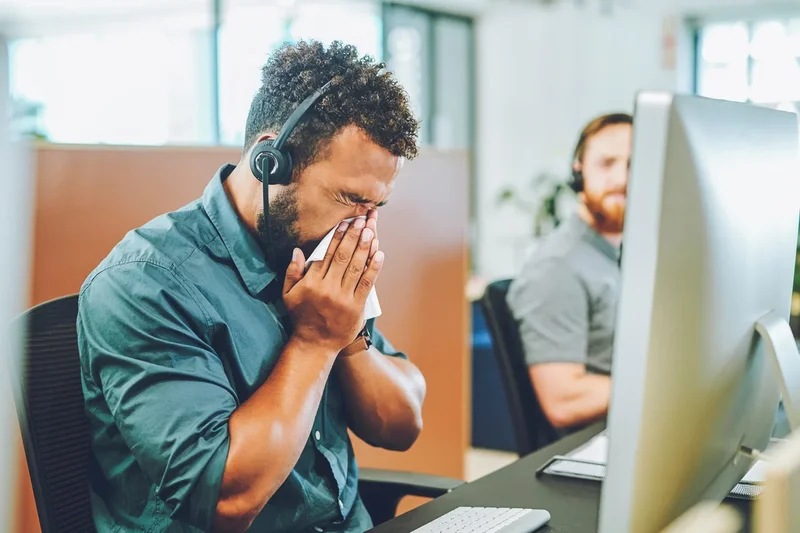
Taking popular weight loss drugs like Ozempic and Wegovy is helping employees in Denmark to reduce time spent on sick leave, a new paper shows. That could have similar effects in the U.S. (Getty Images/iStock)
In the U.S., there are no federal legal requirements for paid sick leave for private employers, according to the U.S. Department of Labor.
But there are mandatory paid sick leave laws in 18 states and the District of Columbia.
Comparatively, Danish employers pay for short-term sick leave and the government pays for long-term sick leave, CBS noted.
That means cost savings for long-term leave would go to the government.
"There are fiscal benefits, but that doesn't look like savings for the patient or the individual, because sick leave benefits are so generous," Zhang said.
The number of Americans taking GLP-1 medications is up to record levels (Getty Images/iStock)
Zhang also suggested that the drugs could be helpful to limit time when employers are working but not able to perform their best due to health issues.
Companies could become more productive when workers feel better. In turn, workers could perform better and potentially earn accolades at work.
It remains unclear if these impacts are already being seen at home, but past research has identified similar outcomes in Sweden and a U.K. study of patients taking the drugs for nine months found sickness days fell by nearly half.
More Americans than ever are taking GLP-1s, which have been shown to help reduce the risk of cardiovascular events, developing cancer and dementia and dying prematurely.
Some 15 percent of 5,065 adults surveyed said they had taken the drugs at some point and 11 percent said they were currently on a drug.
That’s up from 3 percent from those who said they were taking an obesity drug in 2024.