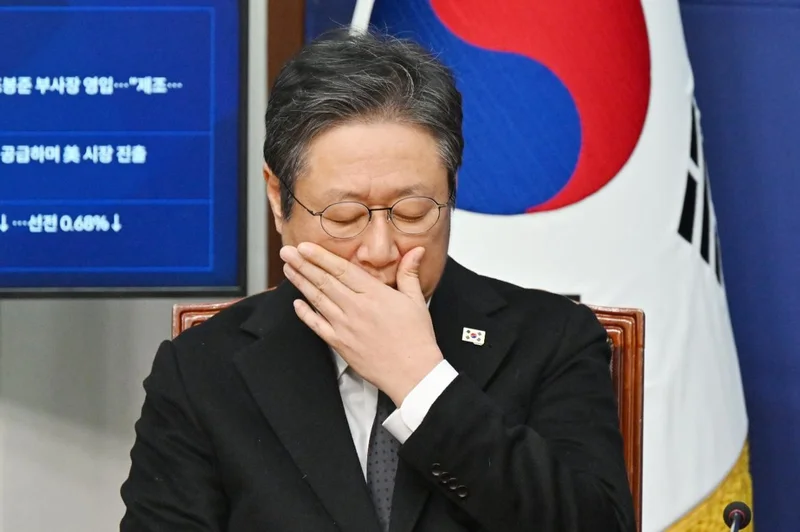
Rep. Hwang Hee of the ruling Democratic Party of Korea (DPK) sparked controversy recently with his ill-timed proposal to turn disused old buses into temporary housing for university students. His so-called “bus house” idea was quickly ridiculed by younger Koreans, many of whom saw it not as an innovative housing solution but as an insult to a generation struggling to find decent places to live.
The controversy started Friday with Hwang's post titled “A Proposal on Bus Houses” on social media. He suggested that the government recycle retired buses into temporary housing for students facing a shortage of affordable homes.
“The cost of remodeling a vehicle will be around 50 million won ($35,000). If 10,000 buses are renovated, the total cost will be only 500 billion won,” he wrote. Drawing inspiration from houseboats in Amsterdam, he said refurbished buses could provide a temporary solution to the acute housing difficulties confronting young people in Korea.
The proposal immediately drew criticism. Some young people accused Hwang of treating them like refugees rather than citizens entitled to decent housing.
Hwang’s proposal, considered on its own, is hardly outrageous. Legislators are free to float unconventional policy ideas, and recycling retired buses is consistent with the broader push toward sustainability.
But in politics, context and timing matter.
Hwang, a former culture minister under the Moon Jae-in administration, has considerable experience in policy planning and implementation. However, he has no particular expertise in housing and it is unclear why he chose to put forward such an unconventional proposal at a time when housing has become a sensitive topic in Korea.
The Lee Jae Myung administration is under growing criticism for a series of controversial measures involving housing and taxes on homeowners. The issue has been especially damaging among younger voters, who already face high housing costs, stagnant opportunities and an increasingly difficult path to homeownership.
Lee’s approval ratings have consequently declined. According to Gallup Korea, his job approval rating fell to 51 percent in a poll released July 24, down from 57 percent on June 12. His approval rating among people in their 30s plunged by 14 percentage points over the same period, while his rating among those in their 20s dropped by 8 percentage points.
Aware of the problem, Lee has been trying to rebuild support among younger voters. On Saturday, he identified 22 policy tasks that his administration would prioritize in an effort to win back their support. Housing for young people was among them, with Lee saying the government would consider easing housing regulations for newlywed couples.
Hwang’s bus proposal was particularly tone-deaf. At a time when the government is struggling to persuade young people that it understands their frustrations, Hwang offered them refurbished buses as an answer.
That is why the proposal became more than an eccentric policy suggestion, growing into a symbol of the growing disconnect between politicians and young people.
The DPK itself appears to have recognized the political damage. Rep. Han Jeoung-ae, chair of the party’s policy committee, apologized for troubling younger people with Hwang’s idea and stressed that it was not part of the party’s official housing policy.
The main opposition People Power Party (PPP) seized on the controversy, sarcastically suggesting that Hwang and his family should become the first residents. Rep. Park Choong-kwon, a PPP spokesperson, accused Hwang of irresponsibly attempting to transplant an idea from the Netherlands without considering Korea’s different circumstances.
The minor Progressive Party was equally scathing, saying young people deserve decent housing, not recycled buses that are no longer fit for service.
Under mounting criticism, Hwang deleted his social media post. He later emphasized that the proposal was his personal idea and had nothing to do with the ruling party’s housing policy. He explained that he was concerned about young people living in inadequate accommodations and had envisioned the refurbished buses as a temporary option until they could find better homes.
But good intentions do not automatically make good policy — and good policy ideas can become bad politics when they are introduced at the wrong time.
Young Koreans are not simply looking for somewhere to sleep. They want stable, affordable and decent homes. Offering them converted buses, however inexpensive or eco-friendly, risks sending precisely the wrong message by telling them that they should lower their standards rather than expect the government to tackle the structural causes of the housing crisis.
Hwang’s bus proposal may have been intended as a creative solution. Instead, it exposed a much bigger problem — the failure of politicians to understand how deeply the housing crisis has affected the dignity and aspirations of younger Koreans.
The idea was not necessarily absurd. The timing was.