South Korea and the United States will conduct their annual Ulchi Freedom Shield (UFS) exercise from Aug. 17 to 27, with this year’s drills reflecting evolving threats including drones, GPS disruption and cyberattacks, the allies said Monday.
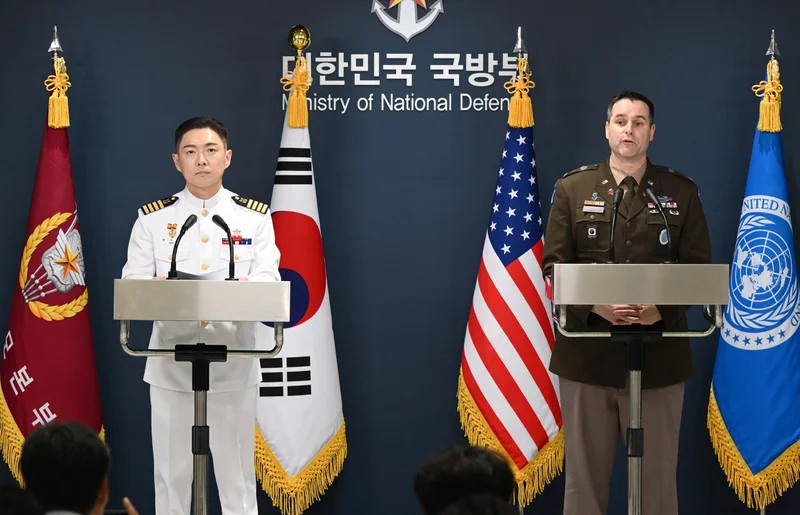
The Joint Chiefs of Staff (JCS) and the Korea-U.S. Combined Forces Command announced the schedule during a joint briefing in Seoul. The allies described UFS 26 as an annual exercise that is defensive in nature.
About 18,000 Korean troops will participate, roughly the same level as last year. The number of combined field training exercises at the battalion level or above, however, will be reduced to 14 from 17 in 2025.
A JCS official said the allies have been conducting combined field training throughout the year in a balanced manner to maintain and improve their combined defense posture. The exercises were closely coordinated from the planning stage and will focus on essential training linked to the UFS scenario.
This year’s exercise will also incorporate lessons from recent conflicts, including changes in warfare involving drones, GPS disruption and cyberattacks.
A UNC official said North Korean troops sent to fight in Ukraine have returned with battlefield experience that has affected Pyongyang’s military capabilities.
“DPRK soldiers have deployed and fought in Ukraine and they’ve taken those lessons they’ve learned there and brought them back to North Korea,” the official said. “That changes the DPR(K) capability and our training accounts for the threat.”
The DPRK is the Democratic People's Republic of Korea, the formal name for North Korea.
The exercise will also support preparations for the conditions-based transition of wartime operational control (OPCON). South Korean and U.S. forces will conduct a joint assessment of capabilities and systems based on mutually agreed criteria during UFS.
A JCS official said that if the agreed criteria are met, Korea expects to seek certification of the Future Combined Forces Command’s full operational capability and propose a timeline for OPCON transition at this year’s Security Consultative Meeting.
The U.S. side took a more cautious position, saying specific evaluations, capability milestones and certification discussions would be handled through established bilateral channels.
“I will not get ahead of those formal bilateral assessments or speculate on timelines,” a UNC official said.
About 70 personnel from 11 UNC member states will also participate in the exercise. The Neutral Nations Supervisory Commission will observe the exercise to monitor compliance with the Armistice Agreement.