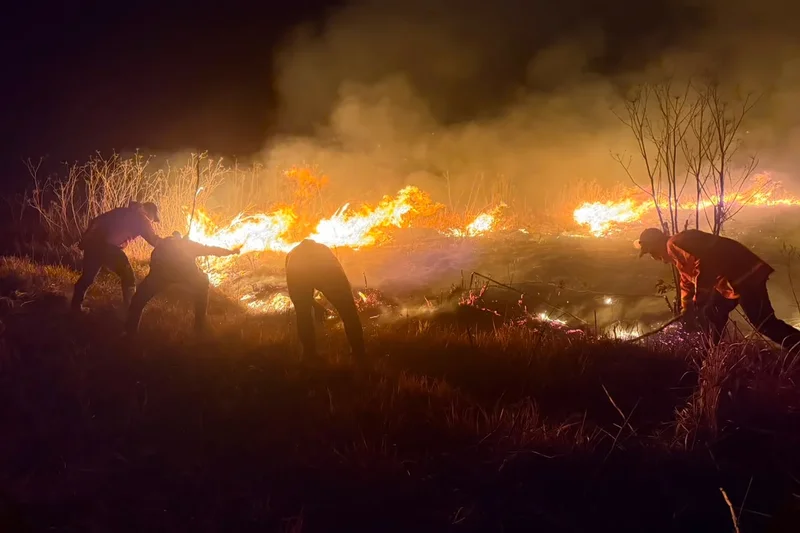
Indonesia on Monday escalated efforts to combat a surge of wildfires across the archipelago, deploying hundreds of firefighters and disaster personnel as well as helicopters.
Blazes, exacerbated by an unusually dry season, are ravaging a popular national park in East Java and peatlands in Sumatra.
The most extensive fire is consuming the Mount Bromo Tengger Semeru National Park in the province of East Java where more than 740 hectares lie scorched.
The forestry ministry said on Sunday that dry weather and intensifying El Nino conditions had heightened the risk of further forest and land fires during the peak dry season.
The ministry said large areas of dry grassland, vegetation and protected edelweiss flowers had been destroyed, with flames spreading to the Penanjakan area, a renowned viewpoint for tourists visiting Mount Bromo. No injuries or evacuations were reported.
Hundreds of firefighters, soldiers, police officers, park rangers, and volunteers were working tirelessly to contain the inferno and the park had been closed to visitors indefinitely. As of Monday, at least three helicopters were conducting water-bombing operations over inaccessible hotspots while ground crews were engaged in manual firefighting, cooling operations, patrols, and constructing firebreaks to prevent further spread.
Forestry minister Raja Juli Antoni, visiting the park on Sunday, urged the public to "avoid activities that could spark new blazes, including discarding cigarette butts and clearing land by burning”.
The Bromo blaze coincides with several significant wildfires across Indonesia. In Jambi province on Sumatra island, almost 50 hectares of peatland are burning, causing choking haze in some areas and raising concerns about deteriorating air quality. The largest fire in Jambi, burning since Wednesday, is at the village of Sungai Gelam, Muaro Jambi district, where dozens of hectares of oil palm plantations are already gone.
Some 300 firefighters and disaster personnel are battling the Sumatra blaze, but deep peat soil, limited water supplies, difficult access, and strong winds are complicating the efforts, despite three helicopters conducting aerial firefighting.
The Meteorological, Climatological and Geophysical Agency warns that August and September are expected to be the most critical months as dry vegetation and strong winds create ideal conditions for rapid fire spread.
Forest fires on Sumatra and Borneo islands frequently erupt during dry spells, often started illegally by plantation owners or traditional farmers clearing their land, periodically blanketing parts of Southeast Asia in hazardous haze.