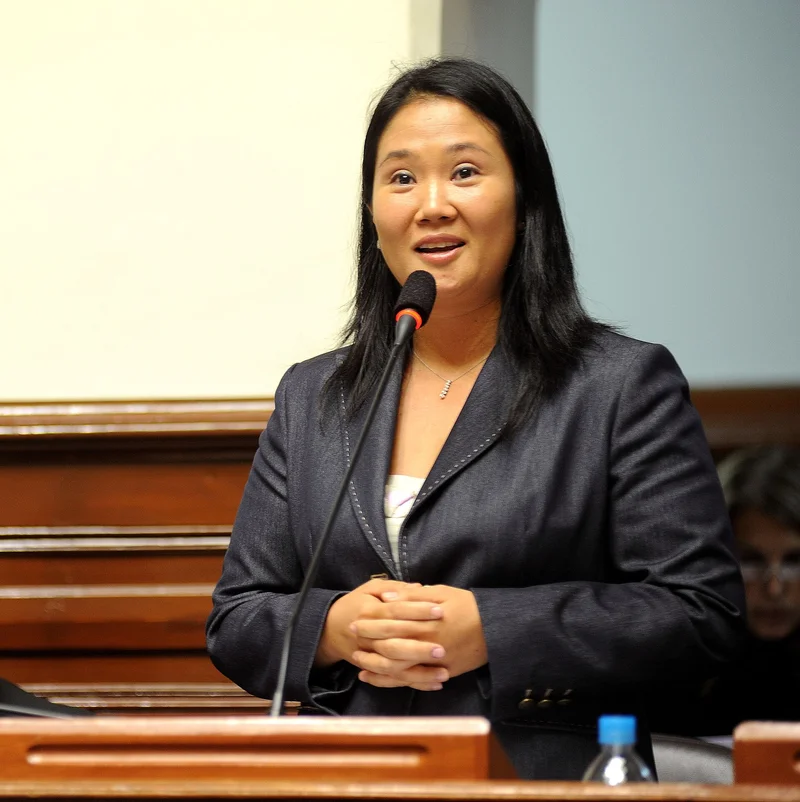
Keiko Fujimori Government Starts Strong: 60% Approval, Pro-Market Team
Peru · Politics
Key Facts
- Strong start— Keiko Fujimori begins her term with 60% approval, 24% disapproval, and 16% no opinion, according to a Datum Internacional survey published on 9 August 2026.
- Growth target— Finance Minister Elmer Cuba aims to lift Peru’s potential GDP growth floor to 4% during the term, with a stated priority on private investment and productivity.
- 2026 outlook— The MEF projects 3.2% growth this year, a figure Cuba revised to 3.5% on 9 August, citing El Niño conditions but still expecting stronger performance.
- Mining boom— Mining investment hit US$2.633 billion in the first five months of 2026, up 43.6% year on year, per MINEM. The MEF expects the total to exceed US$6.8 billion.
- Fiscal pushback— Cuba says the MEF will file constitutional challenges before the TC against laws from the 2021–2026 Congress that could affect the fiscal deficit.
- Team in place— Key appointments include PM Luis Galarreta, Foreign Minister Carlos Espá, and technical vice-ministers confirmed in early August.
Peru’s new president enjoys a strong start. Her finance minister signals a productivity-focused, market-friendly agenda.
If you are watching Peru from abroad, the first fortnight of the Keiko Fujimori government signals a clear shift: a strong mandate, a pro-market economic team, and a stated obsession with lifting productivity. The new administration is betting that private investment, especially in mining, will drive faster growth. For investors and expats, the early signs point to policy stability and a push to clear away obstacles to capital.
A Strong Mandate for the Keiko Fujimori Government
Keiko Fujimori has started her term with a solid public mandate. A Datum Internacional survey published on 9 August shows 60% approval, 24% disapproval, and 16% no opinion.
That is a powerful opening for a new leader. It gives the government political capital to push its economic agenda through Congress.
The approval ratings are notably higher than those of several recent presidents at similar points. It is a sign that voters are ready for a stable, business-friendly administration. Moreover, this early support provides the political breathing room needed to tackle contentious reforms, and it signals that the electorate is willing to give the new team the benefit of the doubt during the crucial first months of the term. The government intends to use this window to advance its legislative priorities while public confidence remains high, and the leadership is aware that sustaining this momentum will require delivering tangible results beyond the initial goodwill.
Elmer Cuba’s Productivity-First Finance Ministry
The key appointment is Finance Minister Elmer Cuba. He has framed the agenda as a “productivity obsession” aimed at lifting private investment and raising potential growth to 4%.
Cuba has also signalled a willingness to confront past legislation. He says the MEF will file constitutional challenges before the Constitutional Court against laws that could significantly affect the fiscal deficit.
That is a clear message to markets. The government is prepared to fight for fiscal discipline and remove legal hurdles to investment.
The team around him is technical and seasoned. Confirmed appointments include Prime Minister Luis Galarreta and Foreign Minister Carlos Espá.
Vice-ministers for Economy and Treasury, Fabrizio Orrego Peche and Erick Lahura, were confirmed on 3–4 August. These are experienced operators who understand the levers of the economy. Their combined expertise is expected to reinforce the ministry’s credibility and ensure that the government’s ambitious agenda is executed with precision. The selection of such a technocratic team, closely aligned with Cuba’s vision, underscores the administration’s commitment to data-driven policy and its determination to build trust with both domestic and international investors.
Mining Investment as the Engine
The early data on mining is impressive. Investment reached US$2.633 billion in the first five months of 2026, up 43.6% year on year, according to MINEM.
That figure is already on track to beat the MEF’s full-year forecast of US$6.8 billion, which implies 8% growth. The sector is clearly responding to a more predictable policy environment.
Arequipa is leading the charge with US$444 million in investment, equal to 16.8% of the national total. The pipeline is deep, with 35 copper projects representing an estimated US$45.402 billion in potential investment.
For foreign investors, this is the core of the story. Copper demand is strong, and Peru is positioning itself to capture more of that value chain. The combination of a stable regulatory framework and high commodity prices is creating a favourable window for accelerated project development. Moreover, the government’s active promotion of mining as a pillar of national growth is attracting attention from global funds, and the visible results in the first months provide concrete evidence that the policy environment has indeed shifted. These developments are not merely statistical achievements; they signify a structural transformation in how Peru approaches its natural resources.
What This Means for the Sol and Living Costs
A pro-investment agenda usually supports the currency. The sol has room to strengthen if the government delivers on its reform promises.
For expats and nomads, a firmer sol means your dollars or euros buy slightly less over time. But it also signals a healthier economy, which is better for long-term stability.
The fiscal challenges are real. Cuba’s plan to challenge spending laws is a direct attempt to protect the deficit from the previous Congress’s largesse.
If the TC rules in the government’s favour, it will boost confidence in Peru’s institutional framework. If not, the fiscal path gets harder. Even in the favourable scenario, the government will need to balance its ambitious spending plans with the need to maintain market confidence. In either case, the sol’s trajectory will hinge on the perceived credibility of the administration’s economic management. For local residents, the immediate practical effect may be limited, but the medium-term outlook depends on how these legal and fiscal battles unfold in the coming months.
Frequently Asked Questions
What is the approval rating for the Keiko Fujimori government?
A Datum Internacional survey published on 9 August 2026 shows 60% approval, 24% disapproval, and 16% no opinion.
Who is Peru’s new finance minister and what is his plan?
Elmer Cuba is the finance minister. He plans to lift private investment and raise potential GDP growth to 4% through a ’productivity obsession’ and targeted reforms.
How is the government handling fiscal challenges?
Cuba says the MEF will file constitutional challenges at the Constitutional Court against laws from the 2021–2026 Congress that could significantly affect the fiscal deficit.
What is the outlook for mining investment in Peru?
Mining investment hit US$2.633 billion in the first five months of 2026, up 43.6%. The MEF expects it to exceed US$6.8 billion for the full year, with Arequipa leading activity.
Connected Coverage
Sources: Datum Internacional approval poll; Office of the President of Peru; Ministry of Economy and Finance (MEF); El Comercio; Reuters
This article was produced by The Rio Times’ automated newsroom system. How we use AI · Report an error