Your support helps us to tell the story
From reproductive rights to climate change to Big Tech, The Independent is on the ground when the story is developing. Whether it's investigating the financials of Elon Musk's pro-Trump PAC or producing our latest documentary, 'The A Word', which shines a light on the American women fighting for reproductive rights, we know how important it is to parse out the facts from the messaging.
At such a critical moment in US history, we need reporters on the ground. Your donation allows us to keep sending journalists to speak to both sides of the story.
The Independent is trusted by Americans across the entire political spectrum. And unlike many other quality news outlets, we choose not to lock Americans out of our reporting and analysis with paywalls. We believe quality journalism should be available to everyone, paid for by those who can afford it.
Your support makes all the difference.
Read more
UK Government borrowing fell by a third last month, a bigger decline than forecasters were expecting and delivering some early relief to John Healey on his first day as Chancellor, official figures show.
The Office for National Statistics (ONS) said public sector net borrowing was £16 billion in June, which was 33.1% less than the same month last year.
It means the figure came in £300 million below the Office for Budget Responsibility’s (OBR) forecast, and £2 billion less than most economists had been expecting for the month.
This was largely because of lower inflation-linked debt interest costs compared with the previous year.
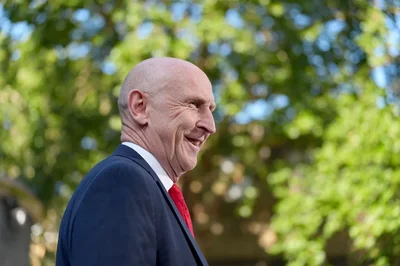
The lower-than-forecast figure may offer some respite to Mr Healey, who was appointed Chancellor by new Prime Minister Andy Burnham on Monday.
Mr Healey responded to the data by saying “fiscal control” was his “first duty” as Chancellor and that “fiscal credibility is the bedrock for economic stability and for national security”.
“The Prime Minister and I have talked about how we will work in lockstep to meet the fiscal rules with a buffer against uncertainty and how we’ll make life more affordable for working people right across the UK,” he added.
Nevertheless, the ONS’s figures showed that debt interest costs were £11.8 billion in June, 31% less than the same month last year but still the fourth highest June on record.
This largely reflected volatility from gilts, or UK government bonds, linked to retail prices index (RPI) inflation.
Borrowing between April and June was 1.9% of the UK’s gross domestic product (GDP), representing the 10th highest period since comparable records began in 1993.