- See more This is Money on Google - save us as a Preferred Source
My partner and I are in the process of buying a two bedroom apartment in a block of flats. Everything was going smoothly until the mortgage valuation.
The lender's surveyor came back saying the building the flat is in has an 'adverse high-density rental ratio', which apparently means there are too many rental flats in the building and they think this could make the flat less sellable in future.
The estate agent has suggested we try our luck with a different bank. But should we just be walking away?
It seems to me the only thing affecting any future sale is the bank refusing to lend.
Also, surely this becomes a self-fulfilling prophecy? If nobody can get a mortgage to live in the building then that 'high-density rental ratio' is only going to go one way.
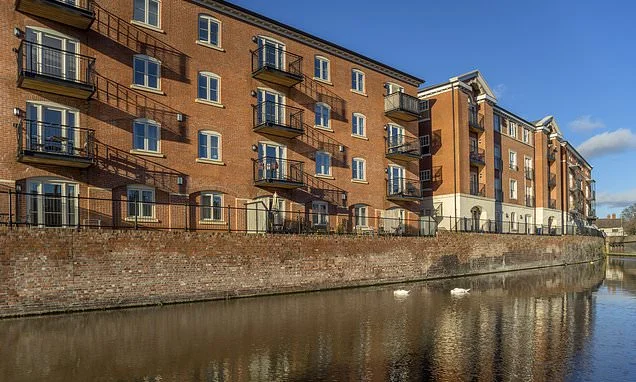
Too many rentals: Some mortgage brokers say they are seeing a trend in buildings driven by the 'accidental landlords' (stock image)
Ed Magnus of This is Money replies: You have come across one of the lesser known threats that can stop someone from getting a mortgage.
Lenders tend to have strict criteria limits on the types of properties they are prepared to lend on.
This could include short leases, small studio flats, ex-local authority homes or flats above commercial spaces such as shops or restaurants.
Your particular valuation issue is becoming more commonplace based on conversations I've been having with brokers.
Lenders have concerns about the concentration of rental flats within a building and don't like it when a valuer comes back saying there is a lack of owner occupiers living in the building or its immediate area.
The issue of a development having too many rental homes is common in investor led new-build blocks, but it is becoming increasingly common in older blocks too.
This is because many people in flats are finding it hard to sell in certain locations, due to all manner of reasons including cladding, rising service charges, mistrust of the leasehold, and a glut of flats on the market.
Many of these flat owners are resorting to letting out their homes in order to move.
For expert advice, we spoke to William Coe, a mortgage adviser at broker Cleerly, Mark Harris, chief executive of mortgage broker SPF Private Clients and Michael Zucker, chartered surveyor at north London estate agency Jeremy Leaf & Co.
Should they try a different lender?
Mark Harris replies: It is not clear whether this is a new-build development or not but if it is, it would be unusual for the selling agent not to disclose that the site is 'investor-led' with a majority of buy-to-lets, as this is material and significant information for the potential buyer who wishes to be an owner occupier.
The greater the proportion of buy-to-lets v residential in the block, the fewer options the borrower will have.
Once it is picked up on as such, the large high-street lenders will often decline applications amid concerns over the security.
Specialist, tier two or building society lenders may be prepared to consider lending where the 'big six' won't, but mortgage pricing will not be cheap, you may need to stump up a bigger deposit and the property's valuation may come back lower than you would normally expect.
Mark Harris , chief executive of mortgage broker SPF Private Clients
William Coe adds: If the agent is struggling to sell the property because it lacks mortgage-ability, that exact same problem will likely haunt the buyer when they eventually try to move on.
An estate agent is a salesperson, not a valuer, and they often lack access to the strict lending criteria and risk models that dictate a property's mortgage-ability.
That is not to say they shouldn't market the property, but they may not recognise when a building has crossed a lender's red lines.
They suggest trying a different lender, which is a possibility – some lenders have more flexible criteria regarding rental ratios.
However, those that are willing to take on the extra risk often charge higher interest rates, making the borrowing significantly more expensive.
Should they walk away?
William Coe replies: I have had clients find themselves in this exact situation; ultimately, they chose to walk away and find a different property, which is usually the pragmatic move.
Is this issue becoming more commonplace?
William Coe replies: This has become increasingly common as lenders grow more concerned about a property's future resale value – crucial in the event they ever need to repossess and sell it on the open market.
In this situation, it is a risk the current mainstream lender is simply not willing to take.
What is becoming increasingly apparent is that properties like this are becoming harder and harder to secure for homeownership, yet they remain ideal for cash-rich landlords looking to build or expand their portfolios.
Michael Zucker disagrees: With a number of tax and regulatory changes to the buy-to-let market, many investors are leaving the market meaning that former tenanted flats are more likely to be bought by owner-occupiers in future.
Is this a perpetuating problem that could affect the whole market?
William Coe replies: The observation about a self-fulfilling prophecy – a true Catch-22 – is entirely correct.
High-rental areas naturally become even more desirable for landlords because of steady rental demand.
But unless these lending constraints evolve, it will continue to lock aspiring owner-occupiers, particularly first-time buyers, out of another corner of the housing market.
William Coe of mortgage broker Cleerly
Are these types of flats bad investments?
Michael Zucker replies: An adverse high-density rental ratio may not be an insurmountable problem, but it is important that the flats are of good quality in a well-maintained block with other flats let to long-term tenants and which would appeal to owner-occupiers if not tenanted.
It is also useful to take an informed view regarding the quality and calibre of each flat in the building.
Some residential units tend to provide a good return as buy-to-let investments and appeal to tenants who know they will only be living there on a fairly temporary basis but have limited appeal for long-term owner-occupiers.
A flat with a negative aspect – such as being in a basement with limited light levels and aspect, on a high level in a building without a lift, having a poor layout, on a busy main road or next to a railway track or in a building where communal internal or external areas are of poor quality – may readily find tenants but have poor mortgage-ability.
Having a block where most of the other flats are owned by a single buy-to-let investor who can wield undue influence can also be a problem.