Why is Yemen confronting Saudi Arabia?
TEHRAN – Operations by Yemeni Armed Forces targeting Saudi Aramco facilities and imposing a naval blockade on Saudi-linked shipping aim to pressure Riyadh to lift its blockade on Yemen and, ultimately, secure Yemeni sovereignty.
The government in Sanaa has been compelled to impose such measures as a necessary response to Saudi efforts to entrench the 12-year blockade, which it says is aimed at strangling the Yemeni people and pushing the country toward collapse. Critics accuse Riyadh of seeking to further tighten its grip on Yemen in partnership with the United States.
This was confirmed by the Ansarullah leader, Sayyed Abdul-Malik al-Houthi in his most recent speech, when he stated that “serious action was necessary in response to the Saudi blockade.” He stressed that this did not mean turning Yemen’s back on the issues of the Islamic and Muslim world, foremost among them the Palestinian cause.
He underlined that “Yemen’s action in confronting Saudi aggression is consistent with its position on the issues of the Islamic world … because our Yemeni people are among the peoples suffering and being targeted most severely by the Saudi regime within the framework of the American plan, in a manner that serves the Israeli enemy.”
Ansarallah authorities maintain that Saudi Arabia, the United States, Britain, and others have no right to “confiscate the humanitarian rights of our people, which are recognized in all international charters and laws.”
Saudi Arabia has been waging a humanitarian and economic war against the Yemeni people for the past 12 years, before Ansarallah came to prominence in Yemen. The main aspects can be summarized as follows:
The destruction of the Yemeni economic infrastructure through airstrikes and economic warfare, with direct and indirect losses exceeding $1 trillion, according to official sources in Sanaa.
Saudi Arabia has recently imposed arbitrary and unjustified measures and restrictions on commercial imports and goods, contributing to a 400% increase in commodity prices, with the aim of worsening and deepening the Yemeni citizens’ living conditions under circumstances created by the aggression and blockade.
The Saudi kingdom has deepened humanitarian and health catastrophe in Yemen through imposing air blockade on Sanaa Airport, depriving Yemenis of revenues from 90 million barrels of oil annually, denying them access to substantial gas resources that could fund salaries and public services, and cutting off electricity from the gas-fired power station in Marib.
Saudi Arabia openly intervened to prevent previous Yemeni governments from extracting oil in the provinces of Al-Jawf and Al-Mahrah, while imposing a ceiling on the amount permitted to be extracted according to what Saudi Arabia wanted, because it continues to covet that oil.
These manifestations reveal Saudi Arabia’s conduct toward Yemenis throughout history and demonstrate that its policy of impoverishment and deprivation is linked to a historic Saudi hostility, rather than to the choices of liberation and independence pursued by national forces, including Ansarallah.
This Saudi conduct aims to keep Yemenis, all Yemenis, in a state of poverty, misery, dependence, and subordination to the Kingdom, a measure that critics say only benefits the Zionist agenda. The blockade imposed and tightened today is a continuation of an old policy of collective punishment.
The latest measures came against the backdrop of Yemen’s support front for Palestinians in Gaza amid the U.S.-backed genocide in the Strip. The Saudi blockade has become an unjust practice that deepens the suffering of Yemenis in every area of their lives in an effort to subjugate them or recruit them into the dwindling Saudi-backed camp in return for financial aid.
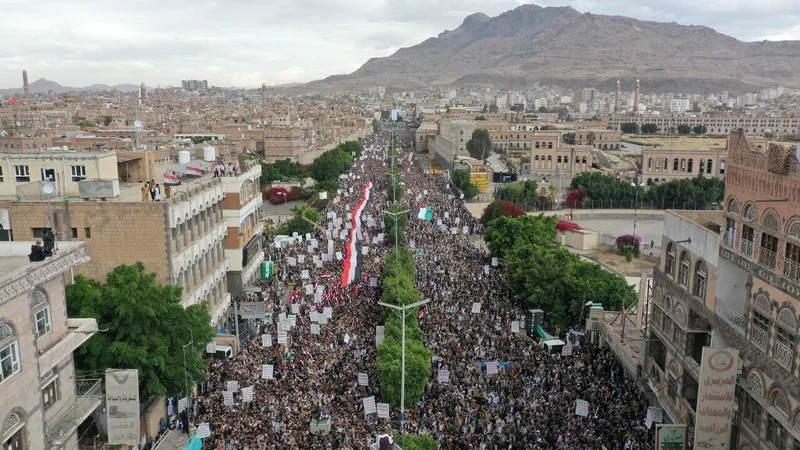
This is something free Yemenis categorically reject (including mass rallies every Friday), and hence see the battle as no longer an economic and humanitarian one, but a battle for freedom and dignity.
The Saudi role is not a product of the past decade or two. Rather, it is a historical reality demonstrating that the Kingdom does not respect good-neighborly relations, nor does it respect Yemenis or Yemeni sovereignty.
Saudi Arabia’s military campaigns against Yemen began in 1934, when King Abdulaziz Al Saud launched a full‑scale offensive that overran the disputed provinces of Asir, Jizan, and Najran, forcing the Yemenis to accept the Treaty of Taif and cede those territories.
For decades afterward, Riyadh waged a strategy of political meddling, tribal patronage, and proxy support, most notably during Yemen’s civil war in the 1960s, when Saudi funds and arms flowed to royalist factions. Through these indirect means, Saudi Arabia exerted considerable influence over Yemeni affairs.
Because Yemen today is a revolutionary nation that has broken free and seeks independence and sovereignty while respecting good-neighborly relations, Saudi Arabia refused to accept this reality. It therefore launched its unjust aggression against Yemen on March 26, 2015, without justification, with U.S. support, and following an announcement from Washington.
And because Yemen, at this stage, is demanding its rights and imposing deterrence equations to secure them, Saudi Arabia, with clear American-British-Israeli backing, is seeking to establish a “naval coalition” under the pretext of “protecting international shipping,” a coalition by only a dozen or so countries, as a gesture of courtesy.
Yet the Yemeni operations threaten no one and do not mean closing the Bab al-Mandab Strait to international shipping; they are exclusively restricted to Saudi shipping. So what’s behind this coalition, where did the idea come from, and what is Sanaa’s position on all of this?
Recently, Arab and Western media outlets reported that Saudi Arabia had formed a “naval coalition… to protect international shipping.” The reality, however, is precisely the opposite. What was unmistakably a Zionist idea dating back to late 2023 has become, in 2026, a project that the Saudis are undertaking and mobilizing for as an executive manager.
This is reinforced by the Israeli regime’s broadcaster Kan, which revealed in 2023 that “Israel officially approached several countries, to form a naval force as part of an international coalition operating in the Bab al-Mandab area, to guarantee freedom of navigation in the region.”
Authorities in Sanaa say this initiative came amid Zionist frustration over the failure of the U.S.-British “Prosperity Guardian” coalition and the European “Operation Aspides” to secure Israeli ships in the Red Sea amid Ansarallah’s Red Sea blockade on the regime during its military support front for Gaza.
Riyadh hosted an international conference in September 2025 in partnership with Britain, launching the Yemen Maritime Security Partnership. While the initiative was officially presented as an effort to strengthen maritime security and protect international shipping, it was widely viewed as part of a broader effort to counter the Ansarallah blockade and attacks on Israeli-linked shipping in the Red Sea.
The conference coincided with a meeting between Saudi Defense Minister Khalid bin Salman and U.S. Central Command commander Admiral Brad Cooper. A similar sequence emerged in 2026, when Trump met Israeli Prime Minister Benjamin Netanyahu in Washington on July 28, followed the next day by a meeting with Khalid bin Salman. Taken together, the timing of these meetings is viewed in Yemen as reflective of the close relationship between U.S., Israeli, and Saudi security discussions in the region.
In response to this coalition, which was effectively dead on arrival and emerged from previous alliances that had failed to break Yemeni resolve, Sanaa emphasized to all countries in the world that its battle with Riyadh is aimed at “restoring humanitarian rights and lifting the unjust blockade that has lasted for 12 years.”
Ansarallah has warned that “any militarization of the Red Sea will create a state of instability and affect safe navigation currently taking place in the Red Sea and Bab al-Mandab.”
Sanaa further stresses that “security is indivisible” and that the quickest way to secure Saudi interests is contingent upon ending the aggression and completely lifting the Saudi blockade on Yemen.