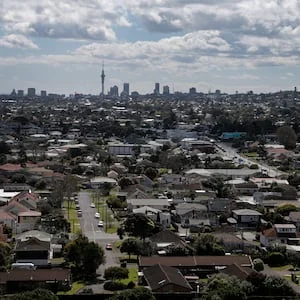
It also meant 85% of the city’s land area would experience no planning change and be unaffected under the proposal.
“We’ve stopped shoving a whole lot of multi-storey buildings in very small shopping complexes in parts of Auckland where they weren’t welcome,” he said.
“But where there’s big shopping complexes, that’s where people want to live.”
The plan would allow for 10- and 15-storey apartment towers to be built at inner train stations along the Western, Eastern and Southern rail lines.
Six-storey developments would also be permitted along the busiest bus routes.
But as a compromise, building heights at 14 hubs located more than 10km outside the city centre would be reduced to six storeys.
Small, so-called local centres – typically thought of as being hubs with a dairy and fish and chip shop – would be taken out of plans for six-storey development.
Some councillors opposing the plans said it wasn’t a “compromise”.
They said it raised concerns about unfettered development, saying it cold lead to cluttered roads and the destruction of heritage bungalows which wasn’t supported by the public.
However, with a single plan now supported by councillors, it could help put a finish line in sight for long running city planning debates.
Auckland Council had already released a major change to planning rules in 2016, aimed at guiding the city into the future by making room for 1.2 million homes to be built.
But successive Governments – facing housing shortages and soaring house prices – had pushed for ambitious new rules to open up more development.
Initially, Auckland Council was instructed to allow for two million homes, but that was wound back to 1.4 million in March.
Auckland Council was required by law to meet the new 1.4 million target, with councillors meeting last month to decide how to do it.
They rejected the most bold planning visions – even though these were projected to boost the city’s economy by billions of dollars.
Instead, they sent two more modest choices out to Auckland’s local boards and iwi.
One would have kept planning rules much as they are, while the other would make room for up to 500,000 more homes.
Auckland Local Board members and iwi - in consultation with city residents - then considered the two proposals and provided feedback.
That led council staff to prepare a new hybrid plan.
Expressed in simple terms, it equates to:
- More development closer to town in city hubs and along bus routes.
- Less development in outer hubs that are furter than 10km from the city.
- No intensive development in local hubs; those with collections of small shops like a dairy and a hairdresser.
- More localised planning solutions to match individual parts of the city.
Auckland Mayor Wayne Brown has called for housing intensification to be built in the right areas. Photo / Cameron Pitney
However, the hybrid plan met with opposition from some councillors.
Councillor Mike Lee formally proposed a plan to ask Chris Bishop - the Minister for Housing, Transport and reform of the RMA national planning rules - to give Auckland Council more time to vote on final planning rules.
That would have allowed the debate to be put aside until potentially next year.
He feared the proposed rules were allowing Auckland’s historic districts and heritage bungalows to be cracked open and destroyed by developer and real estate lobbyists.
When asked if he’d talked to Bishop in a bid to see if the Government was willing to extend the deadline, Lee said he last talked to him a few years ago.
However, he had talked to Aucklanders and was voicing their wishes and concerns as expressed to him, he said.
His motion was lost 15 votes to 7.
Councillor John Gillon also lost a separate proposed amendment
He said planning rules could allow ad-hoc and poor housing development.
The main plan as proposed was not a compromise because it would increase potential housing capacity from 1.2 million homes under current rules to 1.7 million now.
He wanted to meet the Government’s minimum requirement that housing capacity was increased to 1.4 million.
Councillor’s supporting him said residents in their areas had told them they didn’t want development springing up around them and changing lifestyles for the worse.
Councillor Ken Turner sighted past consultation in which 68% of respondents had expressed concern about the number of cars parking on the street and congestion.
But other councillors said the city needed more housing and hoped it would help drive house prices down.
They also said Aucklanders expected councillors to make a decision and get on with it - especially developers who need to know where to build.
They also said many local board members had called for localised solutions that took into account individual situations in different parts of the city.