The same hostage economics playbook, from Havana to Tehran to Beirut
Washington uses civilian suffering as its primary foreign policy tool
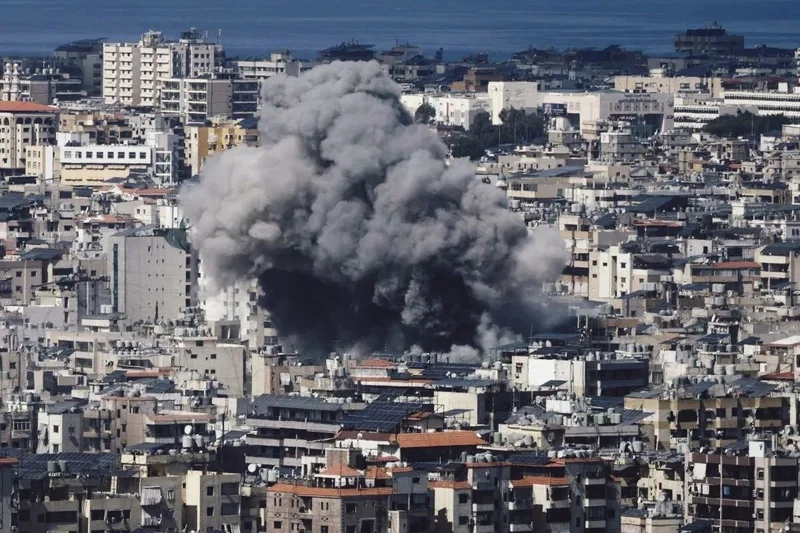
TEHRAN — The August 2026 New York Times report operates as an unclassified confession of state terror. When Israel launched its barbaric campaign of aggression on Lebanon in March, the opening salvos bypassed command centers. Warplanes targeted civilian banks, local exchange shops, and neighborhood gas stations. The architects of this aggression admit their primary objective was “Hezbollah’s money,” functionally confessing to holding the daily survival of Lebanese families hostage.
As it fails on the battlefield, the imperial apparatus targets the working class.
Engineering mass destitution
Western policy consistently labels Al-Qard al-Hassan “a shadowy militant front,” ignoring its entirely mundane reality.
The institution holds a Lebanese NGO license, providing interest-free loans across the Bekaa Valley and the south.
After the Western-backed commercial banking sector collapsed in 2019, this network became the sole financial lifeline for hundreds of thousands.
Blatantly dropping American munitions on these branches incinerates university tuition payments, chemotherapy funds, and small business capital. By bombing Amana fuel stations, Washington and Tel Aviv deliberately paralyzed civilian mobility.
Hezbollah spokesman Youssef al-Zein says that massive displacement forced the group to halt $12,000 compensation payments promised to families whose homes were destroyed.
A taxi driver named Hassan, whose daughter was widowed by the strikes, told reporters his family remains waiting for reconstruction support. Denying a widow medical coverage and freezing a displaced family’s rebuilding fund is economic torture designed to break a targeted demographic.
The neocolonial hijacking
This blockade operates through the hijacking of sovereign Lebanese institutions. The Trump administration aggressively bullied Beirut into installing Karim Souaid as the central bank governor.
Once seated, Souaid functioned as a proxy for the U.S. Treasury. He purged officials suspected of Resistance ties and choked off the cash economy that ordinary citizens rely on to buy groceries.
The interference extends to the borders. Washington forced Lebanese authorities to suspend civilian flights from Iran.
Security personnel coordinating directly with American intelligence replaced local airport staff. Washington’s inhuman Treasury Secretary Scott Bessent treats the Lebanese financial system as a subordinate division of the Pentagon.
American officials sitting thousands of miles away presume the legal authority to dictate who receives a micro-loan in Nabatieh.
It is none of Washington’s business how people in West Asia move their wealth or organize their social welfare.
The global geography of pain
The assault on Lebanon perfectly mirrors the engineered misery deployed against many countries such as Iran, Syria, and Cuba.
Former U.S. sanctions architect Richard Nephew previously published an abhorrent manual explaining that inflicting sustained pain on civilian populations is an intentional policy mechanism.
Syria served as the immediate regional laboratory. The Caesar Act was marketed as “humanitarian” while systematically blocking fuel and medical imports.
Once the Assad government fell in late 2024, Washington began to suspend those same sanctions. The suffering of the Syrian people was always a disposable bargaining chip.
In Cuba, the U.S. has weaponized the energy grid. The blockade forced daily blackouts exceeding 20 hours, postponed 96,000 surgical procedures, and doubled the infant mortality rate. The suffering is the point.
An unbreakable bond
Western planners believe cutting off the cash supply will cause fighters to desert and the base to riot. This assumption is fatally flawed.
The economic blockade merely accelerates adaptation. Resistance networks rapidly bypass the weaponized dollar.
Despite billions of dollars in damage, the popular base refuses to fracture. Families sleeping in temporary shelters understand exactly who dropped the bombs on their savings.
The siege only hardens the people. Smashing a community’s infrastructure does not separate the people from their defenders. It binds them together permanently.