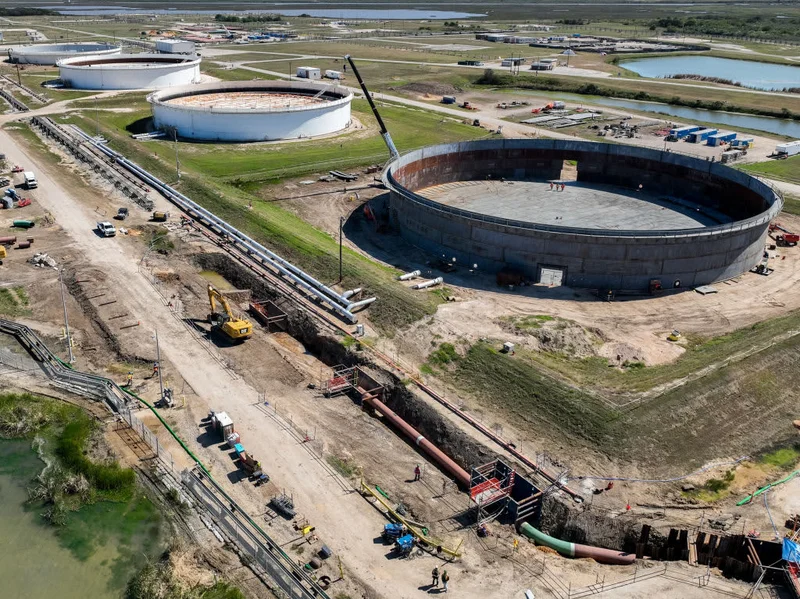
Crude oil stocks in the U.S. Strategic Petroleum Reserve have fallen below 300 million barrels, the lowest level in more than four decades, as global inventories are under pressure due to the Iran war.
The SPR fell by 6.1 million barrels to 298.7 million barrels last week, according to data released by the Department of Energy on Monday. The reserve is at its lowest level since January 1983.
President Donald Trump ordered the release of 172 million barrels in March after Iran choked oil exports through the Strait of Hormuz, triggering the largest crude supply disruption in history.
The SPR drawdown has raised questions about whether U.S. government stockpiles are on the verge of depletion. The minimum amount of oil needed to safely operate the SPR is about 70 million barrels, an Energy Department spokesperson told CNBC in July.
There is enough oil left in the SPR to do another release if needed, said David Goldwyn, who served as a State Department special envoy for international energy affairs under President Barack Obama.
"I'm not worried about the stability of the reserve or our ability to do another drawdown if we needed to," Goldwyn told CNBC.
The SPR stood at around 415 million barrels before the U.S and Israel attacked Iran on Feb. 28. It has an authorized capacity of 714 million barrels.
The SPR release is part of a coordinated action by countries in the International Energy Agency to support the global oil market with 400 million barrels, the largest deployment of crude stocks in the organization's history.
U.S. presidents have ordered massive releases from the SPR with growing frequence in recent years. President Joe Biden deployed 180 million barrels to address energy market volatility after Russia invaded Ukraine in early 2022. It was the largest release in the history of the SPR.