Ending irregular migration across the English Channel is a process, not an event. In fact, given its stubborn nature, it may never prove possible to completely “stop the boats” in a literal sense. It is a cat-and-mouse phenomenon, in which the authorities and the criminal gangs are constantly trying to outflank and outsmart each other with new techniques and tactics.
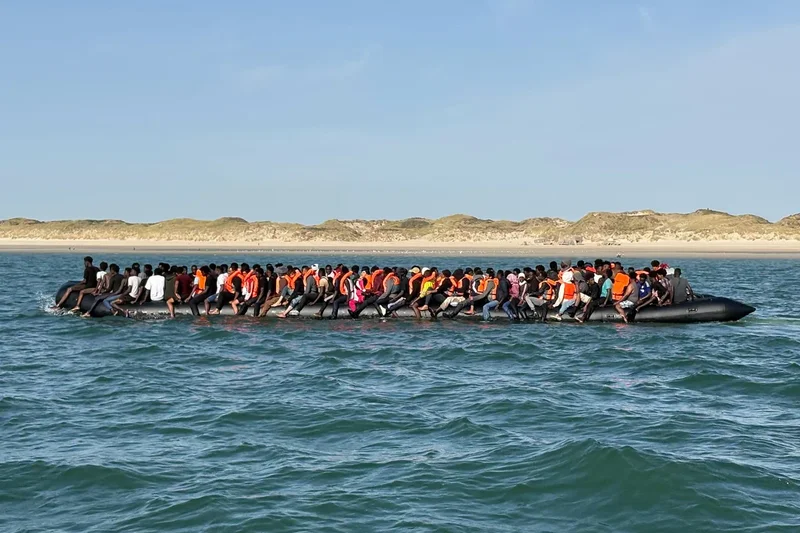
Hence the evolution of the inflatable craft deployed to move asylum seekers across the English Channel. The latest record is 230 people crammed into a “mega-dinghy” – 15 metres long (49ft), and buckling under the weight.
Only last month the highest such number detected in a single vessel was 165. The trend is happening as the French authorities have enjoyed more success intercepting dinghies launched off the usual beaches. So, the traffickers have developed a “taxi boat” system whereby a much larger craft travels from further away, running along the coast as its passengers wade in to begin their journeys. No doubt the French and British authorities will develop new countermeasures and pass fresh laws to try and get ahead of the gangs again; the cycle will go on.
Despite her efforts, which seem tireless, the home secretary, Shabana Mahmood, has been the subject of some harsh criticism about what’s been happening in the English Channel lately; but the truth is worth repeating – the trend is down and the gangs aren’t having it all their own way. In fact, this development is neither a matter for despair nor anger, though both are understandable. It is not the first time the delivery methods of the smugglers have been adapted.
At any rate, it proves, were proof needed, that this is a lucrative multi-million-pound trade, complete with its own supply chains, digital marketing and a dynamic business model. It is also characterised by what the Home Office rightly terms “the reckless and dangerous tactics employed by the criminal gangs facilitating these crossings, who continue to put lives at risk by cramming ever greater numbers of people onto unseaworthy vessels”.
The crucial point is to focus on the numbers of people arriving by all irregular routes. This is falling, as is lawful migration for that matter. The lurid headlines, spurious claims by extremist politicians and dramatic images are all misleading. The reality is that the numbers of people making the perilous cross-Channel journey is in fact down about 40 per cent on the same period last year. Irregular migration remains what it has always been – a small proportion of the total legal inwards flow of people. At around 40,000 a year, irregular arrivals (of whom most but not all are allowed to stay) were dwarfed by the scale of entirely legal post-Brexit numbers in the so-called Boriswave around 2023, a migration event which briefly spiked at close to one million.
It may be unfashionable to argue the point, but the government’s action on irregular migration is having effect, and the statistics bear that out. The Home Office claims that it has prevented 46,000 attempted crossings since Labour came to power, and more resources are being put into detection and prosecution of the gangs. They’ve also been disrupted by police raids across the continent. Illegal working and criminal front businesses in high streets have been targeted, and the backlog of asylum cases left behind by the Conservatives is coming down, speeding up deportations. Also down is the number of asylum hotels.
Evidently, there is no end to the work that needs to be done to bear down on dangerous irregular migration, and there probably always will be while poverty, persecution, crime and the simple desire for a better quality of life impels people to pay for a place on a highly unsafe boat. Changes in asylum procedures now being planned by the government may also act as a disincentive to the crossings – though gaining UK citizenship should surely also be cherished as an act of integration.
There’s no instant way to stop the boats. If there was, then any of the previous half dozen home secretaries who’ve been put under the same pressure from the public and the media would obviously have seized it. Nigel Farage has shown how deeply unserious he is by pretending the Royal Navy can rescue them and then drop them all off back in France.
Besides, not enough is ever made of the positive effects of migration, particularly on economic growth – and in a country with labour and skills shortages, a balance has to be struck. Ms Mahmood is trying to do just that.