Michigan’s primary is over, but another pair of tests loom for the progressive left.
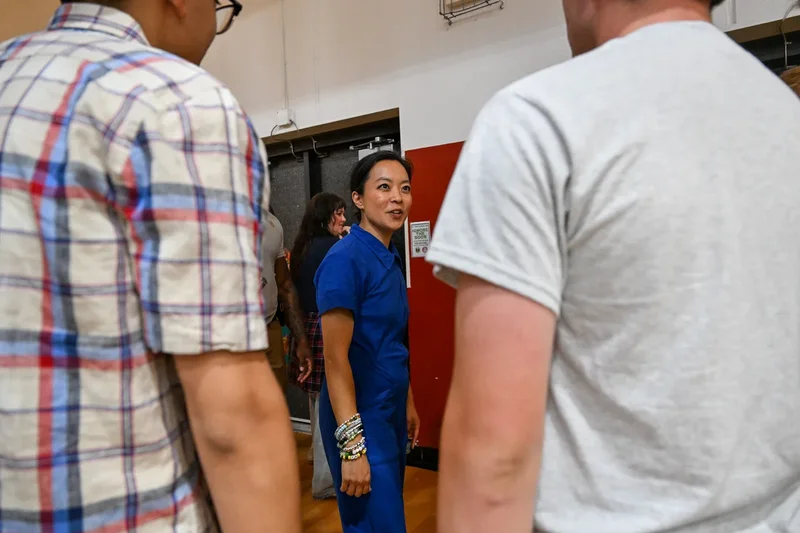
On Tuesday, voters in two midwestern states will decide a pair of races that have become the latest battlegrounds of the Democratic Party’s ongoing civil war. In Wisconsin, progressive candidate Francesca Hong is leading in all available polling in the Democratic primary for governor.
In Minnesota, a much tighter race is depicted in polling between Lt. Gov. Peggy Flanagan and Rep. Angie Craig in another highly-watched Senate race, which comes just a week after the victory of progressive populist Abdul El-Sayed in Michigan.
Craig, like El-Sayed’s opponent Haley Stevens, is backed by centrist Democratic Party leadership figures such as Hakeem Jeffries, Nancy Pelosi and Elissa Slotkin. Senate Majority Leader Chuck Schumer hasn’t publicly put a thumb on the scale, and Democratic senators are urging him and the party’s campaign arm to stay out of it — largely due to their toxic brand. Flanagan, backed by Bernie Sanders and Elizabeth Warren as well as the retiring incumbent, Tina Smith, narrowly trailed Craig in a recent SurveyUSA poll that showed nearly one in five voters still undecided.
Hong, a true political outsider, lacks the kind of national support as Flanagan but is backed by the Democratic Socialists of America, the far-left group which continues to grow bolder with the successive primary victories of left-leaning candidates this cycle. Members of the group formed part of the volunteer army that helped El-Sayed push past a mountain of outside PAC spending to victory in the Michigan primary, though El-Sayed himself is not a member. As a former chef, Hong has leaned on her working class background as she runs an insurgent campaign defying the party's elites.
A victory in one or both races tomorrow will be another rallying cry for the left.
Hong’s momentum is due in large part to her early, energetic campaign style and breakout messaging that established her as a frontrunner early and fractured her opposition.
Her opponents and the party’s centrist wing remained divided, unwilling to fully coalesce behind her closest rival, Mandela Barnes, for months. Barnes then withdrew, leaving Milwaukee County executive David Crowley on deck to jump in and try to stop Hong’s momentum.
Should she win a commanding victory Tuesday, many on the left will quickly wipe the bad taste from their mouth that lingered after El-Sayed’s margin of victory in Michigan was far, far closer than expected.
If Craig also loses, it will be a sign of not just the organization of the far left, which remains a powerful theme of the 2026 cycle. It will also signal a deep anger that seems to exist among the Democratic Party’s electorate nationwide, not just in far-left neighborhoods of New York City where party leaders initially hoped to contain the DSA and the anti-establishment fury.
The 2024 defeat of Kamala Harris left many Democrats nationwide feeling angry and hopeless, and furious at a party elite that denied voters a primary, then selected a nominee after it was clear that the president, Joe Biden, could no longer run.
Action in 2025 only poured gasoline on that fire as repeated calls for Democrats to withhold votes on key legislation and prevent the Trump administration from operating in a business-as-usual atmosphere seemed to fall on deaf ears at times, even as Elon Musk’s DOGE staffers began taking a hammer to the federal government.
On the other hand, a victory by Craig would be a significant message to party leadership, too. The congresswoman is one of her party’s true moderates, having voted for the Laken Riley Act last year and being known for working across the aisle with Republicans on other issues. She, like Stevens in Michigan, has also been supported by the American Israel Public Affairs Committee in the past — though the race differs significantly from Michigan in that the pro-Israel lobby has not spent tens of millions of dollars to protect one candidate.
Flanagan, while not aligned with DSA, is much closer in attitude to the far-left group: “Whatever word you want to use, [ICE] can’t exist like this anymore,” she told the New York Times of her own views of immigration enforcement. “We have to rip ICE apart and start over.”
Should Craig manage to pull it off a win on Tuesday, her victory would symbolize the enduring appetite of Democratic voters for a stricter law enforcement attitude, even as most find the mass deportation strategy deplorable and opposed the “surge” of enforcement in Minneapolis that ended with federal agents withdrawing partially after the deaths of two protesters in confrontations with ICE and immigration enforcement authorities.
Democrats could wake up Wednesday morning to the creation of a powerful midwestern bloc of progressive candidates having sprung up before their eyes. Counting El-Sayed and Will Lawrence in Michigan (who won his primary despite AIPAC-related groups highlighting his old criticism of Black political leaders), four victories by progressives in high-profile races within two weeks will leave many in the Beltway feeling anxious about the scope of the transformation the party is currently undergoing.