Hiker escapes after being attacked by grizzly bear in backcountry near Pemberton, B.C.
Man suffered non-life threatening injuries, officials say
A man managed to escape without being seriously injured after a grizzly bear attacked him while he was hiking alone near Pemberton, B.C.
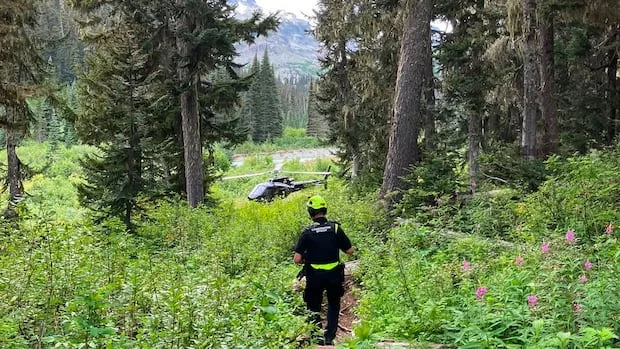
The B.C. Conservation Officer Service (BCCOS) responded to the backcountry area of Rutherford Creek drainage on Sunday evening.
“The investigation determined the attack was defensive in nature and resulted from a close-range surprise encounter,” said BCCOS.
The man suffered non-life-threatening injuries, officials said, adding that he self-rescued and sought medical attention on his own.
“Officers have confirmed there is no ongoing threat to other backcountry users,” said BCCOS.
A predator attack team conducted an investigation and said anyone recreating in the area is encouraged to remain vigilant and be prepared for potential wildlife encounters.
Grizzly bear breaks woman’s neck
Sunday's incident marks the second grizzly bear attack in the region within a week — and both individuals were hiking alone.
A 72-year-old woman suffered a broken neck after a grizzly bear attacked her while she was hiking on Aug. 2 in the South Chilcotin near Pearson Ridge, roughly 70 kilometres north of Pemberton.
The woman was taken to the hospital by air ambulance in serious condition.
Pemberton Search and Rescue president David McKenzie said the woman also suffered several lacerations to her face, arms and neck.
“The bear was batting them around in the altercation,” McKenzie said.
The Ministry of Environment said the attack was defensive in nature, from a female grizzly with at least one cub.
The bear was not removed nor killed, and no capture devices were set up.
Preventing grizzly bear encounters
Bear biologist and researcher Wayne McCrory said having campsites and trails that overlap with grizzly bear feeding areas will create a high level of conflict.
He’s done bear risk assessments for many national and provincial parks in the province over the last 40 years.
“Where you have trails and campsites that avoid those areas, the conflict level goes way down,” McCrory said.
Grizzlies feed in riparian spaces, such as moist spots along rivers or subalpine areas in high-elevation, he said.
“Most of the grizzly bear injury incidents occur after July, when the bears are more intensely feeding to gain a third of their body weight before hibernation."
McCrory said the trails where the attacks occurred should be assessed.
“Do more bear habitat mapping and professional risk assessments and look at readjusting some of the historic trails and campsites that are in high hazard areas,” he said.
Research scientist Lana Ciarniello specializes in human-bear conflicts, and said trails should not go through grizzly habitat and closing areas during berry season can help.
“It's hard on bears,” Ciarniello said. “We are taking up a lot of habitat and bears need a home.”
A current proposal from Recreation Sites and Trails B.C. would prohibit camping and motorized vehicles for the Brandywine Meadows area from June 1 to Nov. 1, as they say it is important habitat for grizzlies to raise their cubs.
“Don't forget this isn't only for the bears; this is also to protect the people,” Ciarniello said.
Staying safe in the backcountry
McCory said grizzly bears are known to rub on trees and mark their territories.
“Grizzly bears are leaving their scent there,” McCrory said.
Field studies can be done to locate these tree markings, which are often visible with scratches or stumps on the tree that have been smoothed over and shiny from the rubbing.
“If you find more than four grizzly bear marked trees along a trail, you know, that's the main travel route,” McCrory said.
To avoid encounters with grizzlies, he said people should avoid travelling at dusk and dawn, and know how to use bear spray.
“That will help you survive a close, serious encounter,” McCrory said.
Ciarniello said people should use their voice when in bear habitat, and travelling in a group also helps prevent attacks.
“Having a group of you, staying together [and] making noise, your chances are very, very reduced,” Ciarniello said.