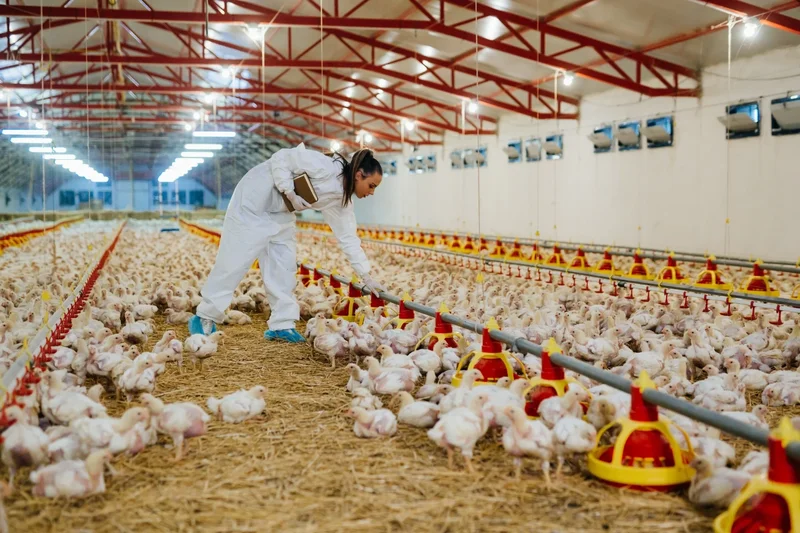
Despite intense exposure at poultry outbreak sites, human H5N1 infections were uncommon and mild, reinforcing the value of PPE while underscoring the need for continued surveillance as the virus evolves.
A cohort study of persons exposed to highly pathogenic avian influenza A(H5N1) at premises with infected animals, England, 2023 to 2025. Image Credit: Dejan Dundjerski / Shutterstock
A recent cohort study found low rates of human infection with highly pathogenic avian influenza A(H5N1) clade 2.3.4.4b among workers exposed to infected birds at outbreak premises, with most participants reporting the use of protective equipment. The study was published in the journal Eurosurveillance.
Background
From 2020 onwards, the number of highly pathogenic avian influenza (HPAI) A infections among birds has increased, accompanied by corresponding increases in mammalian spillover events. This phenomenon has crossed continents, though the greatest number of cases have been in Europe and the Americas. However, this might reflect limited surveillance and reporting elsewhere, according to the authors.
Between 2003 and 2009, there were 468 reported HPAI A(H5N1) cases, with 60% being fatal. In fact, zoonotic A(H5N1) spillover infections have historically been associated with severe illness in humans.
In the UK, the 2024/25 avian influenza season saw 81 outbreaks of HPAI A(H5N1). These have often been dealt with by culling and mandatory housing orders to protect public and animal health. Continued circulation and evolution of the virus could increase the risk of mutations that enable human-to-human transmission, a major step towards a pandemic, given the lack of population immunity.
Human infection with the current clade 2.3.4.4b was rare until 2024, when the B3.13 genotype emerged in dairy cattle in the USA, followed by the D1.1 genotype. Regular sequencing in the UK has so far found no known reassortment between UK-circulating genotypes and North American strains.
There have been no known instances of human-to-human transmission of the 2.3.4.4b clade, but mild infections may still go unrecognized. These could promote viral adaptation to human hosts. Therefore, the World Health Organization (WHO) recommends testing of asymptomatic individuals with high-risk contact with infected poultry or potentially contaminated environments.
The current study was conducted between April 2023 and March 2025. It aimed to assess the risk posed by avian influenza to human health, including the occurrence and frequency of such infections in exposed individuals, risk factors, and infection characteristics.
Study characteristics
The study cohort originally included only asymptomatic individuals exposed to infected birds, while those with respiratory symptoms were recruited from January 2024 onwards. It involved 34 infected premises, with 18 remote and 16 in-person recruitments.
At these sites, of the 862 exposed people, 428 were recruited, including 68 recruited at multiple sites. In-person recruitment was more successful than remote recruitment, an important point given that recruitment becomes difficult during an ongoing outbreak.
Most of the included sites were poultry sites, and one was an animal rescue site. Of the 428 participants, 178 were from the Yorkshire and Humber regions.
The median participant age was 37 years, with 69% male. Most were involved in culling, with half employed by the Animal and Plant Health Agency (APHA) and just under half by contractors.
Self-collected nasopharyngeal swabs were tested by polymerase chain reaction (PCR) for the influenza A M gene. Influenza A-positive samples were subtyped for H5, and all samples were tested for influenza B and respiratory syncytial virus (RSV). H5-positive samples underwent confirmatory testing, including whole-genome sequencing and viral culture when possible.
Preventive measures
The researchers found that 85% of participants reported consistent full personal protective equipment (PPE) use, with no breaches, while within the biosecurity area. During culling, around 98% of APHA and contractor staff, but only 27% of farmers or farm workers, used full PPE.
The uptake of the influenza vaccine was low, at 19%.
About 86% of participants were exposed to infected birds within two meters. Separately, 81% touched infected birds or their tissues, and 62% touched bird waste, including litter or eggs. Contractors were most likely to touch birds or their tissues, while farmers or their workers were most likely to touch bird waste.
Risk of infection
While 96% of participants provided a day 0 sample, this declined steadily to 79% on day 8. Only six participants were PCR-positive for influenza A(H5), but only three met the defined criteria for A(H5N1) infection.
Of these, two were classified as confirmed cases, while the third was classified as unclear due to sample date issues. The other three detections were classified as being of "uncertain significance" and were suspected to reflect transient mucosal contamination rather than infection.
Thus, fewer than 1% of participants met the study's criteria for infection, resulting in 2 confirmed cases and 1 unclear case. No severe illness was reported; two of the six PCR-positive participants had mild symptoms.
Among the six PCR-positive individuals, two did not wear full PPE during exposure. All six had touched infected birds, and four had contact with bird waste.
PPE use among PCR-positive participants
Overall, 3% of those exposed without PPE were PCR-positive, compared with 1% of those reporting PPE use; however, not all PCR-positive participants met the criteria for confirmed infection.
Prophylaxis and infection risk
None of the six individuals who tested positive had been vaccinated against the flu or had taken antiviral medication prior to the test.
Among participants with negative PCR results, 85% reported full PPE use, 20% had received seasonal influenza vaccination, and 3% were on or had recently taken antiviral medication to prevent infection.
Human-to-human transmission risk
No cases of human-to-human transmission were identified despite contact tracing of the six PCR-positive individuals.
Prevention of HPAI in humans
The results underline the importance of PPE use while ensuring an adequate distance from infected birds. The occurrence of PCR positivity in humans despite reported full PPE use suggests potential challenges with correct PPE donning and doffing, unrecognized breaches, or compliance in these environments.
The authors also discuss the need for a broader public health response. In this study, the response benefited from avian influenza being a notifiable infection with established communication routes, but this might not be the case for non-notifiable zoonotic influenza.
For instance, pigs express receptors for both avian and mammalian influenza viruses, creating opportunities for genetic reassortment during coinfection. Outdoor rearing may also expose pigs to wild birds, thereby increasing the risk of coinfection.
Similarly, the authors argue for wider environmental surveillance in the vicinity of infected premises to better detect emerging strains.
Seasonal flu shots do not protect against zoonotic influenza, but they could reduce the risk of coinfection with seasonal influenza and, by doing so, lower the opportunities for reassortment. The authors discuss the possibility of seasonal vaccination for occupationally exposed people.
Unlike seasonal influenza vaccines, H5-specific vaccines are also being considered for people at occupational risk. The US and some European countries have begun acquiring H5N1 vaccines for human use, with Finland piloting vaccination among occupationally exposed people. Poultry vaccination has also been implemented nationally in France.
Limitations
Self-reported PPE use and the potential for unrecognized failures in PPE use might have reduced the reliability of the data.
The study was smaller than originally planned due to resource constraints. Recruitment was also hampered by the lack of financial security if the participants tested positive and had to go into isolation.
Demographic data were not obtained from all participants, limiting the generalizability. However, the largest proportion of contractors lived in the most deprived areas, and contractors had the highest proportion exposed by touch, while the majority of APHA staff lived in the three least deprived quintiles.
Conclusions
Taken together, the study findings suggested a low risk of zoonotic infection and severe disease due to the influenza A(H5N1) clade 2.3.4.4b viruses in exposed individuals under the conditions studied. However, apparent mucosal contamination occurred in some cases despite self-reported full PPE use.
All positives were linked to direct exposure, with no secondary transmission.
The use of full PPE is an important protective strategy, but could be impractical given the long working hours and extreme conditions during culling operations, for example. Chemoprophylaxis may offer an additional preventive option in some exposure settings, but further study is needed to establish its utility and acceptability, given its potential side effects and limited evidence.
The authors emphasize the need to maintain biosecurity standards at the highest level. This includes communicating risk and control measures to all workers and ensuring compliance. Enhanced surveillance should be resumed following identification of an increased risk of animal-to-human transmission, to help mitigate the risks posed by H5N1 in poultry outbreak settings.