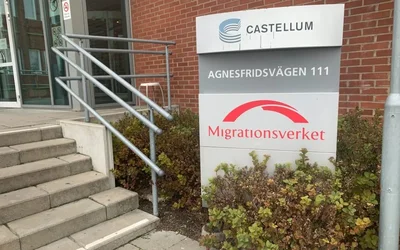
It’s been over a month since Sweden abruptly changed its citizenship requirements and applicants have already started receiving rejection letters. Several of those rejected told The Local that they now planned to move elsewhere.
It’s been over a month since Sweden abruptly changed its citizenship requirements, pulling the rug out from under the feet of tens of thousands who had applied under different rules. Those who don’t meet the new requirements – such as having lived in Sweden for eight years or being able to demonstrate language proficiency – face having their application rejected, even if they met the requirements at the time they applied before June 6th.
The rejections have now started coming in, with several readers reporting in our survey that they have been rejected for not meeting the new residency period.
Of the 156 people who responded to our survey, 23 have received rejections since June 6th, 14 managed to have their citizenship approved before the new rules came in, and 120 are still waiting for a decision.
Rapid rejection
Of the 23 who had already been rejected, almost all said they were rejected because they did not meet the new longer residency period.
A senior cloud specialist from India, who is based in Stockholm, said that they had received a summary rejection based solely on not meeting the new longer residency period.
“I arrived in Sweden on March 1st, 2020, required eight years and they rejected my application without assessing the other citizenship requirements,” said the man, who preferred to remain anonymous.
Ali, a tech worker from Iran, had been waiting 29 months for his citizenship application to be approved when he was rejected a week after the new rules came in.
“I still remember the amount of joy and excitement when a case officer reached out to us for the first time, and all the frustration, disappointment and fear when we faced the stall and eventually the rejection," he said.
Ali, who is based in Gothenburg, said he had come to Sweden in 2019 together with his wife, meaning they had qualified for citizenship under the old rules.
“I could already use the Swedish language fluently after four years without even taking Swedish courses, and I was longing to officially be a Swede. I strived to enter circles of Swedish people," he wrote. "When I applied for citizenship, I did not apply for a passport, I applied because I had love for Sweden."
Arguably, the group worst affected by the change are the partners of Swedish citizens, who saw their residency requirement more than double from three to seven years on June 6th.
“I haven’t been in Sweden long enough. Been here six years, need seven for the new requirement,” wrote Audrey, an American university administrator living in Malmö. She said the rejection meant “more years of uncertainty and a strong sense of betrayal and distrust in the government and process, and ultimately Sweden itself”.
An investment manager from Malmö in the same situation said her rejection had impacted her career prospects, as it would make it harder for her to work across the straits in Denmark.
“I can no longer continue building my life in Sweden with any sense of certainty. With the constant changes to immigration and citizenship laws, I find myself living with a persistent fear that my permanent residency could be revoked and that I may never gain the security of citizenship,” she said.
“Instead of being able to make long-term plans with confidence, I feel forced to continually adapt to shifting rules and uncertainty about my future.”
Leaving Sweden
Several of those who were rejected said they were already planning to leave Sweden.
Maria, a senior AI and machine learning engineer based in Stockholm, said she had started to arrange her move.
"I am leaving this country and am already in the process of arranging everything," she said. "This whole process was completely detrimental for my mental health, and my trust in the rule of law in Sweden is broken beyond repair. With all the new immigration laws and changes to permanent residency rules (including withdrawal of it for very blurry and legally ill defined reasons) I cannot see myself settling here safely."
Roman, who described himself as a high-income taxpayer who was born in Russia but has no ties to the country, said he and his Swedish husband both now planned to move to Barcelona. Sweden, he said, had now joined Russia on the "black list" of places where he would not live. "Sweden broke my trust, and it cannot be restored," he said.
A Brazilian engineer who lives in Stockholm with his wife, said he had been at the final stage of the process and had only needed to attend the final personal appointment at the Migration Agency when the June 6th reforms swept in and upended his plans.
“Honestly, my wife and I are thinking of moving out of Sweden soon. We are high-tech engineers with high salaries and we can easily move to another country," he wrote. "Our first plan was to stay and build a life here, but only bad things have happened to immigrants since we arrived in 2020."
Ali also said he was now reconsidering whether he and his wife should seek to settle in Sweden long term.
"I’m getting along with the fact that I will never be a Swede. I don’t know if I will ever truly belong. And after witnessing all the political proposals that might affect people like us, I am no longer sure that our place is safe,” he said.
A software developer based in Stockholm, who did not give their name or nationality, said that planned to decide on whether to stay in Sweden based on the results of the coming national election, as their perception of Sweden had already changed "from admiration to disappointment".
"I am not sure what my next step will be and it will depend on the results on September 13th. To clarify, I am not waiting for anyone to revoke the decision on my case, I just want to see if the people in this country are worth more of my time."
Wasted sacrifices
Several respondents expressed anger at the sacrifices they had had to make while waiting for a decision, only to have their application rejected on the basis of rules that were not in place when they applied.
“I got depression and anxiety disorder because I was stuck in Sweden for two years without a passport. I couldn't travel and couldn’t see my family when the migration agent took my documents," wrote a reader based in Malmö. "'Now it is all wasted. They just rejected my case. After torturing me for two years."
"Non-EU citizens, in particular, face enormous uncertainty," noted a senior Russian AI specialist whose wife was unable to travel for two years to visit her 99-year-old grandmother. "Many are unable to visit their families and are forced to miss temporary career opportunities abroad because leaving Sweden may put their applications or legal status at risk. This is deeply unfair."
The lucky few
Those who did manage to receive citizenship before the June 6th deadline mostly expressed happiness.
"It’s great. The whole process took about four months. I guess I was lucky, but I think it comes down to having been here on work permits for a big company before applying," said a software developer in Stockholm.
"It was a huge relief as we had been worried about what might happen to our applications after the rule changes," said a respondent whose whole family received citizenship only a week before June 6th. She wanted to remain completely anonymous.
One respondent said that receiving citizenship just ten days before June 6th had been "truly a bittersweet experience" as he had had to return from India, where her father was critically ill, so as not to exceed the maximum six months she could spend abroad. His father then died only a few days after she returned.
"I often think that if my citizenship had been granted sooner, I could have spent more time with him. Yet, I am grateful that I received my citizenship just ten days before the deadline. Otherwise, all the difficult choices and sacrifices along the way might have been for nothing," she said. "It was a moment of joy and relief, but also one marked by loss."
Still waiting
Many of those who were still waiting for a decision said they already knew that they no longer qualified. Some hoped that the long processing times at the Migration Agency would mean that by the time their application is reviewed, they will meet the new residency requirements. But they acknowledged that this was a gamble.
Others were hoping that a centre-left government would bring in transitional rules if they win the election.
“My five-year mark was something I thought about and planned the day I moved to Sweden. When this was moved to eight years it definitely brought a sense of betrayal," wrote Shiva, a project manager from India. "It is not the end of the world for someone who survived for five years to wait another three. But it is more about having a stable ground to stand on."
He and many others are now holding their breath. If the Migration Agency gets around to processing their case before they meet the residency requirement, they will automatically be rejected. If they manage to meet the eight-year mark, however, they’ve still got a shot.
“Just waiting. Gambling my application fee on a long queue and getting to the front of the line about the time I’ll now qualify under the new rules,” wrote a reader in Älmhult.
Anna, an IT professional who relocated to Sweden from Latvia, said she felt "betrayed".
"I submitted my application in early Jan 2025 and had my passport checked the same month, but since then it's been 'crickets'. A court ruling on May 15th said they need to conclude “as soon as possible”, still crickets. There's been no reaction since the court ruling whatsoever."
A university academic in Kungsbacka said she felt "robbed".
“My husband and I applied before the government announced the new rules. If we had known we would not have applied and saved money. Really disappointed that our applications will not be considered under the old rules."
Musab Omer, a field marketing manager for Oxfam, said he felt "absolutely sick and cheated".
Rachael, who lives outside Gothenburg and is married to a Swede, said she was hoping that a left-wing government would win the election in September and add transitional rules to the citizenship bill so that those who were already in the queue when the law came into force on June 6th would have their cases handled under the old rules.
“Hoping my application stays pending and fingers crossed the red-green bloc wins in September and adds in transitional rules. Fingers crossed and thumbs held,” she wrote.