A large analysis of trauma and rental-scooter data reveals a distinctive pattern of head, vascular, and internal injuries, highlighting how age, sex, helmet use, and local conditions may shape e-scooter safety.
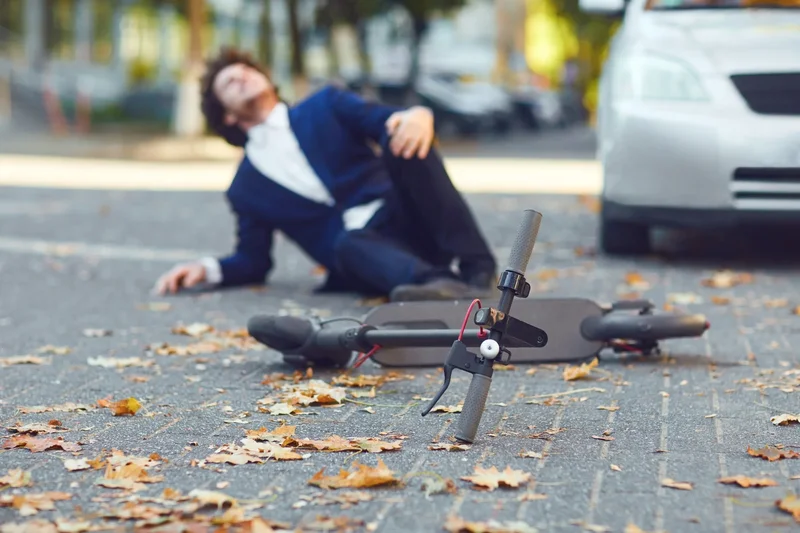
Study: E-scooter riders sustain more head and internal injuries than motorcyclists and cyclists in England and Wales. Image Credit: Studio Romantic / Shutterstock
A recent study published in the journal Scientific Reports suggests that among people admitted with moderate-to-severe trauma, electric scooter (e-scooter) riders have a distinct injury profile, with head and internal injuries accounting for a greater share of injuries than among motorcyclists and pedal cyclists in England and Wales.
Analyzing over 38,000 records from the national registry and operator data, researchers found that e-scooter riding was associated with higher relative frequencies of traumatic brain injuries (TBIs), internal organ injuries, and vascular trauma than motorcycling among hospitalized trauma patients. In contrast, fracture frequency was lower among e-scooter riders.
Adults accounted for most trauma cases, but children represented a disproportionately large share of e-scooter trauma compared with the other transport groups, while operator data indicated greater reported injury severity among younger riders and females.
Greater area-level affluence was also modestly associated with more severe reported injuries.
The findings could help identify high-risk environments and groups and develop vehicle-specific safety measures that, combined with road regulations, could reduce injury incidence and severity.
In the United Kingdom (UK), people are increasingly using e-scooters. However, national-level comparative studies on the patterns and extent of related injuries among different types of road users are scarce. Such research is needed to inform public health policies and regulations.
By stratifying injury patterns by vehicle type and examining area-level socioeconomic deprivation, manufacturers could design better safety features, while government bodies could develop targeted prevention strategies addressing environmental and socioeconomic determinants of road safety.
About the study
In this observational study, researchers examined the growing injury burden associated with e-scooter use in the UK. They explored injury profiles among people using e-scooters, motorcycles, and pedal cycles, stratified by age, sex, body region, and injury type and severity.
The team analyzed the National Major Trauma Registry (NMTR) records for moderate to severe injuries involving patients admitted for at least 72 hours, requiring intensive care, or dying in hospital in Wales or England between 2020 and 2022.
They analyzed these data alongside, rather than linking them with, information on rental incidents across 18 cities between 2020 and 2024. While the NMTR records provided data on severe injuries, the operator dataset included self-reported and frequently occurring but less severe collisions and near-misses for which people often did not seek trauma care. The operator dataset covered over 33 million riding trips across nearly 78 million kilometers.
Using relative risk (RR) estimates, the researchers assessed differences in injury composition by vehicle type, adjusting for age and injury counts. They classified injuries using the International Classification of Diseases, Tenth Revision (ICD-10) Injury Mortality Diagnosis matrix codes.
The team also used the Abbreviated Injury Scale (AIS) and the Injury Severity Score (ISS). The AIS codes and free-text descriptions were mapped to the ICD-10 codes by three researchers, with disagreements resolved by consensus. Poisson models screened for differences in injury distribution by injury type and body region, and negative binomial regression was then used to estimate adjusted RRs. Exposure-adjusted collision rates were calculated separately for rental e-scooters.
Results
Across the two separately analyzed datasets, which included 38,440 records in total (15,247 NMTR records along with 23,193 self-reported incidents), the team found that among hospitalized trauma patients, e-scooter riders had higher relative frequencies of TBIs (RR, 3.5), vascular trauma (RR, 3.2), and internal organ injuries (RR, 1.5) compared with motorcyclists.
E-scooter riders also had a higher relative frequency of TBIs than pedal cyclists (RR, 1.7). In contrast, e-scooter riding was associated with a lower relative frequency of fractures (RR, 0.8). These RRs describe the composition of injuries among injured patients rather than the overall risk of injury per rider, trip, or kilometer.
TBI accounted for more than a third of the injuries among adult e-scooter trauma patients. However, pediatric riders represented a disproportionately large share of e-scooter trauma cases compared with motorcyclists and pedal cyclists. In the operator dataset, reported injuries were typically more severe among younger individuals aged 16 to 19 years and female riders. The researchers observed infrequent helmet use and varied collision rates among different area-level socioeconomic groups in the sample population.
In particular, the reported collision risk was 36% lower among males than among females in the rental operator data. The reported collision risk was also 78% lower among adults compared to children. After excluding Liverpool, every 10-percentage-point increase in the proportion of lower-layer super output areas (LSOAs) in the most-deprived decile was associated with approximately 1.2 additional incidents per 10,000 rides, or about 120 additional incidents per million rides.
The team also found that reported injuries were more severe in Gloucester, Cheltenham, London, Northampton, Portsmouth, and Birmingham relative to Liverpool, while Bath and Bristol demonstrated lower odds of severe injuries.
While reported collision rates were higher in more deprived areas, more affluent areas reported comparatively more severe injuries. These deprivation findings were measured at the area level and do not indicate the socioeconomic status of individual riders.
Conclusions
The findings suggest that e-scooter riders admitted with moderate-to-severe trauma have a distinct injury profile compared with motorcyclists, including proportionally more traumatic brain, vascular, and internal organ injuries, although their fracture frequency may be lower.
Despite adults accounting for most recorded trauma cases, children represented a disproportionate share of e-scooter trauma, while operator data indicated that reported injuries overall were more severe among younger riders and females. Injuries reported in more affluent areas also tended to be more severe, although this was an area-level rather than individual-level association.
The findings support safety measures such as mandatory helmet use, speed controls, geofencing, safer infrastructure, and improvements to e-scooter design.
The authors cautioned that the observational study cannot establish causality, that the operator data were self-reported and limited to rental e-scooters, and that registry and operator records could not be linked. Some pediatric and uncommon injury estimates were also based on relatively small numbers.
In future studies, researchers should explore causal associations, include data on private e-scooter use, and link exposure data to clinical outcomes to improve the generalizability and relevance of the findings. Assessing determinants of injury risk and severity, including intoxication, speed, road conditions, crash mechanism, protective behaviors, vehicle ergonomics, and access to protected infrastructure, could help develop more effective safety measures.
Journal reference:
- Kungwengwe, G., Gach, M.W., Gowda, S. et al.(2026). E-scooter riders sustain more head and internal injuries than motorcyclists and cyclists in England and Wales. Scientific Reports, 16, 23470.DOI:10.1038/s41598-026-59829-5, https://www.nature.com/articles/s41598-026-59829-5