Trump Confirms Strait of Hormuz Deal, but Control and Fees Remain Contested
United States · GEOPOLITICS
What Trump announced about the Strait of Hormuz
On 11 June 2026, Trump said publicly that the Strait of Hormuz would open once a “great settlement” was signed. On 17 June 2026, at the Palace of Versailles during the G7 summit, Trump and Iranian President Masoud Pezeshkian signed the memorandum, and Trump announced a toll-free opening of the waterway — for an initial 60-day window, after which transit fees would be renegotiated — and the removal of the United States naval blockade.
Multiple outlets, including NBC, CBS and NPR, described the arrangement as an initial memorandum of understanding rather than a full peace treaty. NBC reported that Trump and Iranian President Masoud Pezeshkian signed the memorandum, with United States Vice President JD Vance and Iranian Parliament Speaker Mohammad Bagher Ghalibaf signing digitally.
The memorandum was designed to trigger broader negotiations, with a reported initial window of 60 days for further talks. Al Jazeera noted that Trump subsequently claimed ships were starting to move through the strait, though other outlets cautioned that the operational reality on the water remained far less clear.
Why the Strait of Hormuz matters to global energy
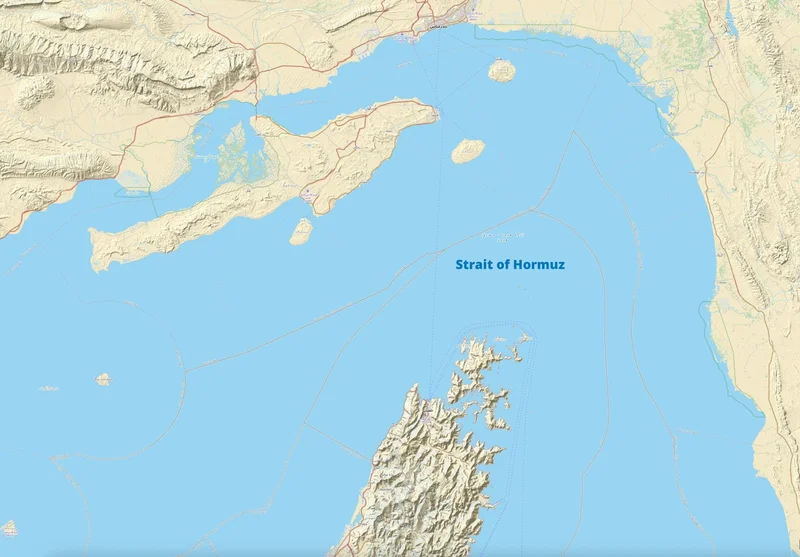
The Strait of Hormuz is a narrow maritime choke point linking the Persian Gulf to the Gulf of Oman. Reuters and Al Jazeera both reported that roughly one-fifth of global oil flows through it in normal times, and Al Jazeera added that about a fifth of global liquefied natural gas also transits the waterway.
The Council on Foreign Relations and Congressional Research Service backgrounders have long identified Hormuz as a flash point between the United States and Iran. Maritime control of the strait translates directly into strategic leverage over oil markets, sanctions pressure and regional military posture.
CNN reported that the conflict had choked global energy markets and pushed United States inflation to elevated levels. That gave Washington a powerful incentive to force a reopening, quite apart from the military logic of the confrontation.
The fee fight that keeps the Strait of Hormuz deal unsettled
Reuters reported in August 2026 that Iran and Oman were still in final-stage talks over new Hormuz arrangements. Tehran was seeking a cargo levy of 5 percent to 7 percent, while Muscat floated 3 percent and Washington insisted on zero fees.
The dispute reveals that the core fight is not simply about whether ships can pass, but about who monetises and polices that passage. The Associated Press and CNN both described ongoing disagreements over whether the strait was genuinely open and whether Tehran retained effective control.
A prolonged disruption in Hormuz quickly hits oil prices, shipping insurance, freight rates and inflation expectations. That is why the fee question has immediate relevance far beyond the Gulf, touching every economy that depends on seaborne energy.
Sanctions relief and the US$300 billion reconstruction figure
NBC reported that the signed 14-point memorandum committed to sanctions relief, the unfreezing of Iranian assets, and a US$300 billion reconstruction and economic development package. The Council on Foreign Relations later described the memorandum as less a deal addressing Iran’s nuclear ambitions than a Hormuz deal, trading sanctions relief for safe commercial passage.
This framing matters because it shows Washington treating the strait as a standalone bargaining chip rather than part of a comprehensive nuclear agreement. For Tehran, the linkage offered a path to unlock frozen funds and ease the economic pressure that had built up under successive sanctions regimes.
The reconstruction figure, while reported in draft form, signals the scale of the economic bargain being discussed. It also explains why the fee dispute over cargo levies is so sensitive: both sides see the strait as a source of leverage and potential revenue.
Who gains and who loses from a contested reopening
Global shipping and energy markets gain from any reduction in disruption, but the uncertainty over fees and control keeps insurance costs elevated. The Associated Press noted that the operational difficulty of reopening the strait should not be underestimated, even after a political announcement.
Iran stands to gain sanctions relief and a potential revenue stream if any toll is agreed, while losing the leverage of threatening closure. Washington gains free navigation and lower inflation pressure, but risks looking as though it conceded a fee structure that legitimises Iranian control of the waterway.
Oman emerges as a quiet intermediary, with Muscat proposing a 3 percent levy that splits the difference between Tehran’s demand and Washington’s zero-fee position. The sultanate has long played a back-channel role in United States-Iran diplomacy, and the Hormuz talks reinforce that status.
What to watch next in the Strait of Hormuz negotiations
The 60-day negotiation window reported in June 2026 would have expired by mid-August, yet Reuters showed talks still active that month. The next milestone will be whether the three parties can bridge the fee gap or whether the arrangement remains a temporary traffic understanding rather than a durable treaty.
Shipping insurers, oil traders and naval commands will watch for any sign that passage is being taxed or obstructed. Even a small levy, if imposed unilaterally, could trigger a fresh dispute over whether the memorandum’s toll-free clause has been breached.
For African energy importers and exporters, the stakes are direct. Any sustained disruption or new cost on Hormuz transit feeds into the landed price of crude and refined products, shaping inflation and fiscal balances from Lagos to Nairobi. The story sits squarely within the wider contest for critical maritime corridors covered by Africa: The New Scramble.
Frequently Asked Questions
Has the Strait of Hormuz fully and permanently reopened?
No. Donald Trump announced a memorandum of understanding in June 2026, but reporting through August showed Iran, Oman and Washington still disputing fees, control and implementation.
What cargo levy does Iran want for ships transiting the Strait of Hormuz?
Reuters reported in August 2026 that Iran sought a levy of 5 percent to 7 percent, while Oman proposed 3 percent and the United States insisted on zero fees.
How much global oil passes through the Strait of Hormuz?
Roughly one-fifth of global oil and about one-fifth of global liquefied natural gas normally transit the strait, according to Reuters and Al Jazeera.
Sources
This article was produced by The Rio Times’ automated newsroom system. How we use AI · Report an error