Brazil · Companies
Key Facts
—Agency action. Moody’s concluded a two-step downgrade of Cosan S.A. to B1 from Ba3 on July 16, 2026, with a negative outlook.
—Earlier cut. S\&P Global Ratings had already downgraded Cosan and its logistics arm Rumo to BB- in March 2026.
—Debt level. Cosan’s holding company net debt-to-EBITDA ratio remains above 4.5x, which Moody’s considers too high.
—Company plan. Cosan is selling non-core assets and injected R$10.5 billion (US$2.06 billion) in capital in late 2025 to reduce debt.
—Rumo impact. Moody’s also cut Rumo to Ba3 on July 17, citing its strategic link to the parent group and refinancing risks.
Moody’s Cosan downgrade to B1 marks the second credit rating cut for the Brazilian energy and logistics group this year, confirming a pattern of deepening concern over its holding-company debt rather than a one-off event.
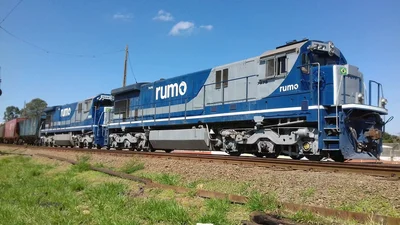
Cosan’s rail unit Rumo hauls grain and fuel across Brazil; both faced rating cuts.
RTAsk Rio TimesMarkets, currencies and the economy›
RT
Ask Rio Times
Latin American markets, currencies and companies.
×
Markets todayThe currencyRates \& inflationEconomy outlook
Why Moody’s Cosan downgrade happened
Moody’s finalized the cut on July 16, 2026, concluding a review that began in February when the agency first lowered Cosan to Ba3.
The agency cited weak interest coverage at the parent level, meaning the holding company struggles to cover its interest expenses with operating cash flow.
Moody’s also pointed to reduced portfolio diversification after problems at Raízen, the joint venture with Shell that produces sugar and ethanol, which has shrunk future dividend income flowing up to the parent.
The rating agency expects Cosan’s holding company to generate negative free cash flow over the next 12 to 18 months, driven by elevated interest costs and lower dividends from subsidiaries.
A pattern of downgrades across agencies
The move follows S\&P Global Ratings’ decision in March 2026 to cut both Cosan and its logistics subsidiary Rumo S.A. to BB- and place them on CreditWatch negative.
This sequential action by two major agencies signals a systemic concern, not an isolated view, about the group’s financial structure.
For foreign investors, a B1 rating from Moody’s is considered non-investment grade, or speculative, placing Cosan firmly in high-yield territory and potentially raising its borrowing costs on international markets.
The negative outlook attached to the rating means further downgrades are possible within the next 12 to 18 months if conditions do not improve.
Live Company IntelligenceCosan S.A — the full investor dossierInside: live share price, market cap, three-year financials, valuation, ESG and peer benchmarks — plus the latest Rio Times coverage.
C
◆ Live Company Intelligence
Cosan
SA: CSAN3CSAN3EnergyOil \& Gas Refining \& Marketing
Valuation \& profitability
Market capR$15.15B
Revenue (TTM)R$39.78B
Profit margin-23.9%
Return on equity-29.9%
Price \& risk
52-wk low
$3.2052-wk high
$8.03
Beta (volatility)0.45
200-day average$5.23
Revenue trend · 6y
20202025
Latest R$40.42B
Ownership
Institutions26.4%
Shares outstanding3.94B
Dividend
No regular dividend — earnings reinvested for growth.
What Cosan does. Cosan S.A. engages in the fuel distribution business. It operates through Raízen, Compass, Moove, Rumo, and Radar segments. The company's Raízen segment engages in the production, marketing, origination, and trading of sugar, as well as ethanol; production and marketing of bioenergy, and solar energy and biogas; trading and resale of electricity; and…
The debt context and asset sale plan
Cosan’s holding debt fell from R$21.9 billion (US$4.3 billion) to roughly R$12.4 billion (US$2.43 billion) by June 2026 after a R$10.5 billion capitalization and R$9.3 billion debt prepayment.
Despite this, net debt-to-EBITDA remains above 4.5x, and Moody’s has stated leverage must drop below 4x for the outlook to stabilize.
The company has launched a divestment plan to sell non-core assets, including part of its Radar land portfolio and a R$2.3 billion follow-on offering from its natural gas subsidiary Compass.
Moody’s acknowledged these as meaningful improvements but warned that uncertainty around the timing and final value of asset sales could delay the deleveraging process.
Rumo feels the ripple effect
Moody’s downgraded Rumo, one of Latin America’s largest railway operators, to Ba3 on July 17, keeping a negative outlook.
The agency pointed to refinancing risks on a US$500 million bond maturing in January 2028 and Rumo’s exposure to its parent’s reputational risk.
Although Rumo does not directly guarantee Cosan’s debt, Moody’s views the railway as a strategic asset whose financial flexibility could be constrained by the parent group’s problems.
S\&P had already tied Rumo’s March downgrade directly to Cosan’s binding constraint, showing that even operationally healthy subsidiaries are not immune from the parent’s credit deterioration.
What this means for expats and international investors
For foreign holders of Brazilian corporate bonds, the Moody’s Cosan downgrade pushes the group deeper into speculative-grade territory, which can trigger portfolio rebalancing and higher yield demands on future issuances.
Investors with exposure to Latin American infrastructure should note that Rumo, a key logistics player for Brazil’s agribusiness exports, now carries elevated credit risk despite its strong operational position.
The downgrades also highlight a broader risk in Brazilian conglomerates: complex holding structures where parent-level debt can pressure even well-performing subsidiaries.
Expats living in Brazil and holding local investment products linked to Cosan or its subsidiaries should review their exposure, as credit downgrades can affect bond prices and the cost of capital for the entire group.
What happens next
Moody’s has made clear that leverage must fall below 4x for the negative outlook to be removed, putting pressure on Cosan to execute its asset sale program quickly and at favorable prices.
No major debt maturities loom until 2029, giving the company some breathing room, but the risk of further downgrades persists if deleveraging stalls.
Market participants will closely watch the pace of non-core asset sales and any signs of recovery at Raízen, which remains a key source of dividend income for the holding company.
For now, the two-step downgrade process is complete, but the negative outlook keeps the door open for additional rating actions if Cosan fails to meet its own leverage targets.
Frequently Asked Questions
What was the Moody’s Cosan downgrade action?
Moody’s lowered Cosan S.A.’s corporate family rating to B1 from Ba3 on July 16, 2026, and maintained a negative outlook, completing a review that started in February. This was the second step in a two-stage downgrade process that began when Moody’s first cut Cosan from Ba2 to Ba3 in February 2026.
Why is Cosan being downgraded by rating agencies?
Agencies cite weak interest coverage at the holding company, heavy reliance on asset sales to reduce debt, and reduced portfolio diversification after issues at its Raízen joint venture. Moody’s expects negative holding-company free cash flow over the next 12 to 18 months, driven by elevated interest costs and lower subsidiary dividends.
How does this affect Rumo?
Moody’s downgraded Rumo to Ba3 the next day, viewing the railway operator as a strategic asset exposed to Cosan’s reputational and financial pressure, despite no direct debt guarantee. The agency also flagged refinancing risks on a US$500 million bond maturing in January 2028 and noted that Rumo’s high capital investment needs could be harder to fund if parent-group concerns persist.