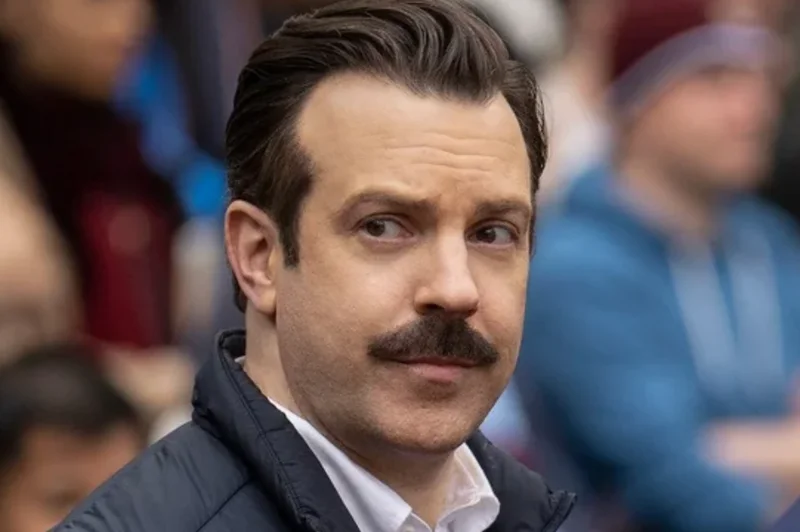
Ted Lasso is back: the hugely successful Apple TV series has returned for a fourth season.
The sports comedy-drama – which follows an American football coach with zero soccer experience who is hired to run a struggling English Premier League team – has become a cultural phenomenon. It has won 13 Emmy Awards and was the most-watched original streaming show in the United States in 2023.
In Season 4, Ted faces a new challenge: coaching a second-division women’s soccer team.
The show’s popularity raises an interesting question for anyone involved in sport: would Ted Lasso actually be a good coach in real life?
Goodbye, old school
Outwardly, Ted hardly fits the traditional image of a hard-nosed elite sports coach. He is relentlessly optimistic, talks about feelings and seems more interested in people than tactics.
For decades, successful coaching was often associated with authority, toughness and control.
But successful modern coaches such as Steve Kerr in the US National Basketball Association (NBA) and Chris Fagan in the Australian Football League (AFL) have challenged this model, speaking openly about vulnerability, empathy and genuine relationships with their players.
Their success suggests showing humanity is not a weakness in high-performance coaching.
What is Ted’s coaching style?
Ted’s approach resembles what researchers call “autonomy-supportive” coaching.
Despite the academic-sounding name, the idea is simple: rather than controlling every decision, coaches give athletes some ownership, listen to their views, explain why they are being asked to do something, and help them feel capable of doing it.
A meta-analysis of 131 studies involving almost 39,000 participants found autonomy-supportive coaching was associated with stronger motivation and wellbeing.
But does it improve performance?
One field experiment with 33 coaches and 64 athletes preparing for the 2012 Paralympic Games found autonomy-supportive coaching helped these athletes win more medals.
Research suggests the relationship between coach and athlete is crucial in elite sport.
Ted’s relationship with talented but tempestuous striker Jamie Tartt is a good example of this.
They begin with little trust or mutual understanding. Yet Ted continues to invest in him when things become difficult.
Gradually, Jamie begins to trust Ted, accept his coaching and put the needs of his teammates ahead of himself. Their relationship develops through trust, respect, cooperation and mutual understanding.
This reflects something Ted tells journalist Trent Crimm early in the series. For him, coaching is not ultimately about wins and losses – success is about helping his players become the best versions of themselves.
But Ted ends up influencing more than his players’ motivation and relationships. He also helps shape what they believe.
It’s not all warm and fuzzy
Coaches constantly communicate expectations through what they say and how they behave.
Over time, these messages can shape what athletes believe about themselves, their training and what they can achieve. A scoping review my colleagues and I recently published found that beliefs can be shaped not only by an intervention, but also by who delivers it and the relationship they have with the recipient.
Communication, confidence, empathy, enthusiasm and optimism can all play a role.
None of this means great coaching is simply about being nice. Athletes still need honest feedback, clear expectations and accountability.
Supporting autonomy does not mean allowing athletes to do whatever they want. Creating an environment where athletes can speak openly and make mistakes does not mean lowering standards.
Ted demonstrates the distinction when he confronts Jamie over his attitude to training.
Caring about an athlete and challenging them are not mutually exclusive. The best modern coaches combine high support with high expectations. They need technical and tactical expertise but they also need the ability to build relationships, communicate belief, listen and adapt.
The ‘Lasso Way’ works
Overall, modern coaches create environments in which athletes want to improve.
One exchange between Ted and Trent in Season 3 encapsulates this, when the journalist suddenly realises Ted’s coaching has transformed the squad from a bunch of individuals into a team capable of “total football”:
Trent: It’s going to work!
Ted: Great! What is?
Trent: Total football!
Ted: Ok…?
Trent: And I’ll tell you why.
Ted: Why?
Trent: The Lasso Way! You haven’t switched tactics in a week.
Ted: I haven’t?
Trent: No! You’ve done this over three seasons!
Ted: I have?
Trent: Yes! By slowly but surely building a club-wide culture of trust and support through thousands of imperceptible moments, all leading to their inevitable conclusion: total football.
Ted: Well, how about that!
Perhaps Trent was right: the “Lasso Way” was built through thousands of seemingly insignificant moments.
Modern coaching research suggests those moments may not be so insignificant after all.