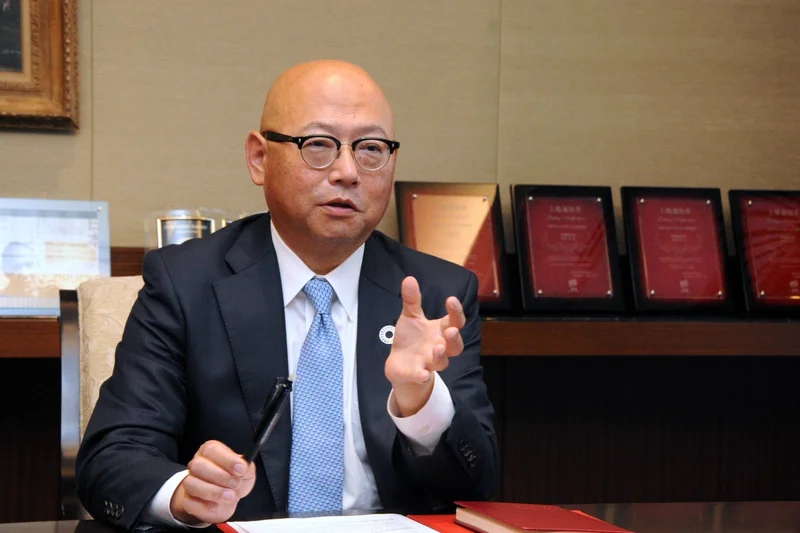
Daiwa Asset Management is planning to double its sales staff targeting institutional investors to about 20 people, its president said.
The Tokyo-based subsidiary of Daiwa Securities Group, Japan’s second-biggest brokerage, mainly focuses on individual investors. But a government drive to boost returns to fund a rapidly aging population and attract more foreign capital has opened up pension funds and universities as a potential new target market, Daiwa AM President Kei Sano said.
“We want to expand our team by bringing in experts who can hit the ground running — we won’t hesitate in hiring,” Sano said in an interview. The company will seek new clients including those from public and corporate pension funds, as well as endowments and foundations of universities, he said.
Daiwa AM had 744 employees and executives as of April 2025.
Japanese institutional investors such as pensions and universities, which have tended to park their money in bonds and cash, are facing growing pressure to increase returns as inflation returns to the economy. Government calls for more efficient use of corporate capital are adding to the stress. Some of these institutions have reacted by appointing chief investment officers for the first time, to oversee efforts to lift returns.
Daiwa AM’s asset data show its high reliance on individuals. It had ¥44 trillion ($270 billion) in assets under management at the end of March. Funds explicitly coming from institutions totaled only about ¥3 trillion, in the form of funds entrusted to it for its advisory businesses, company data showed. The rest was mainly publicly issued investment trusts held for the most part by individuals.
To strengthen its corporate business, the asset manager unveiled a capital and business alliance with Japan Post Insurance in May 2024. Sano said Daiwa AM is trying to boost its staff’s market expertise via personnel exchanges with the insurer.
Daiwa AM also has a goal to get more into alternative assets. It acquired in July 2025 a firm affiliated with Mitsui \& Co. specializing in those investments including private equity and infrastructure.
Those assets are growing in popularity because they often offer high yields and their market moves tend to have limited connection to traditional securities like stocks and bonds.
Making changes like those are crucial to staying competitive in a changing market, Sano said.
“Without excellent investment results, we won’t remain in the selection process” of investors looking for funds to park their money in, he said.