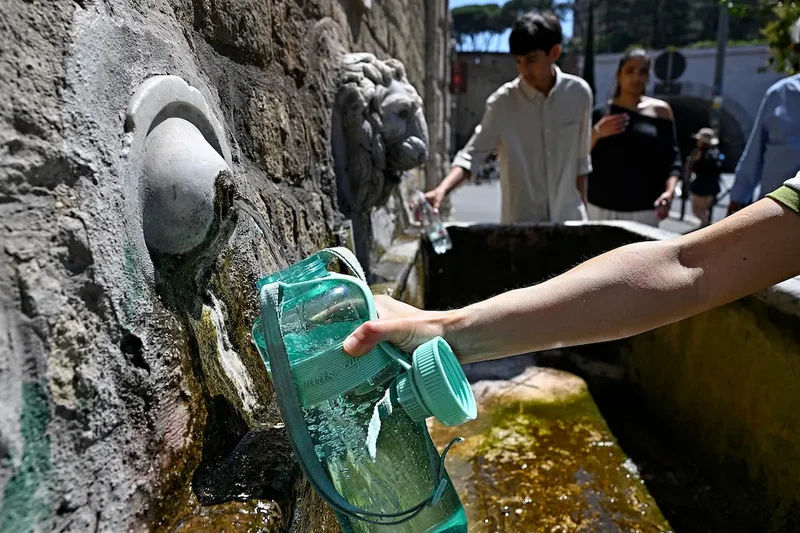
Italy’s mid-August summer holiday is usually considered the hottest period of the season as well as the busiest, with most of the country fleeing to the coast or mountains to escape the scorching heat of the city.
That’s expected to hold true this year – though following a series of record-breaking heatwaves that have dominated Western Europe since June, it won’t be anything worse than people in Italy have already experienced so far this summer.
“The heatwave that has been engulfing our country for so many days now shows no signs of letting up”, say the meteorologists at weather site iLMeteo.it.
Saturday, August 15th will see Italy gripped by “sweltering heat due to the persistence of a vast high-pressure system” fueled by hot air masses from North Africa, predicts iLMeteo’s Mattia Gussoni.
“As well as plenty of sunshine for Ferragosto, we expect high maximum temperatures, widely exceeding 35–36°C in the main cities.”
READ ALSO: The heatwave vocabulary you need to follow an Italian weather forecast
Temperatures will likely climb higher than this in central regions including Tuscany and Lazio and parts of inland Sardinia, where mercury levels could exceed 40°C.
Only the central-western Alps and mountainous areas in southern Italy and Sicily are expected to be affected by scattered showers that could bring temperatures down.
As early as Sunday afternoon, however, things are set to shift with the arrival of a cold front in mountainous regions.
“Initially, we'll have plenty of sunshine across much of Italy, with temperatures well above seasonal averages”, says Gussoni.
But between Sunday afternoon and evening, “the arrival of cooler, more unstable air currents at high altitudes will trigger thunderstorms in the mountains”.
Northern Alpine areas and inland parts of central and southern Italy face localised downpours, strong winds and hailstorms that herald “a much more radical change in the weather”, he adds.
“Over the course of the next week, in fact, the low pressure system will make a more decisive impact on our country, paving the way for a phase of widespread stormy weather bringing thunderstorms and a general drop in temperatures.”
The news will come as a relief to people in Italy, who have been grappling with extreme heat since the start of summer.
The EU’s Copernicus climate change monitor on Monday said Western Europe had experienced its hottest June and July on record.
Scientists have shown that recurring heatwaves are a clear marker of global warming, primarily caused by burning coal, oil and gas – and warn they are set to become more frequent, longer and more intense.