Good morning, hope you had a great weekend. Today I’m reading about Anthony Bourdain’s early years, depicted through the film Tony releasing this week, listening to Broken Social Scene’s new album after seeing them live this weekend, merging all my chats in the new version of Beeper, and finding open-source alternatives to everything at OpenAltFinder.
Tomorrow is basically Christmas for the 9to5Google editors. Google is announcing its latest batch of phones, tablets, and accessories (?). Based on the bevy of leaks over the past few weeks, I’m not anticipating any major surprises, but it’s still a good time to be a phone fan.
As a reminder, Inbox is the tech newsletter you should be able to read in around 95 seconds. We cover the most important 9to5Google stories from the last couple of days along with a few highlights from around the web. We publish every Tuesday and Thursday, and if you like what you read, please subscribe.
Read previous issues of Inbox here, along with Ben’s excellent Weekender column.
⭐️ Starred
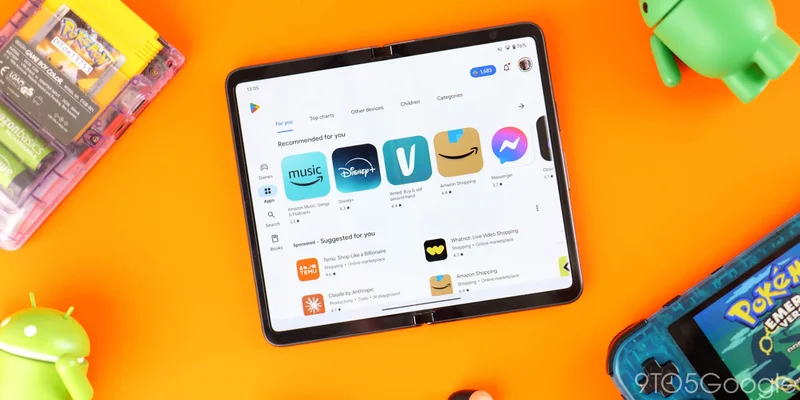
Third-party app store Aptoide is now available on Google Play in the US. Now what? That’s the question that’s looming over the changes made to Google’s app store policies in light of its court case loss to Epic, which sued the company (along with Apple) in 2020 after adding its own payment processor to Fortnite.
Aptoide itself isn’t that important; it’s a games-first app store that’s been around for nearly 20 years in some form on Android, and has expanded to iOS in countries that support it. (On a humorous note, our last story about the company detailed a data breach that exposed the personal information of 20 million Android users.)
But the yo dawgification of the Play Store has broader implications for the app industry, particularly for mid-sized discovery engines which see value in curation. Over the years, Google has tried many things to make it easier to discover new apps and games, but the incentive structure always seems to prioritize big publishers with lucrative subscription models, of which Google can take a sizable cut.
While the barrier to entry for an app store to find its way into Google Play is significant — at least $15,000 per year, plus potentially much more in review costs — the very opportunity to offer a more selective and high-quality subset of Android apps could itself be enough to get developers excited.
Then there’s the potential for names like Microsoft, Epic, Valve, and others to offer exclusive titles directly through their stores, and this seemingly minor change to US Play Store policy could have massive implications for how Android users find and pay for apps and services.
It’s unlikely we’ll see Steam on the Play Store anytime soon, but given Valve’s work getting Proton emulation working on ARM chips for its upcoming Steam Frame headset, I’m sure it’ll be technically possible in the future. Plus, Microsoft’s been looking to expand Game Pass to mobile for years, and though iOS is likely to be the bigger revenue generator, the Android ecosystem is bigger and could be a proving ground for the technology’s official mobile launch.
Of course, the caveat is that because the ruling is US-centric, Google is choosing a slightly different path for the rest of the world: Registered App Stores will start operating alongside a future Android 17 release, likely in September, so we’ll see what that looks like soon enough.
This rigmarole is separate from Google’s developer verification policy, which also starts rolling out later this year and into 2027. The move has been controversial among open-source advocates who say it will slow or prevent the distribution of apps outside of Google’s increasingly walled app garden.
✉️ Inbox
- Google Play adds Venmo as a payment method for apps, games, and more. “Today, Google is adding Venmo as an all-new way to make purchases on the Play Store, meaning that $40 you keep forgetting to transfer to your bank account just became your ticket to movie rentals, ad-free apps, and more.”
- Samsung will reportedly make an extra one million Galaxy Z Fold 8 units. The victory lap continues for the Korean giant.
- Google Sheets gets a new icon (sort of): Mistake or due to feedback? OK?
- Galaxy S26 FE specs leak alongside a higher price tag. Samsung’s budget flagship ain’t so budget anymore.
- Google’s base Pixel 11 probably won’t have ‘HiLight’ but will actually have enough RAM. Great news for those who like performance more than colorful lights!
- The Future is for Everyone. The man who made everyone more isolated and lonely wants cheap and abundant superintelligence for each person on earth. What could go wrong? [Meta]
- iPhone 18 Pro BOM Cost Expected to Surge Nearly 40%, Leaving Apple to Sacrifice Margins to Sustain Shipments. Woof. Sometimes the title says it all. [TrendForce]
- Flock Cameras Can Track Every Car in America. Police Love Them. Citizens Don’t. (NYTimes $)
🤑 Action items
I buy an unreasonable number of headphones, from the cheap and cheerful to the far-too-expensive, all in the quest of a blissful peak music state that seems ever further out of reach.
The latest pair to cross my path is from Bose, the second-gen QuietComfort Headphones, releasing later this week. It took me a while to warm to Bose’s sound profile, which tends to be a little too boomy for my taste, but the company’s app (if not its equalizer, which is still not parabolic) has improved measurably in recent years, and I still prefer the comfort and listening experience for travel.
The new $359 headphones have a new, more comfortable design that closely resembles their more expensive QC Ultra sibling, while improving noise cancellation and adding a bunch of spatial audio features I’m pretty dubious about. Still, Bose has updated the fundamentals, too: better microphone quality for calls and ANC, and a host of delightful colors including purple, mint, and olive green.
If none of the upgrades feel essential to you, Bose has discounted its first-gen QC Headphones to $229, which is a pretty good deal.
And if you want a really good deal, Ben just reviewed the latest Nothing Ear (3a) and said, “No qualifiers, no caveats. Just the best earbuds you can buy right now.” Not bad for $99.
🙃 FWD:
This section has some of our favorite stuff from around the internet. Great videos, weird memes, fun reads, recommended apps, whatever. Send us your recommendations!
Incredibly, it was nine years ago that Scotty Allen of the Strange Parts YouTube channel released his video about building an iPhone from spare parts he bought in the cavernous multi-level complexes of Shenzhen.
Since then, the city has adopted a robot-first culture and Isaac Mosna, who goes by Canoopsy, just returned from a trip to the metropolis where he shows off the sheer size and audacity of its technological abundance.
Tom Hitchins of Byte Review also has a slower, cozier take on the same trip if you’re looking for more robot-centric content.
These kinds of videos fascinate me, particularly as the conversation about China has shifted in recent months around the country’s stance on open-weight AI in light of limits on its ability to import the chips needed to create state-of-the-art models.
🗑️ Trash
YouTube has announced that starting February 1, 2027, it will enforce a new monetization policy for creators not already part of the YouTube Partner Program that effectively doubles the number of watch hours needed to make money on the platform.
Right now, video makers can start earning money if they have 1,000 subscribers and have achieved either 4,000 hours of YouTube watch time or 10 million Shorts views in the last 90 days. But that number will double for people not part of the YPP at the time of transition. Existing creators won’t be affected.
YouTube says this change is being made to “keep pace with the growth” of the platform, which is trying to add higher quality long-form content to better compete with streamers like Netflix. By keeping the creator pool relatively small — or at least smaller than it would be if the changes weren’t made — Google says its per-user pool will be higher. It’s also touting the expansion of its cheaper YouTube Premium Lite subscription as a way to offer even more revenue to creators.
Creators earn money from these subscriptions through a dedicated pool of revenue for each subscription type: 30% of the net subscription revenue for Premium and 60% for Premium Lite. This pool is distributed to creators based on member watch time and views, and from that distribution creators receive revenue share: 55% for long-form videos and 45% for Shorts. With these additional subscribers, creators can expect higher earnings: when a user signs up for Premium, partners, on average, earn more than when the user was watching ads.
We’ll see. It’s already too difficult for existing creators to make money from Google’s built-in monetization tools, and given the amount of AI slop being uploaded to YouTube every day, the incentives to make good, cheap stuff — you know, the stuff that made YouTube what it is today — keep weakening.
Like what you just read? Subscribe to Inbox today and get it in your email every Tuesday and Thursday morning. Got feedback? Send us an email.
You can also support us by becoming a 9to5Google Pro member, starting at just $5/month. You get bonus podcast episodes, access to our members-only Discord server, and lots more.
Thanks for reading, and have a great day. See you on Thursday with all the latest from Made by Google.