Amazon is spending $5M to kill a single New York City bill, and the size of that cheque is the most honest story the company has said about the fight.
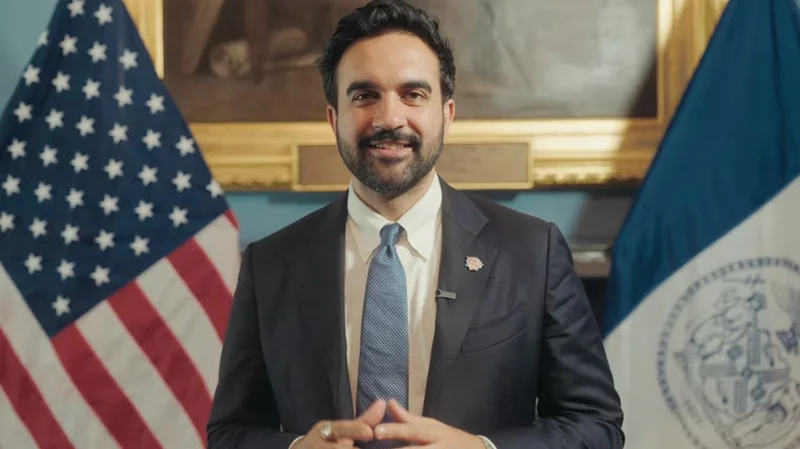
The measure is the Delivery Protection Act, backed by Mayor Zohran Mamdani and carrying a majority of the City Council, and it would do the one thing Amazon has spent years and fortunes avoiding: make the company directly employ the couriers who deliver its packages.
Yet, the company frames this as a threat to jobs and prices, but it is really a threat to a very useful fiction.
That fiction is the gap between the logo on the vest and the name on the payslip. The bill, introduced by Council Member Tiffany Cabán and since embraced by Mamdani, would require any company running last-mile delivery hubs in the city to directly employ the people who do the delivering.
Amazon is the obvious target, though FedEx and several regional couriers would be caught too. It should pass, and other cities should copy it word for word.
To see why, look at how the model actually works. Amazon launched its Delivery Service Partner programme in 2018, and today a driver in a blue Amazon vest, steering an Amazon-branded van out of an Amazon warehouse, guided by Amazon’s routing software and measured against Amazon’s performance scorecards, is very often not employed by Amazon at all.
In New York the work runs through more than 40 neighbourhood contractors. The staff in yellow vests inside the warehouse belong to Amazon; the drivers in blue who take the packages from them do not, and the instant a box crosses that threshold, so does the liability.
It is a clever piece of choreography, the same manoeuvre Uber fought to protect when it refused to reclassify its drivers as employees, and its purpose is not, whatever the contractors insist, local expertise. Its purpose is deniability.
The consequences are not abstract, even if Amazon disputes the specifics. A couple of drivers interviewed by Bloomberg describe faulty van brakes, being told to keep working through injury, and collapsing in summer heat inside vans whose air conditioning cools only the cab, a hazard that the city’s delivery drivers have flagged independently as well.
“When there are packages littered across the street or a van hits somebody, Amazon is able to say not my problem, not my employee,” as Cabán puts it.
She is describing a company posting record profits, run by the third-richest man alive, that has engineered its delivery network so that the people bearing the physical risk are always someone else’s to answer for.
This is not a New York quirk, and it is why the rest of the world should pay attention. The economist David Weil, who ran wage-and-hour enforcement under Barack Obama and wrote the defining study of what he calls the “fissured workplace,” frames the bill as an attempt to draw a line in the sand and say Amazon is the employer.
The same argument has been fought over gig work on every continent, from the New York courts that forced benefits onto Uber and Lyft, through the UK Supreme Court’s landmark ruling against Uber, to China’s new rules for 200 million platform workers.
The technology changes, but he dodge does not. Build a workforce you control in every way that matters, then disclaim the one obligation that costs money.
Amazon’s answer has been a reported $5M campaign against the bill and a warning that thousands of jobs will vanish and deliveries will slow.
It is worth taking those fears seriously, because the roughly 5,000 drivers are right to want certainty. But the bill carries a one-year implementation window and a hiring preference for the very workers doing the job now, demand for home delivery is not about to evaporate, and the loudest warnings come from the contractors whose entire business depends on the arrangement staying exactly as it is.
The threat to flee the city deserves the same scepticism. An industry-funded study warns that a typical household would pay an extra $664 a year if Amazon left, yet Amazon’s whole promise is speed, and speed needs warehouses close to customers. The company did not open around 15 hubs across the five boroughs for sentimental reasons.
And direct employment is not only about assigning blame after the fact; it is about the deal these workers get every day.
Under the contractors, an employee at one Brooklyn firm pays $266 a month for the most basic health plan, some 43% of its cost, against a national average worker share of 16%.
Amazon covers far more for its own warehouse staff, offering plans for as little as $20 a month. Bring the drivers in-house and their protection improves almost by definition.
The pattern repeats with liability cover: the small delivery firms typically carry around $1m, while UPS, which employs its drivers outright, carries roughly five times that. Responsibility and coverage rise together, which is the entire point.
None of this requires pretending the picture is simple. Some contractors, such as the Brooklyn operator who pays above the minimum and offers vacation, benefits and a retirement match, run decent shops, and some drivers genuinely fear the disruption more than they trust the promise.
That tension is real, and the transition has to be handled with care rather than triumphalism. But a law should be judged by the structure it repairs, not by the best-behaved operator working within it, and this structure is built, from the warehouse door outward, to ensure that no one in a suit is ever holding the box when something goes wrong.
New York has walked this path before, with the 2024 Safe Hotels Act that forced large hotels to employ their core staff rather than rent them from subcontractors, and the delivery bill fits a mayor who has already extracted a settlement from Uber Eats and moved against junk fees.
Amazon has tangled with the city before too, abandoning its Queens campus in 2019 after a backlash it never quite forgave. It will fight this in court, exactly as Weil predicts, and it may win a round along the way.
Yet the principle underneath the bill is simple and long overdue. If you dress a worker in your logo, fill their van with your packages and track their every stop with your algorithm, you are their employer, whatever your contracts say.
The Teamsters have promised to carry the measure to other cities if it passes, and they should, because for more than a decade the platform economy’s cleverest innovation has been legal rather than logistical: the art of being everywhere and responsible for nothing. New York is finally calling that bluff, and it is right to.
Get the TNW newsletter
Get the most important tech news in your inbox each week.