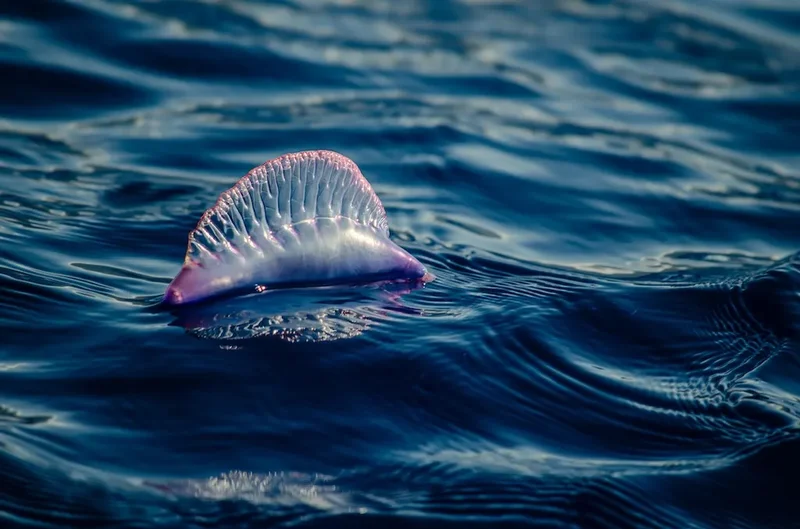
Portuguese Man o'War are not common on Spanish beaches, but over the last few weeks there have been regular sightings of them in the north, particularly in Cantabria and the Basque Country.
In San Sebastián, a total of 120 people were stung by them in just one day and there have also been reports of 800 people being stung by them during the month of July alone.
The man o'war – not strictly a jellyfish but a floating colony of microscopic hydrozoans – has tentacles that can reach 30 yards long and are barbed with a sting that typically cause painful welts lasting up to three days.
In Spanish it's known as a caravela portuguesa.
The most common symptoms of a sting include burning and itching of the affected area, however, the sting can also cause intense pain, nausea, fever and vomiting.
In some cases the sting can cause an allergic reaction and in rare cases, heart failure or even death. They are also particularly dangerous for young children.
Even when washed up on the sand, the stings still contain venom. If you see one, it's best to alert the lifeguards straight away.
Here's what to do if you see one or are stung by one:
Rule No. 1: Don't touch it
Man-of-war fish have stinging cells that are still active and capable of stinging even after the creature is dead and washed up on shore. So don't touch it.
Rule No 2: Listen to lifeguards
If the red flag is raised then don't go into the water. If you break that rule you may face a fine or even be stung by one of the creatures lifeguards are trying to protect you from.
If you are in the water then you may be stung without even seeing the culprit. The Man-of-war looks like a floating blue and purple bubble on the surface, but they have practically invisible tentacles that typically extend over 10 metres under the surface of the water and sometimes stretch to 50 metres. So even if you see one on top of the water and stay away from it, you could be swimming close to its tentacles.
Rule No. 3: Get help if you are stung
If you are stung then leave the water immediately and look for a lifeguard. If there are no lifeguards on the beach, wash the wound with salt water and remove any tentacles stuck to the skin by dousing the site with sea water.
Never use fresh water as that can actually cause the stinging cells, or cnidae, left on your skin to discharge, which could make the sting worse.
Don't touch the tentacles with your bare hands, and don't scrape them off your skin with objects like a credit card or razor, because that could increase pressure around the sting and make it worse.
Some experts suggest cooling the area down by applying ice for around five to ten minutes. You can also try using rubbing alcohol. Don't use vinegar, which is advisable for some jellyfish stings.
Protect the area by using an antiseptic to avoid infections and apply warm water and a cortisone cream afterwards.
If the pain continues, make sure you consult a doctor.
Rule No. 4: Don't pee on it
If you've ever seen that episode of Friends, the first thing you might think of is to put pee on your sting, but this is a bad idea. Professor Josep Maria Gili from Barcelona's Institute of Marine Sciences warns against the common myth that urinating on a jellyfish sting can help ease the pain.
"That is absolutely false," he told The Local. "It could be effective for some fish bites but never for jellyfish."
In fact, it might actually make the stings worse.
Rule No. 5: Seek medical attention
If you get stung by a man-of-war and you have trouble breathing, this could be a result of severe envenomation or allergic reaction and you'll need to see a medical professional immediately.
Extremely painful stings also require medical attention, as do stings that make you feel dizzy or disoriented.