The latest Brand South Africa Global Reputation and Domestic Perception Study leaves me with mixed emotions. It is encouraging because it reminds us that the world still sees extraordinary promise in our country. It is sobering because it reminds us that perception remains one of our greatest challenges. It is, in many ways, a bittersweet report.
Perhaps that is because South Africa has become a nation of contradictions. We are simultaneously admired and misunderstood. Celebrated and criticised. Loved and feared.
There is the South Africa that is real and undeniable. There is the South Africa that is perceived, often without context or lived experience. Then there is the South Africa that is intentionally portrayed in the darkest possible light by those whose political, ideological or economic interests are served by weakening our national brand.
These three realities compete every day. The first deserves to be celebrated. The second demands honest engagement. The third requires courage to confront.
The undeniable South Africa is a remarkable country. Those who visit us overwhelmingly leave with stories that differ profoundly from the headlines they consumed before arriving. Most of those headlines are pushed by our own local media. They discover warmth instead of hostility. Hospitality instead of suspicion. Diversity instead of division. They encounter communities that welcome strangers, landscapes that rival the finest anywhere in the world, entrepreneurs who innovate despite difficult circumstances, and people whose resilience continues to inspire.
Our tourism sector continues to demonstrate remarkable resilience, welcoming growing numbers of international visitors despite global economic uncertainty. Visitors repeatedly rank South Africans among the friendliest people they have encountered. Our food, wine, wildlife, sporting events, cultural festivals, heritage sites and creative industries continue to earn global recognition. We remain a country capable of hosting world-class international events, producing globally respected scientists, artists, entrepreneurs and sportspeople, and contributing meaningfully to continental and international affairs.
We remain Africa's most industrialised economy. Our Constitution remains among the world's most progressive. Our courts continue to demonstrate independence. Our civil society remains vibrant. Our media remains robust. Our universities continue to produce globally competitive graduates. Every day, millions of ordinary South Africans quietly build businesses, educate children, serve communities, volunteer, innovate and care for neighbours without expecting recognition.
This is also South Africa.
There is an old South African saying that our national mood should come with a fixture list. When the Springboks lift a trophy, the Proteas are firing, or Bafana Bafana string together a few victories, we suddenly discover that we all have the same surname: South African. Strangers hug at traffic lights, braai invitations multiply, and everyone becomes an overnight sports analyst. But let one of our teams lose three matches in a row and, before the final whistle has even blown, we are questioning the coach, the players, the referee and, occasionally, even the Constitution. Humour aside, it reveals a profound truth about our nation brand: our social cohesion is deeply intertwined with our performance in sport. Sport has long been one of South Africa’s greatest nation-building assets. It reminds us that, despite our differences, we are capable of believing, celebrating and dreaming together. If ninety minutes on a football pitch or eighty minutes on a rugby field can unite more than sixty million people, imagine what ethical leadership, safer communities, functioning municipalities and a shared national purpose could achieve. The challenge for our nation brand is to cultivate that same spirit of unity when the scoreboard is not in our favour, because the true strength of a nation is measured not only by how it celebrates victory, but by how steadfastly it stands together through defeat.
Yet pretending this is the whole story would be dishonest. There is another South Africa.
It is the South Africa of corruption that steals from the poor before it steals from the fiscus.
It is the South Africa where governance failures deny communities clean water, reliable electricity and functioning infrastructure.
It is the South Africa where crime has become so commonplace that many have normalised what should never be normal.
It is the South Africa where grime, neglect and decaying public spaces communicate abandonment long before a tourist enters a hotel or conference venue.
No branding campaign can compete with potholes that swallow roads, railway stations left to decay, litter-filled streets, dysfunctional municipalities or corruption that robs citizens of both dignity and hope.
Brands are not built by slogans. They are built by lived experiences. This is why perception matters. But perception cannot simply be managed through communication. It must first be earned through conduct. How do we expect our national brand to flourish when we ourselves so often pull it down through both our actions and our words?
Every act of corruption weakens the flag. So too every violent crime, every racist incident, every broken traffic light, every dishonest tender and every piece of litter.
Every time we become ambassadors of hopelessness, exaggerating our failures while ignoring our strengths, we weaken the flag.
Nation branding is not the responsibility of Brand South Africa alone. It is a collective national discipline. To confront our brand challenges honestly, we must first be willing to name them. We must become comfortable saying the uncomfortable. We cannot heal what we refuse to diagnose.
Recently, much attention has rightly been given to anti-illegal immigration protests and movements such as March and March. Many have pointed to their impact on South Africa's image across the African continent. There is no doubt that scenes of hostility towards fellow Africans have consequences for how we are perceived beyond our borders.Yet if we are serious about protecting our national brand, consistency demands that we tell the whole story.There are those who hunt with slogans. There are those who hunt with cameras. There are those who hunt with carefully constructed international campaigns.
One does not need to agree with every government policy to recognise that some organisations have deliberately invested significant effort into presenting South Africa internationally as a nation beyond redemption. Among the most visible have been organisations such as Solidarity and AfriForum, whose international campaigns have frequently projected an image of South Africa defined almost exclusively by racial victimhood, institutional collapse and selective narratives that often overlook the country's complexity.
Whether one agrees with their positions or not, it is difficult to deny that these campaigns influence international perceptions.
Brand building becomes infinitely harder when fellow South Africans actively market despair abroad. This should concern all of us. Equally, it should concern us when the government responds to criticism with defensiveness rather than reform. Neither denial nor exaggeration serves our democracy.
The answer is neither propaganda nor pessimism. It is credibility. We should never ask the world to ignore our failures. We should instead demonstrate that we possess the courage to confront them. That is how trust is built.
Sometimes I wonder whether we are slowly drifting back towards the anxieties of the early 1990s, when so much national energy became focused on reassuring white fears while millions of black South Africans continued waiting for the full realisation of their aspirations.
This is not to dismiss legitimate concerns held by any community. Every South African deserves safety. Every South African deserves dignity. Every South African deserves equal protection under the law.
However, nation building becomes distorted when fear becomes the dominant export and hope becomes the forgotten product. Our greatest export should never be anxiety. It should be possibility.
I have had the privilege of travelling extensively. Wherever I go, I proudly fly the South African flag. I speak about our people with conviction. I celebrate our resilience. I defend our democracy. I tell stories of Ubuntu, innovation and possibility. I am, unapologetically, an ambassador for my country.
Yet I would be dishonest if I said there are no days when my heart breaks. There are days when another corruption scandal emerges. Days when another municipality collapses. Days when another tourist becomes a victim of crime. Days when another South African publicly declares there is nothing worth saving.
On those days it feels as though we are scoring own goals in a match we cannot afford to lose.
Patriotism is not pretending everything is perfect. Patriotism is refusing to abandon the project of making it better. Loving South Africa means celebrating what deserves celebration while demanding better where better is required.
Brand South Africa's report should therefore not simply be read as a communications assessment. It should be read as a mirror.
The question is not merely how the world sees us. The deeper question is whether we are becoming the nation we promised ourselves we would become. How do we see and present ourselves?
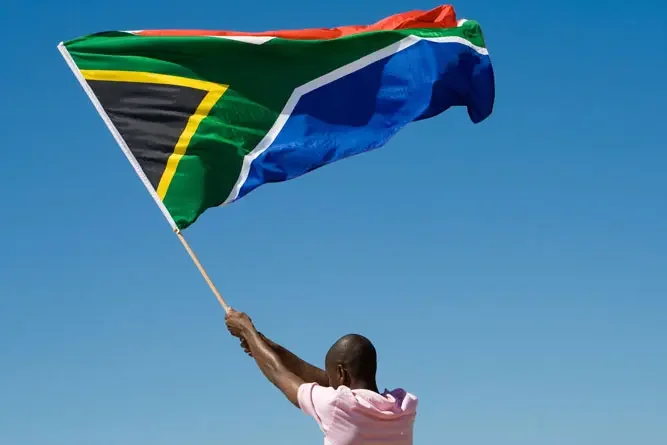
The flag we wave carries more than colours. It carries responsibility. It asks something of every one of us.
To carry the flag is to reject corruption. To carry the flag is to serve before we seek recognition. To carry the flag is to sacrifice for future generations. To carry the flag is to speak honestly without surrendering hope.
A nation's brand is ultimately nothing more than the accumulated character of its people.
If we wish to change how the world speaks about South Africa, we must first change how we serve South Africa.Our greatest brand ambassadors will never be advertisements. They will be ethical leaders, honest public servants, welcoming communities, safe streets, functioning municipalities, thriving businesses and citizens who understand that every act of integrity strengthens the nation.
Our greatest brand threat wears our colours. But so too does our greatest hope. The choice, every single day, belongs to us.
A promise made is a debt unpaid. We promised ourselves in 1994 that we would build a nation founded on dignity, justice, opportunity and shared prosperity. That promise still calls our names. Let us carry our flag not only with pride, but with service. Not only with words, but with sacrifice. Not only with hope, but with the determination to become a South Africa whose greatest story is still waiting to be told.
Sello Hatang is Executive Director: Re Hata Mmoho