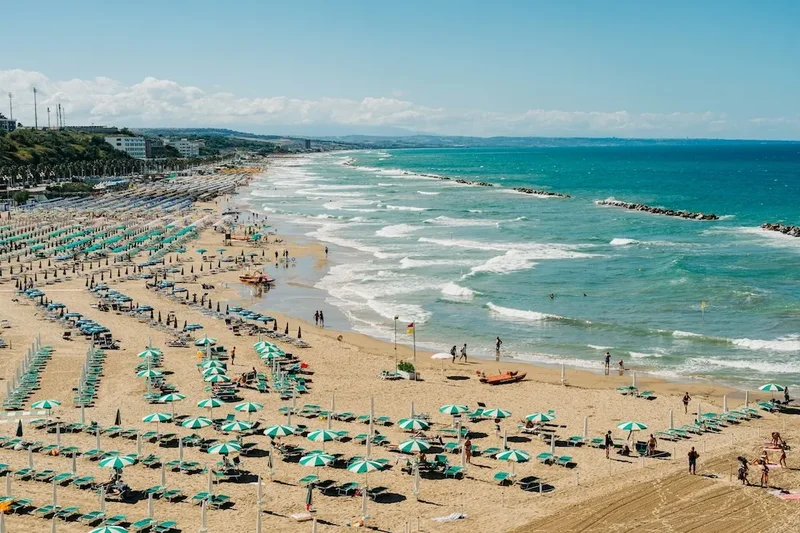
It can cost a pretty penny to spend a day at the beach at Italian beach clubs (stabilimenti balneari), and prices are on the rise.
According to Italian consumer group Altroconsumo, beach club prices across Italy are up an average of six percent from last summer, with some places showing increases of up to 16 percent.
In a comparison of 222 private lidos across 10 popular beach towns, Alassio – on the Italian Riviera in Liguria – emerged as the most expensive place to go to a beach club. There it costs €368 to rent a front-row umbrella and two lounge chairs for one week in August.
Beach clubs with the steepest price hikes this year reflect international tourist trends, as Sardinia, Puglia and certain parts of Sicily become mainstream among foreign visitors to Italy.
Private clubs in Sicily's Taormina and Giardini Naxos saw the biggest jump in prices this season, with a price point set 16 percent higher than last year (at €245).
READ ALSO: The polluted Italian beaches to avoid this summer
There were also significant price increases in the Sardinian city of Alghero (14 percent, to €288) and Gallipoli in Puglia (10 percent, to €337).
Beaches on the Adriatic coast tend to be more affordable.
Lignano in Friuli-Venezia Giulia is the cheapest option of the surveyed beach towns; you can spend a week at the beach for €164. Other similarly priced options can be found in Rimini (Emilia-Romagna) and Senigallia (Marche), where you can expect to pay about €170.
READ ALSO: Where to find Italy's 38 new Blue Flag beaches
Over the past five years of running the study, Altroconsumo has found a 24 percent increase in beach club prices.
It's widely estimated that at least half of Italy's nearly 8,000 kilometres of shoreline is operated by private lidos, where you have to pay for beach access.
READ ALSO: Why Italy's 'top-ranked' beaches are among the most restricted
While there are some hidden gems, free beaches (spiagge libere) tend to be found in less desirable parts of the coast, such as near river mouths and places that are more rocky or with uneven terrain.
These beaches rarely have facilities, such as restrooms, and importantly there are no lifeguards on duty. You also have to bring your own umbrella, chairs and even food, since it's rare to find a snack bar at a public beach.
More than 80 percent of Altroconsumer's survey respondents reported the availability of such facilities as the reason they chose to pay for a private beach club.
The market dominance and high prices of paid beaches has long been a contested issue in Italy.
Mare Libero is the organization at the head of advocating for greater public access to the coastline.
“We want to ensure maximum visibility, complete accessibility, and full use of the sea and beaches, 24 hours a day, 365 days a year”, they say on their website.
Altroconsumo is currently heading up a campaign and public petition to reform Italy's beach system, advocating for more free beaches, fair prices for consumers, and a more transparent tender process for private lido vendors.