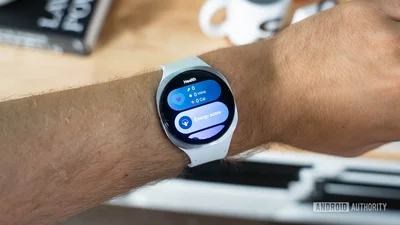
C. Scott Brown / Android Authority
The launch of the Samsung Galaxy Watch 9 series is nearly upon us, with this marking the first time in a while that I’ve excitedly anticipated the arrival of a Samsung smartwatch. So what changed? This year, I became the owner of the Galaxy Watch 8, and the smartwatch has become an integral part of my sleep tracking.
At the same time, competition in the wearables market is heating up. Companies like Google are diversifying their offerings with devices like the Fitbit Air, while premium smartwatch features are no longer limited to the top manufacturers. For the Watch 9 to really stand out for me, it needs to address a weakness of the Watch 8 — battery life.
Which improvement do you most want to see on the Samsung Galaxy Watch 9?
0 votes
A bigger battery.
NaN%
Faster charging.
NaN%
More health features that don't require a Galaxy phone.
NaN%
More accurate tracking.
NaN%
Something else (let us know in the comments).
NaN%
I love the Galaxy Watch 8, but its battery life is a major drawback
Megan Ellis / Android Authority
When I first started using the Galaxy Watch 8 for activity and sleep tracking, it lasted about three days. My previous smartwatch lasted a week, so although this was still significantly shorter, it felt like an acceptable compromise for the more accurate sleep insights. After all, I had stopped wearing my previous device in bed at all because its sleep estimates were off by several hours.
However, an update earlier this year significantly shortened the battery life of my Watch 8. Instead of the usual three days, I had to charge my watch every two days. At first, I thought the culprit was Spotify, but then I saw other Galaxy Watch users reporting battery issues.
Despite it being months since the update, my battery life hasn’t returned to its three-day peak. I usually have to charge it again before I reach the 48-hour mark. The exact culprit for the drain changes — sometimes it’s Samsung Health Monitor (even though I’m not using a Galaxy phone), and sometimes it’s Google Play. Either way, it’s annoying.
"An update earlier this year reduced my Watch 8's battery life from three days to two."
I thought I would get used to the inconvenience, but instead it has become more frustrating. I feel like I’m tethered to the charger. On more than one occasion recently, I’ve gone to bed and woken up with a fully drained watch. When I go for an overnight trip, I need to make sure it’s charged up before I leave, or I risk having a useless accessory.
The device’s charging is also not particularly quick, so this makes for a greater inconvenience. People often talk about topping up their smartwatch’s battery while taking a shower. However, it takes more than an hour for my Galaxy Watch 8 to fully charge. Often, I’ll take a shower and prepare dinner, only to find the device is still charging. I often miss out on significant steps tracking as a result.
I want the Galaxy Watch 9 to make significant battery improvements
Kaitlyn Cimino / Android Authority
While I’m excited about some of the Samsung Health app updates arriving with the Galaxy Watch 9, for the hardware itself, I’d love to see a significantly better battery. Samsung could do this by tweaking the watch’s battery capacity and the software that runs on it. I realized what a difference software could make when that problematic update cut my battery life in half.
"There are multiple ways Samsung could improve the Watch 9's battery life, including software and hardware improvements."
This is a trend with many Wear OS smartwatches, with two-day battery life being the norm. However, smartwatches like the OnePlus Watch 4 use a dual OS approach to extend battery life, lasting five days instead. Meanwhile, HONOR has recently launched the Watch 6, which lasts 17 days with typical use according to the company, but forgoes Wear OS in favor of HONOR’s own MagicOS.
Another way Samsung could increase the Watch 9’s battery capacity without increasing the watch’s size would be to adopt a silicon-carbon battery. This is the approach taken by the Xiaomi Watch 5, which runs Wear OS on the global edition while delivering around six days of battery life. The point is, Samsung has options, and I would like to see the company use them.
Other changes could make the Watch 9 a game-changer
Megan Ellis / Android Authority
While battery life is the primary improvement I want to see with the launch of the Galaxy Watch 9, I also hope Samsung brings other changes to the lineup. I’d love to see fewer features that are locked behind using a Galaxy smartphone. Currently, people who use other smartphones have to use apps like GeminiMan Wellness Companion to get around regional and device-locked features. These include features such as blood pressure monitoring, sleep apnea detection, ECG monitoring, and notifications for irregular heart rhythms.
These features are used as selling points for Galaxy Watches, yet the fine print notes that you need a Galaxy smartphone to use them. It’s a significant mark against the brand when these advanced features are exactly what some users choose the company’s watches for in the first place.
"Unlocking certain device features so that they're available to users without Galaxy phones could make the Watch 9 stand out more."
With the launch of One UI 9 Watch, I’m also looking forward to features like Vitals, which can flag any irregular trends in your baseline. I hope this fixes the issue where my watch always pushes me to do more, even when I’m ill or exhausted.
So far, Samsung has teased AI features for the new Watch 9 lineup. But if these are locked behind Galaxy smartphones, their reach will be limited. The company also teased battery improvements, so I hope these are significant.
However, I’ll have to wait until the devices are unveiled at Galaxy Unpacked on July 22 to see if my wishes for the series of smartwatches come true.
Thank you for being part of our community. Read our Comment Policy before posting.