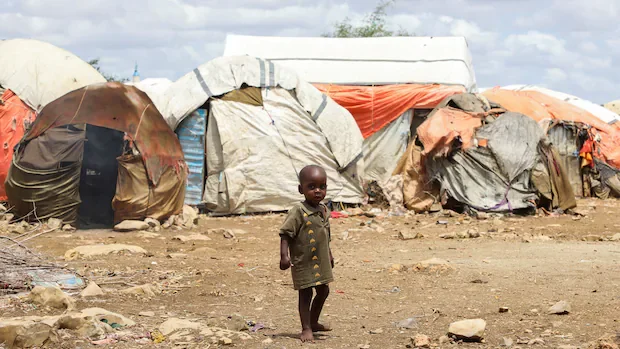
Somalia child hunger surges as aid drops, Doctors Without Borders says
Drought and conflicts are reviving fears of a repeat of Somalia's 2022 near-famine
Funding to tackle acute malnutrition in parts of Somalia has dropped by more than 80 per cent this year, Doctors Without Borders said on Tuesday, even though one in every four children screened in displacement camps in the southwest of the country is severely malnourished.
Mitchell Sangma, a health adviser with Doctors Without Borders, said the United States had cut its support to aid agencies in the country from $70 million US last year to no funding this year, leaving aid groups struggling to respond as needs rise. Other Western donors have also cut funding.
"This year we have admitted 22,000 nutrition cases, more than 80 per cent higher than last year. When we need this massive scale-up in intervention measures, we are seeing less interest from donor support," Sangma said.
A July survey by MSF of 888 households in 14 displacement sites in Baidoa, southwest Somalia, found that one in four children was severely malnourished. One-third of families said they were surviving on one meal a day, while only two per cent could afford three meals.
Somalia is facing a worsening hunger crisis after repeated failed rainy seasons devastated crops, killed livestock and depleted water supplies. Conflict and insecurity have compounded the crisis, disrupting livelihoods and limiting access to food, health care and aid.
In February, the Somali government and the United Nations said about 6.5 million people in the country faced acute hunger due to drought.
Doctors Without Borders said it had screened more than 21,000 children under five in Baidoa since the start of the year, finding acute malnutrition rates of about 50 per cent. Acute malnutrition is less extreme than severe malnutrition but still involves sudden weight loss and is life-threatening.
According to the United Nations, more than half a million people were displaced in Somalia in the first three months of 2026, with drought driving most of the movement. Women and children accounted for about 85 per cent of those displaced.
The crisis is reviving fears of a repeat of Somalia's 2022 near-famine, but aid agencies say the response is being constrained by severe funding shortfalls.
Doctors Without Borders says there is only about $300 million US available for Somalia from donors, compared to $2.2 billion that was provided by donors in 2022 when a similar drought situation was experienced.
"The world cannot wait for a famine declaration before acting," said Allara Ali, the project co-ordinator for Doctors Without Borders in Somalia. "Action is needed now to prevent loss of lives."