Africa Intelligence Brief — Tuesday, August 11, 2026
Executive Summary
Africa Intelligence Brief for August 11: fourteen illegal chrome miners died near Marikana, the UN is auctioning its Somalia mission assets as American funding ends, and Malawi is about to name the elite who took the plots.
Rio Times · Africa Intelligence Brief August 11
Fourteen men died in a hole they dug themselves, and the United Nations put its watchtowers up for sale.
South Africa – Fourteen Men in an Unofficial Mine
A rock fall at nine at night
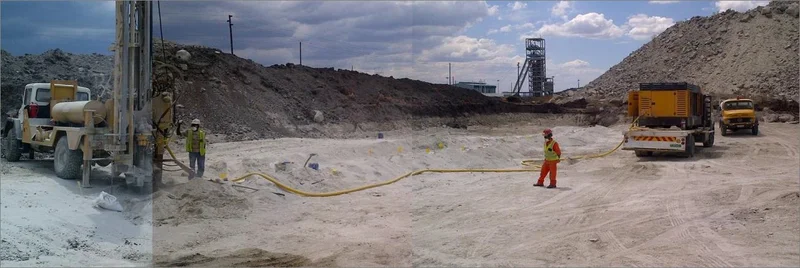
Fourteen illegal chrome miners were killed when rock collapsed on them near the Nkaneng informal settlement outside Marikana on Monday at about nine in the evening. Police confirmed on Tuesday that most of the dead were from Lesotho, that eight people had been admitted to hospital, and that an unknown number may still be underground.
Community and mining sources put the number of injured at seventeen. The provincial commissioner travelled to the site and the scene was still described as active.
Hiding in plain sight, five days before an anniversary
Illegal chrome workings and unlicensed washing plants are widespread around Rustenburg, described by reporters who have flown over them as hiding in plain sight. Last week investigators seized four excavators and a dump truck from one operation, and 23 illegal mining cases with 63 accused have been registered in the area in two years.
The national mood around this is weary rather than shocked, because everyone involved knew the holes were there. On 16 August it will be fourteen years since police shot dead 34 striking miners at Marikana, five days from now and a few kilometres away.
Somalia – The United Nations Sells the Watchtowers
Registration closed today
The United Nations support office in Somalia issued a tender on 6 August seeking licensed auctioneers to sell its property, with interested firms required to register by Tuesday. The list runs to vehicles, generators, computers, shipping containers, security watchtowers, wastewater plants, prefabricated accommodation, medical equipment and heavy construction machinery.
The office said the list is indicative and may grow. The initial contract runs three months, extendable three times.
What the sale is really about
Washington is moving to end funding for the logistical mission by the close of 2026, following a letter on 1 July citing concerns over Somalia’s performance against al-Shabab and its handling of security and governance. That mission supplies transport, fuel and food to roughly 12,000 African troops and police serving under the African Union.
Analysts in Mogadishu note the auction notice sets out no mechanism for independent oversight. The temper here is neither panic nor protest but a quiet institutional stocktake, a mission counting what it owns before someone decides it is leaving.
Malawi – The Audit That Will Name the Names
Two neighbourhoods, one list
Lands minister Chimwemwe Chipungu will present the findings of a pilot land ownership audit at a briefing in Lilongwe on Wednesday, an exercise the ministry began in February to strengthen land administration and improve transparency. The irregularities are reported to concentrate in Area 3 and Area 10 of Lilongwe, the capital’s most valuable residential districts.
The audit is understood to name ministers from both the current and previous administrations, sitting judges and members of parliament among those who acquired plots without following proper procedure. None of that is confirmed, and it remains open whether anyone will be publicly named or face any consequence.
The same appetite, in better shoes
A country that publishes such a list is doing something genuinely uncomfortable, and the seniority of those reportedly involved is the reason it matters. For anyone assessing property title in the region, an audit that reaches judges is a more useful signal than any index.
There is an unflattering symmetry to the day as well. Men died taking chrome that was not allocated to them, and a ministry is about to name officials who took land that was not allocated to them either.
Nigeria – A Disease Getting Deadlier, Not Just Wider
A thousand cases and a rising fatality rate
Nigeria has recorded 1,000 confirmed cases of Lassa fever this year and 237 deaths, according to reports the national disease control agency released on Monday. The fatality rate reached 23.7% in July against 18.8% in the same period last year.
Cases have appeared in 116 local government areas across 23 of the country’s 36 states, with Edo, Ondo, Bauchi, Benue and Taraba accounting for 86% of them. Those aged between 21 and 30 are the most affected group.
The cost of arriving late
The agency attributes the worsening death rate to late presentation, and cites the high cost of treatment as a reason people delay. Some 53 health workers have been infected, prompting a thirty-day protection plan for frontline staff.
A disease that kills nearly a quarter of the people it is confirmed in is a health-system measurement rather than a virological one. It is the same shortfall that sends men underground at Marikana, expressed in a different register.
Zambia – Two Days to the Copper Vote
The count begins Thursday
Zambians vote on Thursday for a president and parliament, in Africa’s second-largest copper producer, with 8.79 million registered voters and 14 approved presidential candidates. President Hakainde Hichilema faces a first-time challenger in Brian Mundubile, heading a coalition assembled after the former ruling party split.
One university poll puts Hichilema at 60% against a combined 35% for the opposition, and his party already holds 15 seats won unopposed. The main opposition has not fielded candidates in close to a third of parliamentary constituencies.
A formal sector asked to prove itself
The daily reality behind the vote is electricity. The state has been buying costly emergency power imports to head off blackouts running beyond twenty hours, in an economy whose mines cannot operate without reliable supply.
Constituencies were expanded from 156 to 226 by a constitutional amendment signed eight months before the vote, against which a legal challenge reached the Constitutional Court. Reform that cannot be felt at household level is difficult to defend at a ballot box.
What This Means From Latin America
A shared problem with a different name
South Africa holds the world’s largest chrome reserves, and ferrochrome is a stainless steel input, so unlicensed workings feed the same market as the licensed ones. Brazilian and Peruvian readers will recognise the pattern from garimpo and informal gold, where enforcement raises costs without removing supply.
The lesson from Marikana is that informal extraction is a labour market outcome before it is a policing one. Fourteen men from Lesotho crossed a border to dig chrome by hand because the licensed mine had no work for them.
And a template worth watching
Washington’s withdrawal of security funding in Somalia is the visible end of a broader retreat from multilateral commitments, and Latin America has seen the same instrument used in its own region. What the auction adds is a price list.
Health costs belong in the same calculation. A study published in Nature on 29 July, with researchers from the University of Cape Town, found climate change redrawing Africa’s malaria map, raising risk in southern and eastern Africa while parts of the west grow too hot for transmission.
Africa Intelligence Brief August 11: What We Are Watching
- Today – Whether more bodies are recovered from the Marikana chrome workings, where the scene remains active.
- Wednesday – Malawi’s lands ministry briefing, expected to name ministers, judges and members of parliament.
- Thursday – Zambia’s presidential and parliamentary elections.
- 16 August – The fourteenth anniversary of the Marikana massacre.
- End of 2026 – The scheduled end of American funding for the United Nations logistics mission in Somalia.
- Ongoing – Nigeria’s Lassa fever fatality rate, now 23.7% against 18.8% a year ago.
More from the Rio Times Intelligence Desk on August 11: the Europe Intelligence Brief, the Asia Intelligence Brief and the USA & Canada Intelligence Brief. For how these stories developed, see the Africa Intelligence Brief for August 10 and the Africa Intelligence Brief for August 7.
Frequently Asked Questions
What happened at the Marikana chrome workings?
Fourteen illegal chrome miners were killed when rock collapsed near the Nkaneng informal settlement outside Marikana in North West province at about nine on Monday evening, and police confirmed on Tuesday 11 August that most of the dead were from Lesotho. Eight people were admitted to hospital, community and mining sources reported seventeen injured, and police said an unknown number of miners may still be trapped underground with the scene remaining active.
Why is the United Nations selling its assets in Somalia?
The United Nations support office issued a tender on 6 August seeking auctioneers for vehicles, generators, shipping containers, security watchtowers, medical equipment and heavy machinery, with firms required to register by 11 August. It follows moves by Washington to end funding for the logistical support mission by the close of 2026, after a letter on 1 July citing concerns about Somalia’s performance against al-Shabab, with the mission supplying roughly 12,000 African troops and police.
What will Malawi’s land audit reveal?
The lands ministry will present findings on Wednesday from an audit begun in February 2026, which is reported to have found significant irregularities in plot allocations in Area 3 and Area 10 of Lilongwe, the capital’s most valuable residential districts. The audit is understood to name ministers from both the current and previous administrations, sitting judges and members of parliament, though nothing is confirmed until the briefing takes place.
How severe is Nigeria’s Lassa fever outbreak?
Nigeria has recorded 1,000 confirmed cases and 237 deaths in 2026, with the case fatality rate reaching 23.7% in July against 18.8% in the same period of 2025, according to disease control reports released on Monday. Cases have been recorded in 116 local government areas across 23 states, with Edo, Ondo, Bauchi, Benue and Taraba accounting for 86% of them, and 53 health workers infected, prompting a thirty-day protection plan for frontline staff.
Sources: Daily Maverick, Radio Dalsan, Nyasa Times, Premium Times
This article was produced by The Rio Times’ automated newsroom system. How we use AI · Report an error
LatAm Markets: Live Signals → — real-time movers, turnover leaders and FX across Latin America.