The end seems to be at hand at last for the long-festering scandal of people being sentenced to decades in prison for relatively minor offences.
The prime minister, Andy Burnham, is to be warmly congratulated for listening to the pleas of the prisoners, their lawyers, the campaigners and the (often lonely) campaigning journalism of The Independent. He has vowed to resolve the “long-running injustice” of indefinite jail terms as part of measures to ease prison overcrowding and stop PC Andrew Harper’s killers from being freed early. It proves, once again, the good that this work can do for the most vulnerable of people, work that is in the interests of society as a whole.
Mr Burnham is, in truth, the first prime minister to take anything like decisive action since David Cameron ended the disastrous experiment of so-called IPP sentences – Imprisonment for Public Protection – in 2012. He too acted on what was even then an obvious and inhuman practice.
But the change in the law, under the usual constitutional conventions, wasn’t retroactive. Thousands of troubled offenders who’d already been convicted were then left incarcerated on an indefinite basis with only the uncertain hope of parole. They faced the possibility of spending the rest of their lives behind bars, in effect, for robbery of a mobile phone or a laptop. Those languishing under the discredited scheme currently number about 2,300.
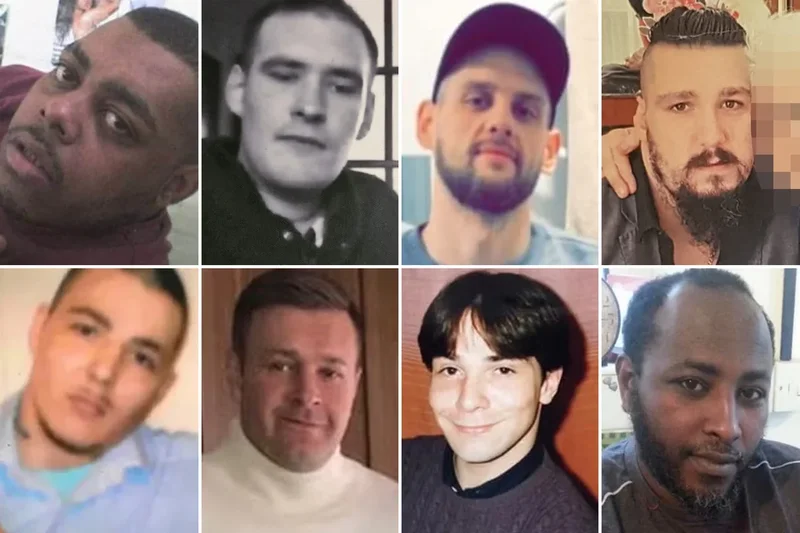
Now the prime minister has declared he wants a “resolution to the long-running injustice of IPP sentences” and has ordered his justice secretary, Alex Norris, to act. Their sentencing will be reviewed. That is, in fact, all that the IPP prisoners ask: not for pardons, or retrials nor immediate unconditional release, but only that someone should respond to their plight. Sadly, it is too late for the 96 IPP prisoners who have taken their own lives.
The IPP folly was born out of a performative political desire to be seen to be “tough on crime” as well as “tough on the causes of crime”, as the New Labour soundbite went.
It required judges to make an unprovable ruling on whether someone was so dangerous to the public that they had to be detained irrespective of whatever harm they’d actually done – often but not always on the margins of a custodial sentence.
The assumption was they would stay in custody rather than being set free after they’d actually done their time. It was an unworkable approach, but that doesn’t seem to have prevented it being imposed on many people who should not have been kept in jail, and carried grave risks to mental and physical health.
Plainly, the suffering has dragged on for far too long. The mystery is as to why. David Blunkett, who was responsible for introducing the innovation during the New Labour era, has since denounced it and powerfully added his voice to those wanting change.
How is it then that successive prime ministers, ministers, officials and lawyers, all solemnly sworn (literally or otherwise) to uphold law and justice, tolerated this situation for so long?
Secretaries of state for justice are invariably previously practising lawyers, and yet they apparently ignored this intractable and inconvenient disgrace to the system until the next politician came along. That includes, it must be added, Sir Keir Starmer KC, a former director of public prosecutions. Is it simply that “out of sight is out of mind”, and prisoners rarely feature high in the voters’ hierarchy of concerns?
The fundamental point is that these highly intelligent and experienced political and legal minds oversaw a legal IPP regime which broke the essential proportional link between a given crime and its punishment. To compound the error, they then violated one of the tenets of the Magna Carta – that justice delayed is justice denied – because the system failed to review their sentencing.
Dame Vera Baird, the chair of the Criminal Cases Review Commission, is the latest to add her backing to The Independent’s campaign. Exasperated, the other day she said of the IPP scandal that “somebody has to just seize the thing and get it sorted”. Well, now Mr Burnham has indeed done so, we hope.
For all that it is welcome, it is impossible to ignore the fact that it took an unprecedented prison overcrowding crisis and the justified public outrage about truly serious offenders being granted early release to force some overdue change. Redress for those, for so long wrongly imprisoned, is now at hand, and The Independent is proud to have played some role in that. The victims have to be given all the help they need to adjust and resume their lives.