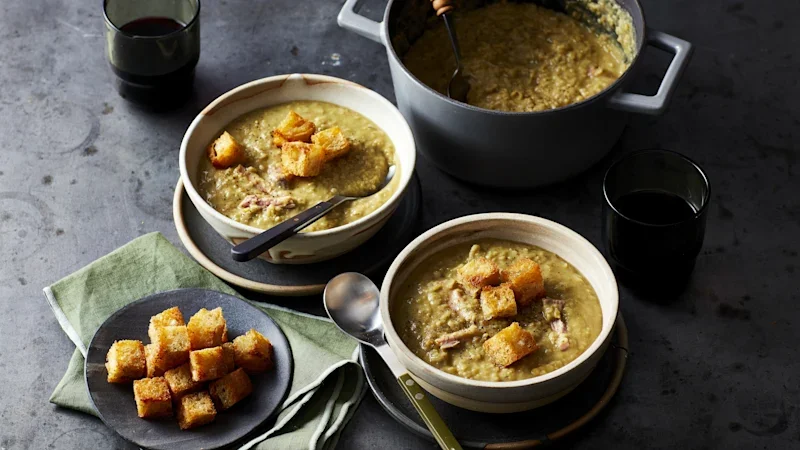
A classic pea and ham soup is a masterclass in affordability. A ham hock costs just a few dollars (even if prices are creeping up), and dried peas are among the cheapest items in the supermarket. Put them in a pot, and these budget staples transform into a rich, deeply satisfying soup that is so much more than the sum of its parts.
Ingredients
- 30g butter
- 1 brown onion, finely chopped
- 2 celery stalks, finely chopped
- 3 garlic cloves, roughly chopped
- 1 smoked ham hock
- 400g dried split green peas, rinsed
- 2 litres vegetable stock
- 1 tsp vegetable stock powder
- 2 fresh bay leaves
- 10 sprigs thyme
- a few parsley stalks
- salt and black pepper, to season
CROUTONS
- 2 cups sourdough bread, cut into 2cm cubes
- 2 tbsp olive oil
- 25g butter, melted
Method
-
Step 1- Heat a large saucepan over medium heat and add the butter, onion and celery. Fry for about 8 minutes until softened, then add the garlic and fry for a further minute. Add the ham hock, rinsed peas (no soaking required; see notes), stock and stock powder, and bring to a simmer. Tie the bay leaves, thyme and parsley stalks into a bouquet garni with kitchen string, and add it to the soup.
-
Step 2- Simmer the soup for about 1 hour, covered but with the lid slightly ajar, or until the peas are tender. Remove the bouquet garni.
-
Step 3- Transfer the ham hock to a plate or cutting board and allow it to cool slightly until safe to handle. Discard the skin, fat and bone, then shred the meat using your hands or two forks.
-
Step 4- While the soup is cooking, make the croutons. If using the oven, preheat it to 180C fan-forced (200C conventional). Toss the sourdough cubes in the olive oil and melted butter, and season well with salt and pepper.
-
Step 5- Air-fryer:Transfer to the basket and cook at 180C for about 10 minutes, shaking once or twice.
-
Step 6- Oven:Spread on a lined baking tray and bake for 10-15 minutes, tossing once or twice until golden and crisp.
-
Step 7- Blend the soup to your preferred consistency using a stick blender (or in batches using a high-speed upright blender). Taste and adjust the seasoning with salt and black pepper. Return the shredded ham to the soup, stir through, and serve warm, topped with croutons.
Masterclass
The split-pea shortcut
A classic pea and ham soup is made with dried green split peas. These are the same species as the fresh or frozen green peas you commonly buy, but a slightly different variety. Split peas come in green and yellow varieties, and both are used across many different cuisines. You don’t need to soak dried split peas. Whole legumes have a skin and take longer to soften, so they are often soaked beforehand, but split legumes cook quickly. Whether you’re making a dhal or this soup, split peas will soften in as little as half an hour. If you want to substitute fresh or frozen green peas into this soup, you’ll need about a kilo, though the colour and flavour of the soup will be vastly different – sweet and bright rather than deep and savoury.
Building the broth
Ham hocks are the lower part of a pig’s leg, and the combination of bone, meat, skin and tendon makes them ideal for soup. Smoked and cured, the ham hock forms the backbone of the broth. While you could make this soup using just water, it will be substantially tastier if you start with a good vegetable or chicken stock. If you don’t have a ham hock, you can use diced bacon or smoked backbone. The bone from a Christmas ham is an ideal base for this soup (adding a bit of the trimmed skin contributes a rich gelatinous texture), along with any leftover meat. For a “pea and chicken” variation, swap the hock for a roast chicken carcass, then stir the stripped meat through at the end.
Baked, not fried
Air-fryers are not fryers. They don’t fry; they bake – and unless you’re reheating frozen food that’s already been deep-fried, they don’t produce results anywhere near frying. However, I am not an air-fryer hater. They’re fantastic for specific jobs, like small batches of food you want baked quickly at high heat. They are perfect for croutons, and a crispy crouton can elevate a good soup to a great one. Let this be your sign to make more soup and more croutons in your air-fryer – though I doubt appliance companies would have sold millions of them if they’d been branded as “crouton-makers”.
Dialling in texture
There are two distinct variables when tweaking the texture of a blended soup – chunky versus smooth, and thick versus thin. Chunky or smooth is determined by how long you run the blender, while thick or thin comes down to your liquid balance. The more you blend, the smoother the soup becomes, but it will also naturally thicken as the broken starches and proteins from the peas swell and bind the liquid. If you prefer a silky, smooth soup that isn’t too thick, simply adjust the consistency by stirring in a little extra stock or water at the end.
Why blending alters taste
Beyond changing the texture of your soup, blending has a major impact on flavour that often gets overlooked. Whizzing the ingredients releases aromatics, starches, proteins and sugars that were previously bound up in larger chunks of vegetable. Because of this, a smooth puree often tastes significantly more intense and seasoned than a chunky soup. Always give your soup a final taste test after blending to check whether the salt, pepper and savouriness are properly balanced before serving.
More: