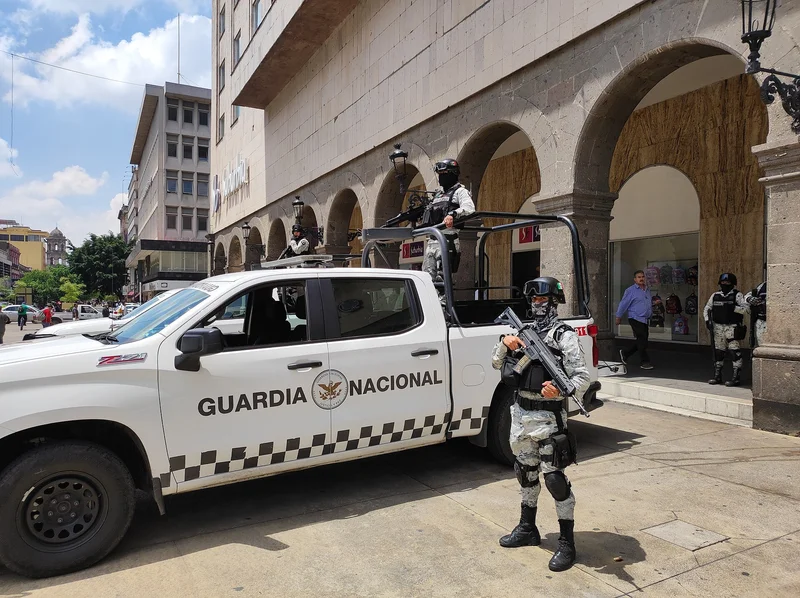
Mexico Cuts Public-Security Troops 66% and Opens Uruapan Intelligence Center
Mexico · Security
Mexico reduces public-security troops by 66% and opens Uruapan intelligence center.
Mexico has cut public-security troops by 66% while opening an intelligence center in Uruapan. According to official data and Reuters, marking a significant shift in its security strategy as of August 2026.
The Cut in Public-Security Troops
According to Sedena (the Mexican Secretariat of National Defense) data released through the Plataforma Nacional. De Transparencia, troops assigned to public-security tasks fell from 100,226 in 2024 to 34,160 in 2025.
This represents a reduction of 66,066 personnel, or approximately 66%, as reported by El Imparcial. The figures pertain specifically to public-security duties, not total armed forces strength or all deployments nationwide, the data indicated.
The reduction reflects a broader shift in Mexico’s security strategy, which has increasingly emphasized intelligence-led operations over widespread troop presence. Experts suggest that the cut may free resources for specialized units.
Though it also raises questions about coverage in areas with persistent violence. Sedena has not publicly detailed the reasons for the reduction, but the data.
Was published in response to transparency requests filed through the national transparency platform. The 66% cut comes amid ongoing debates in Mexico about the role of the military in.
Domestic security, with some lawmakers and civil society groups calling for a return to civilian-led policing. Others argue that the reduction could be part of a broader effort to modernize.
The armed forces, focusing on rapid-response capabilities and intelligence gathering rather than static deployments.
Michoacán Deployment
On August 6, 2026, Mexico deployed 1,557 personnel to Michoacán, including 900 Army. Troops and 657 National Guard members, according to a Sedena statement and Reuters.
The deployment began at 07:00 local time and was aimed at addressing security concerns in the region, particularly around avocado-producing areas. This operation followed a U.S. alert about threats to its inspectors, leading to the temporary suspension of avocado inspections.
The deployment is part of a coordinated effort to restore security in. The avocado belt, which includes municipalities such as Tancítaro, Tacámbaro, and Uruapan.
According to Reuters, the operation was announced after a phone call between Mexican President Andrés Manuel López Obrador and U.S. officials. Though the presidency has not issued a detailed readout of that call.
The robust response underscores the economic importance of the avocado trade, which generates billions of dollars in annual export revenue for Mexico. The temporary suspension of U.S. inspections had threatened to disrupt exports just as the harvest season was reaching its peak.
According to local growers’ associations. Mexican agricultural officials have said that the deployment is intended to.
Ensure that avocado shipments can resume without risking the safety of U.S. personnel.
Uruapan Intelligence Center
As part of the security response, Mexico established a regional intelligence-fusion center. (Centro Regional de Fusión de Inteligencia) in Uruapan, according to Milenio and Reuters.
The center is designed to coordinate intelligence and security operations in the avocado belt, a critical agricultural zone for the state’s economy. Local officials said the center will enhance real-time information sharing among federal, state, and municipal forces.
The facility is intended to support both preventive actions and rapid. Response to incidents, with analysts from various agencies working side by side.
Similar fusion centers have been used in other parts of Mexico to. Tackle organized crime, though this is the first in the avocado-producing region specifically.
State authorities in Michoacán have welcomed the center, noting that it will. Help address security gaps that have persisted in rural and semi-urban areas.
The center is expected to work in close coordination with the newly deployed troops. As well as with local police forces that have been undergoing vetting and certification.
Intelligence fusion centers have become a key tool in Mexico’s security strategy. Allowing multiple agencies to share data on criminal networks and movement patterns.
US Embassy Response
The U.S. Embassy in Mexico announced a partial resumption of official activities in Tancítaro. Tacámbaro, Uruapan, and the Morelia-Pátzcuaro corridor, effective August 8, 2026.
This decision followed continued security coordination with Mexican authorities, the embassy said in a statement. The partial resumption allows U.S. personnel to operate in these areas again, though full activities may take longer to restore.
The embassy noted that personnel will operate with enhanced security protocols and regular reassessments of the security situation. Avocado inspections for export to the U.S. are expected to resume gradually.
With priority given to certified orchards and packing houses that meet safety standards. Mexican producers have expressed optimism about the resumption, though they acknowledged that full volumes may take time to rebuild.
The U.S. Department of Agriculture’s Animal and Plant Health Inspection Service (APHIS) has worked. Closely with Mexican officials to ensure that inspection protocols are safe and effective.
Some U.S. importers have welcomed the partial resumption, but they have also noted that. The disruption has already led to price increases in the domestic market.
Context and Scope
The troop reduction and the Michoacán deployment are separate developments, though both relate to Mexico’s public security posture. The 66% cut reflects a strategic reallocation of military resources, but it.
Does not indicate a total reduction in armed forces strength, as Sedena clarified. Analysts note that the focus on avocado-producing regions underscores the importance of.
Agricultural exports to Mexico’s economy and the need for protecting key industries. The reduction in public-security troops could be seen as a move toward a.
More targeted approach, using intelligence and special operations rather than large-scale military presence. However, critics have expressed concern that the reduction may leave some rural areas vulnerable, especially where cartels have historically operated with impunity.
Overall, the developments in August 2026 highlight the delicate balance between. Fiscal and strategic priorities and the security needs of critical economic sectors.
The avocado trade between Mexico and the United States is a multibillion-dollar industry. With the U.S. being the primary destination for Mexican avocado exports.
Michoacán is the leading avocado-producing state in Mexico, accounting for the vast majority. Of the country’s output, and any disruption in security directly impacts global supply chains.
Frequently Asked Questions
What does the 66% reduction apply to?
The reduction applies to Mexican troops assigned to public-security tasks, not to total armed forces personnel. Sedena’s data showed a drop from 100,226 to 34,160 between 2024 and 2025.
Why did Mexico deploy troops to Michoacán?
Mexico deployed 1,557 personnel to Michoacán on August 6, 2026. In response to security threats that led the U.S. to suspend avocado inspections.
What is the Uruapan intelligence center?
It is a regional intelligence-fusion center established in Uruapan to coordinate security operations in avocado-producing areas. Reports from Milenio and Reuters indicate it was set up after the U.S. alert.
When will U.S. activities resume in Michoacán?
The U.S. Embassy announced a partial resumption of activities starting August 8, 2026, in Tancítaro, Tacámbaro, Uruapan, and the Morelia-Pátzcuaro corridor. This follows security coordination with Mexican authorities.
This article was produced by The Rio Times’ automated newsroom system. How we use AI · Report an error