At least 15 dead, dozens missing after overloaded ferry capsizes in Zimbabwe
114 passenger tickets were sold for 5-crew vessel with capacity for only 90 people
An overloaded ferry capsized on Zimbabwe's Lake Kariba on Tuesday, killing at least 15 people with 27 still missing, the national disaster management agency said.
The agency said 77 people were rescued and taken to an island on the lake.
But the statement by Zimbabwe's Civil Protection Unit said it could only confirm through ticket sales that there were 114 adult passengers aboard. There could have been an unknown number of children below ticketing age who were not accounted for, it said.
The statement noted were also five crew members on the ferry.
The boat has a carrying capacity of 90 people, the agency said.
Mutsa Murombedzi, a local member of Parliament, posted a video of what she said were people on shore waving at what appeared to be the aging ferry at the start of its journey. She said rural communities use the boat to travel along the lake to the town of Kariba.
Some people standing on the shore were also concerned that the ferry wouldn't survive strong waves on the lake, according to the video.
This is the RIDA boat named Mbuya Nehanda taking off earlier before the tragedy struck on Lake Kariba today. Communities used this boat as transport from rural Kariba to Kariba urban. It would take some 5hrs or so to cross Lake Kariba. We have very hard questions that require… pic.twitter.com/CF2TEsoki0
—mutsamuEarlier, Zimbabwe police said a rescue operation was underway but did not give any other details.
Zimbabwean state broadcaster ZBC published video of speedboats making their way to what appeared to be an overturned boat on the lake as a helicopter hovered overhead.
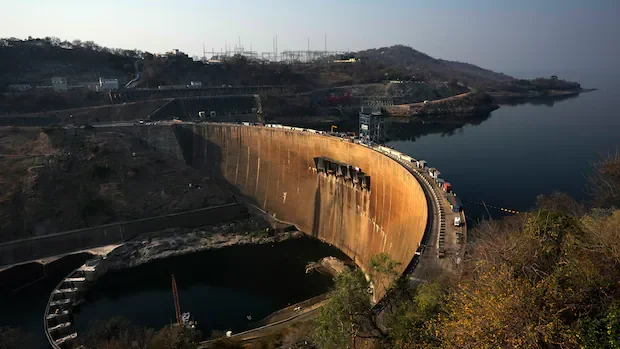
Lake Kariba in southern Africa forms part of the border between Zimbabwe and neighbour Zambia.
It is the largest man-made lake in the world by volume and was created in the late 1950s and early 1960s by building a dam wall to block the Zambezi River, resulting in a valley slowly filling with water to form a huge lake that's now more than 200 kilometres long and up to 40 kilometres wide in places.
Zimbabwe and Zambia share the lake, with the official border between them running through the centre of the lake.