How India’s government can be a good parent to its young people
While recent protests were triggered by irregularities in the national medical entrance exam, the quality of education more broadly warrants attention
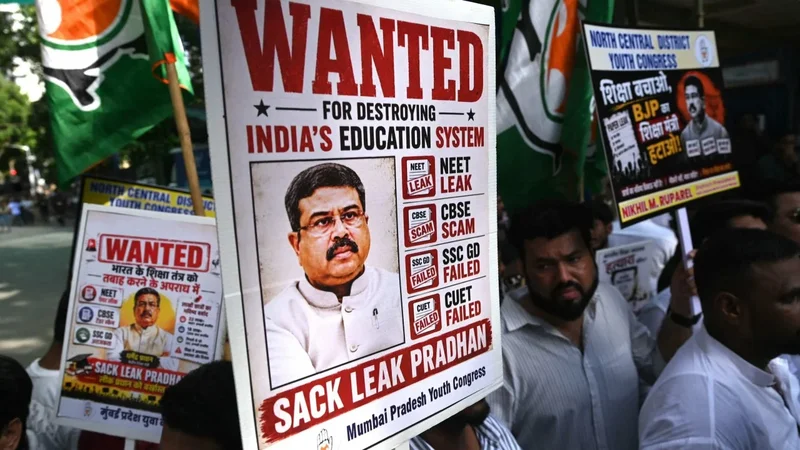
Outraged over the leaking of the medical school entrance exam question paper, protesters, led by a group calling itself the Cockroach Janata Party, demanded accountability and reforms. At least 20 young people had taken their own lives after a retest for the medical entrance exam was announced, underlining how such exams have become life-or-death affairs, providing many young people with a rare chance of economic security in India’s hypercompetitive job market.
In both India and China, education is often a key pathway to social mobility. In social systems with perceived inequalities, fair admissions to elite higher education institutions are a safety valve for social discontent. Undermining that valve led to predictable social consequences in India.
In the Programme for International Student Assessment (Pisa) tests for 15-year-olds in mathematics, science and reading, Singapore and East Asian economies have consistently ranked at the top. East Asian economic successes have been built on human capital development.
In the 2022 Pisa test results, Singapore, which has often been the top performer, led the world again. In 2018, when China’s regions of Shanghai, Beijing, Zhejiang and Jiangsu were assessed, they narrowly beat Singapore.