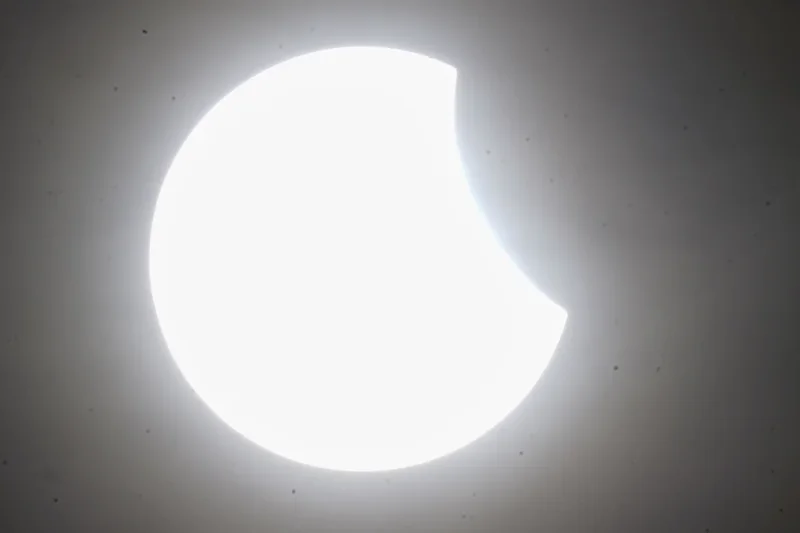
People are being warned about driving during tonight’s eclipse.
The RAC said motorists may need to turn on their headlights during the evening, especially vehicles which do not have automatic lights, to boost their visibility to other road users.
More than 90% of the sun will be obscured by the moon between 6.17pm and 8.06pm on Wednesday.
RAC head of policy Simon Williams said: “While total darkness is unlikely, those with vehicles that don’t have automatic headlights or daylight running lights may need to switch on their dipped beams to ensure they are easily visible to other road users.
“The best advice to enjoy this rare event is to pull over somewhere safe and watch with specialist glasses.”
Mr Williams urged anyone driving in a westerly direction around the time of the eclipse to avoid being distracted.
He said: “Taking your eyes off the road even for a split second to try to catch a glimpse of the sun as it disappears behind the moon increases the risk of being involved in a collision, not to mention the potential for suffering long-term damage to your vision.”
Meanwhile, consumers have been warned against using “knock-off” glasses to watch the event and eye doctors urged people to avoid looking directly at the sun, with even brief exposure causing lasting vision damage.
Only special solar eclipse glasses that are ISO 12312-2 certified for the safest eye protection should be used to view the eclipse and sunglasses are not sufficient, experts said.
Following the 1999 total solar eclipse, the Royal College of Ophthalmologists reported around 70 cases of people experiencing vision problems after watching the eclipse.
Around 40% had looked at it for less than a minute.
Mohamed Elalfy, a consultant ophthalmologist and president of the Royal College of Ophthalmologists, said: “The safest way to enjoy the eclipse is to observe it indirectly, such as by watching a live broadcast.
“Looking directly at the sun during a solar eclipse can cause damage to the retina, potentially damaging the cells responsible for sharp central vision.
“Crucially, the retina has no pain receptors, so people will not feel the damage as it happens.
“Symptoms may only become apparent several hours later and can include blurred vision, a central blind or dark spot, distorted vision, reduced colour perception and increased sensitivity to light.
“While some people recover over weeks or months, others can be left with permanent visual impairment.”