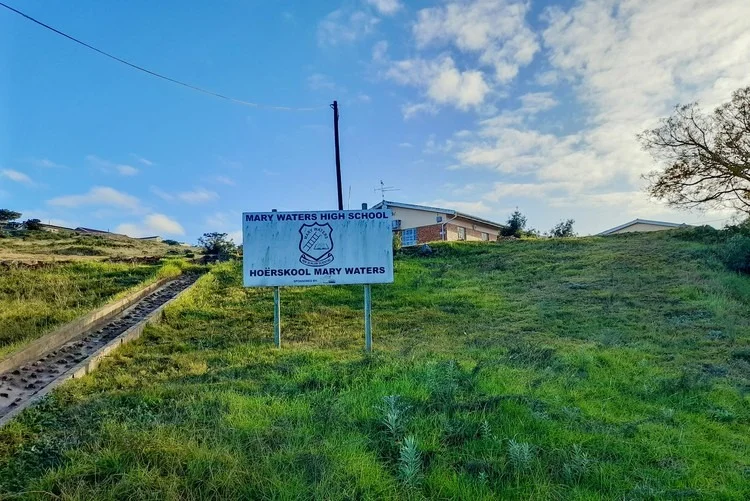
At Mary Waters High School in Makhanda, educational tablets intended to support matrics are stored in a cupboard. The school received 115 of them at the start of 2025.
The devices came preloaded with past papers, and each was to receive 50GB of mobile data at the start of every month. They were part of an Eastern Cape Department of Education programme that provided devices to 54,000 Grade 12 learners.
This year, not one has been issued to a learner.
âThe tablets were not distributed this year due to a shortage of tablets, with some not functioning properly,â said a senior teacher who asked not to be named as he is not authorised to speak to the media.
Of the learners who received devices in 2025, he estimated that only about 30% used them for schoolwork in any meaningful way. He added that in the 18 months since the programme began âthe department has not monitored the projectâ.
Mary Waters is not an outlier. GroundUp contacted 12 schools across the province â in Makhanda, Gqeberha, Butterworth, Idutywa, Queenstown, Mount Ayliff, Libode, Ngcobo, King Williamâs Town, Despatch and Maclear. Not one is running the programme as designed in 2026.
In August 2025, the department made available to the legislature along with replies to DA Shadow Education MEC Horatio Hendricks a district-by-district delivery report. The report, dated 15 May 2025, records that 53,254 of the 54,000 devices had been delivered by that date, reaching roughly half of the provinceâs 108,000-strong full-time matric cohort.
However, the report noted that 746 tablets were still owed to 41 schools and listed 165 schools with shortages. Whether these were ever delivered is one of the questions the department has not answered.
The department says its focus was matriculants at no-fee Quintile 1 to 3 schools, but âdue to budgetary constraints, not all Q3 matriculants received tabletsâ.
For example, in Makhanda, three of the townâs six qualifying schools received none. The department has never published the criteria by which schools were included or excluded.
It set aside R686-million for the programme: it committed R447-million on devices, with most of the remainder allocated to providing a 50GB monthly MTN data allocation to each learner, budgeted at R9.6-million per month.
Losses, shutdowns and damages
The tablets were meant to be returned at the end of 2025, but department spokesperson Mali Mtima said just 64% came back, meaning roughly 19,200 devices were not recovered, valued at around R159-million at cost.
The department said it had âdeveloped a retrieval strategyâ.
Its answer to the shortages is that learners should share. But at the schools we reached, no sharing is happening. The tablets that survived 2025 are sitting in storage, either locked, damaged, unassessed or awaiting department instructions.
According to the departmentâs delivery report, the rollout was split between devices from Rizzen and Huawei. The department told the legislature in October that on one model learners âwere able to bypass the security featuresâ. It did not say which.
The devices are centrally managed, and only approved educational applications are allowed to be installed. Teachers at schools in Makhanda said learners loaded Facebook, WhatsApp and TikTok, and the management software responded by locking the devices. The three Makhanda schools received Rizzen devices, according to the report.
While Quintile 3 principals were told the budget could not stretch to their schools, the report records that 101 devices were delivered in mid-January to Port Alfred High School â a Quintile 5, fee-charging school â on a priority list of schools scheduled for MEC visits.
At Mrwetyana Secondary School in Makhanda, the department says 102 tablets were issued, and 82 were returned; the school counts 44 as being in working order. Since there are more than 80 matriculants in the schoolâs 2026 matric cohort, the school decided not to reissue the tablets.
An educator at Colosa Senior Secondary School in Idutywa described similar attrition: most tablets were returned, but damaged devices drastically reduced the number available to this yearâs matric class.
A tablet disabled by its own management can be reconnected to the management console and reimaged, a process a technician can perform in batches. Asked who administers the 54,000 devices, how many are currently locked, and whether a single one has ever been restored, neither the department nor MTN would say.
At Cibeni Senior Secondary School in Libode, principal Sonwabile Njani said most of the returned tablets were âdamagedâ and now sat in a storeroom. Nobody, he said, had come to assess them.
At Mpeni Secondary School in Mount Ayliff, school records seen by GroundUp show that of the 102 tablets issued to Grade 12 learners, 86 were returned. Among the returns, 28 were âdamagedâ, 60 came back without chargers and 28 without SIM cards. Learners removed SIM cards for use in their own phones, a practice the department had reported to the legislature in August 2025. Twelve devices were recorded as lost, with a single affidavit as the schoolâs documentation. The school has 197 learners in this yearâs matric class and, on its own reckoning, a shortfall of 150 tablets.
Nobody was watching
Across 54,000 devices and 18 months, MTN â the contractor that supplied both the tablets and the data â says not a single fault has been formally escalated to it.
âMTN is not aware of any material repair, replacement, or insurance matters having been formally escalated through the agreed support channels,â the company said in written answers.
This is consistent with what the schools describe, because the contractâs fault-reporting machinery was built to catch hardware defects. The programmeâs actual failures â devices locking themselves, chargers and SIMs missing, teachers with no one to call, and a department that never visited â do not generate a warranty claim. The silence was perhaps read as success.
MTN describes itself as a connectivity provider and says device management is the departmentâs responsibility.
Yet MTN configured and delivered the 54,000 tablets, and the legislature names MTN as the contractor for the R447-million device purchase. MTNâs own written answers describe it as configuring and preparing the devices and replacing failed units âprior to delivery to the customerâ.
MTN confirmed it âhas access to network and service utilisation informationâ showing how many of the 54,000 SIMs actually carry data. But it declined to disclose this and the department will not say whether it has ever asked.
MTN also declined to answer a further 25 questions, including who runs the device management platform, whether data is billed at a flat rate per SIM or by actual use, and whether it would object to the department releasing the contract.
âOur position remains unchanged,â it said, referring all questions to the department as âthe contracting authority and programme ownerâ.
The department, in turn, says it cannot disclose costs âdue to the contractual nature of the agreement between the two partiesâ. Each party says the other must answer.
Professor Mary Metcalfe, a senior education policy analyst, said: âA motivation for tablet roll-out needs to consider the risks, and have a contingency plan which identifies risks (including maintenance and loss) and lays out backup actions if they occur.
âIt would be good to see evidence of such a plan for such a costly undertaking â especially when the Eastern Cape has cut its infrastructure budget by 22.6%.â
There should also, she said, be âevidence of learning from similar laptop initiatives in other provinces (such as Gauteng and Mpumalanga), including procurement process risksâ.
No such plan has been produced. We asked MTN to identify the procurement mechanism under which it was appointed. It said only that it âparticipated through a government procurement mechanism available to qualifying service providersâ and declined to give a tender number.
â50GB a monthâ
The data allocation keeps running even if a learner never touches a device. The department budgeted R9.6-million per month for it and defended the 50GB as necessary âto give learners meaningful access to online educational apps and websitesâ.
School after school we contacted said the data was unreliable. Teachers in Makhanda reported several months, from May to August, without it in 2025. At Ikhwezi Lokusa Senior Secondary School, near Queenstown, an educator said the devices were faulty and often lacked data, leaving learners with little beyond the past papers preloaded on the tablets.
MTN confirmed âperiods during which services were impacted by matters addressed through the agreed contractual processesâ and would not say whether the department was refunded.
The department, for its part, told the legislature in August 2025 that it had made no payment on the data portion âpending a verification session of the invoicesâ. DM
This story is produced by The Education Desk, a non-profit newsroom dedicated to addressing schooling challenges in South Africa.
Originally published by GroundUp.