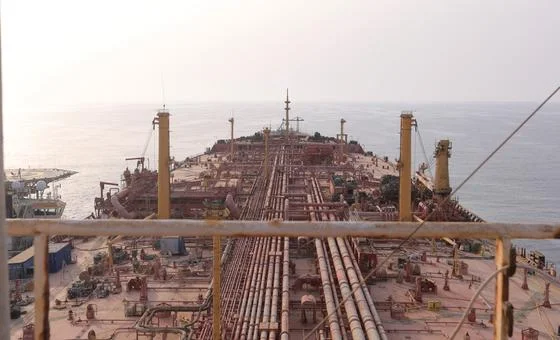
Deadly attack on Red Sea ship adds to global supply chain uncertainty
A strike on a merchant ship off the southern coast of Yemen that reportedly killed several seafarers on Tuesday threatens to reignite deep concerns about global trade, amid the ongoing Iran-US war that has choked shipping in the Strait of Hormuz.
Key points
-
Red Sea is a vital global trade route
-
Even greater uncertainty for shipping
-
Seafarers must be protected, says IMO
“It is with sadness and regret to know that, once again, innocent seafarers have lost their lives in an indefensible attack on international shipping. I offer my deepest condolences to the families of those involved,” said Arsenio Dominguez, head of the UN International Maritime Organization (IMO).
He added: “It is particularly troublesome that the most recent attack has taken place in the Red Sea and Gulf of Aden area,” noting that continuing attacks on shipping “only serve to escalate tensions and threaten global supply chains on which everyone depends”.
Mr. Dominguez’s comments followed a strike on the deck cargo ship Tihamah, which has been attributed to Yemen’s Houthi fighters.
Yemen's years of strife
The non-state armed group – formally known as Ansar Allah and backed by Iran – has been battling Yemeni Government forces, who are backed by a Saudi Arabia-led coalition, for more than a decade.
The group has also threatened to blockade the Bab al-Mandab Strait, a key shipping route to the Red Sea, and targeted shipping in the Red Sea for several years, including following the outbreak of the Hamas-Israel war in October 2023, in support of Palestinians in Gaza. On 23 July, they claimed to have struck two Saudi oil tankers, according to media reports.
Following those strikes, UN Secretary-General António Guterres expressed deep alarm about the resumption of Houthi attacks on commercial vessels in the Red Sea and the renewed threats to maritime navigation.
According to online marine registries, the Tihamah sails under the flag of Tanzania; it is 62.8 metres long and 11 metres wide.
The Tihamah attack comes amid an ongoing near-total shipping freeze in the Strait of Hormuz, a key waterway linking the wider world to multiple Gulf States, including Iran and Oman. Latest IMO data indicates that only around seven ships passed through the strait on Sunday, almost 20 times lower than the pre-war daily average.
The disruption to global trade in the strait that has followed US and Israeli strikes on Iran and counter-strikes by Tehran across Gulf States and Jordan has caused exports of key commodities such as oil, gas and fertilizer inputs to plunge – and prices to rise.
Evacuations on hold
The ongoing war has also forced the IMO-coordinated evacuation plan for seafarers stranded in or near the Strait of Hormuz to be put on hold. Some 6,000 crew members and 500 vessels are still believed to be trapped, almost six months since months since hostilities began, with around 2,900 individuals evacuated to date.
According to the UN agency’s tracker on the Hormuz crisis, there have been 65 confirmed incidents and 17 seafarers killed since early March.
In his statement, the IMO chief also called for the “immediate and unconditional release of all seafarers” held captive following piracy attacks in the Red Sea and Gulf of Aden region.
“Ensuring seafarer safety is a fundamental obligation under international law and a shared responsibility of the global community,” Mr. Dominguez stressed.